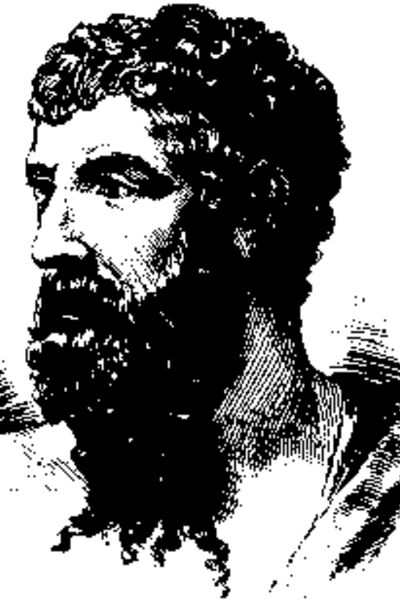
Aristophanes
Aristophanes
Athens's greatest comic poet
c. 446 BC – c. 386 BC
Aristophanes was born around 446 BC in Athens and died around 386 BC. Almost nothing is known about his life beyond his plays — eleven survive complete out of approximately forty. They are the only surviving examples of Attic Old Comedy, a form so wild and inventive that nothing in Western literature quite resembles it.
Old Comedy was performed at the great Athenian festivals of Dionysus, and it took as its subject the entire life of the city: its politics, its wars, its intellectuals, its poets, its demagogues. Aristophanes attacked them all. In the Knights he savaged the populist leader Cleon. In the Clouds he mocked Socrates as a charlatan who taught young men to make the worse argument appear the better. In the Wasps he ridiculed the Athenian addiction to jury service. In the Birds two Athenians escape the city to found a utopia among the birds — a fantasy so gorgeous and so pointed that it has been read as everything from escapism to anarchism.
The Lysistrata, in which the women of Greece go on a sex strike to end the Peloponnesian War, is his best-known play and one of the great anti-war comedies. The Frogs, in which Dionysus descends to the underworld to bring back a dead tragedian, contains the most famous literary criticism in ancient drama — a contest between Aeschylus and Euripides that is both hilarious and deadly serious about the purpose of art.
Aristophanes is obscene, surreal, lyrical, and savage — sometimes in the same line. His choruses of clouds, wasps, birds, and frogs sing some of the most beautiful poetry in Greek. He is the great satirist of democracy, endlessly critical of its excesses and endlessly committed to its survival.
Works (11)
-
1
Acharnians drama
An Athenian farmer, sick of the war, makes a private peace treaty with Sparta and enjoys the benefits while his neighbours suffer. The earliest surviv...
- 2
- 3
-
4
Ecclesiazusae drama
The women of Athens take over the government and establish communism — shared property, shared meals, shared partners. It works about as well as expec...
- 5
- 6
-
7
Lysistrata drama
The women of Greece, led by Lysistrata, go on a sex strike to force their husbands to end the Peloponnesian War. The men hold out for about a day. The...
- 8
-
9
Thesmophoriazusae drama
Euripides' relative infiltrates the women's festival to defend the playwright, who they want punished for slandering them on stage. A play about theat...
- 10
- 11