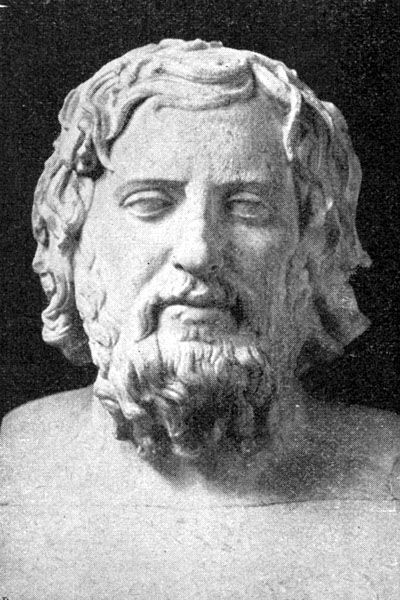
Xenophon
Xenophon
Soldier, historian, and gentleman farmer
c. 430 BC – 354 BC
Xenophon was born around 430 BC in Athens to a wealthy equestrian family. A pupil of Socrates, he chose the life of action over the life of contemplation — and spent the rest of his career proving that the two were not incompatible.
In 401 BC he joined the mercenary expedition of Cyrus the Younger against his brother, the Persian king Artaxerxes II. When Cyrus was killed at the Battle of Cunaxa and the Greek generals were treacherously murdered, Xenophon helped lead the famous retreat of the Ten Thousand — ten thousand Greek mercenaries fighting their way through hostile territory from Mesopotamia to the Black Sea. His account of the march, the Anabasis, is one of the great adventure stories of antiquity.
Banished from Athens for serving with the Spartans, he settled on an estate near Olympia and wrote prolifically: histories, memoirs of Socrates, treatises on horsemanship, hunting, estate management, and the education of the Persian king Cyrus the Great. His Hellenica continues Thucydides' history from 411 BC to the Battle of Mantinea in 362 BC. His prose is clear, practical, and unpretentious — the prose of a man who has done things and wants to explain how they were done.
Works (14)
- 1
- 2
-
3
Apology philosophy
Socrates' defence at his trial, as Xenophon remembers it — shorter, simpler, and less philosophical than Plato's version. Socrates welcomes death beca...
-
4
Constitution of the Lacedaimonians history
A description of Spartan institutions: military training, the common mess, the education of youth. Xenophon admired Sparta. This is his explanation of...
-
5
Cyropaedia history
How does a leader win an empire without losing his soul? Xenophon's answer is Cyrus the Great — founder of the Persian Empire, conqueror of Babylon, r...
- 6
- 7
- 8
-
9
Memorabilia history
Socrates in conversation, remembered by Xenophon. Four books of practical philosophy — how to manage a household, choose friends, practise self-contro...
-
10
On Hunting history
A treatise on hunting with dogs, covering hares, deer, boar, and lions. Xenophon argues that hunting builds character and is the best preparation for...
-
11
On the Art of Horsemanship history
A practical treatise on riding: how to buy a horse, train it, and ride it in peace and war. The oldest surviving work on horsemanship.
-
12
On the Cavalry Commander history
A manual for cavalry commanders: how to train, equip, and deploy cavalry. Practical military advice from a man who led cavalry in battle.
-
13
Symposium philosophy
A dinner party hosted by Callias, where the guests discuss love, beauty, and their most valued possessions. Lighter than Plato's Symposium — Socrates...
-
14
Ways and Means history
How Athens can increase its revenue without war or exploitation. Xenophon proposes silver mining, trade incentives, and treating metics better. A rema...