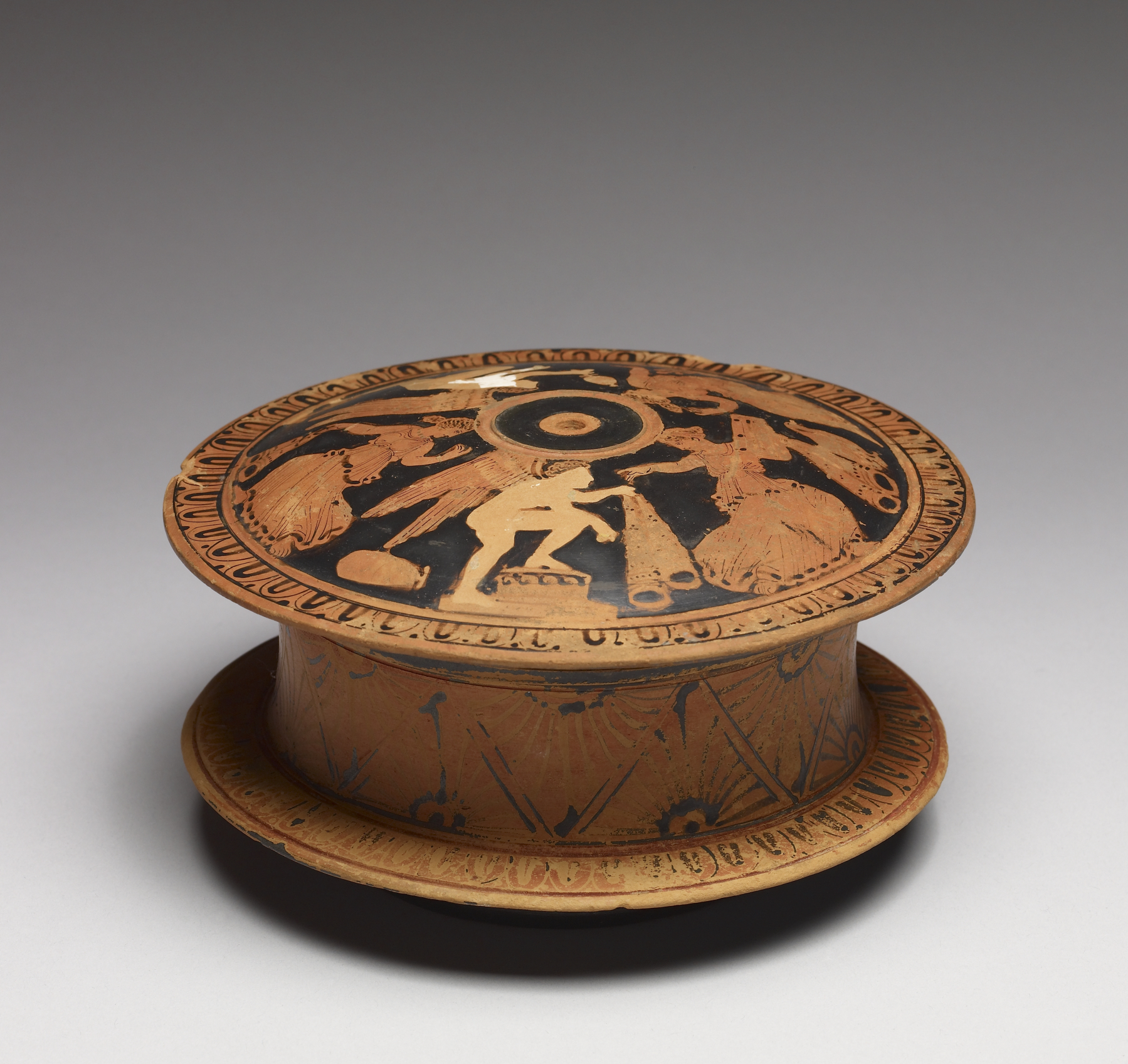
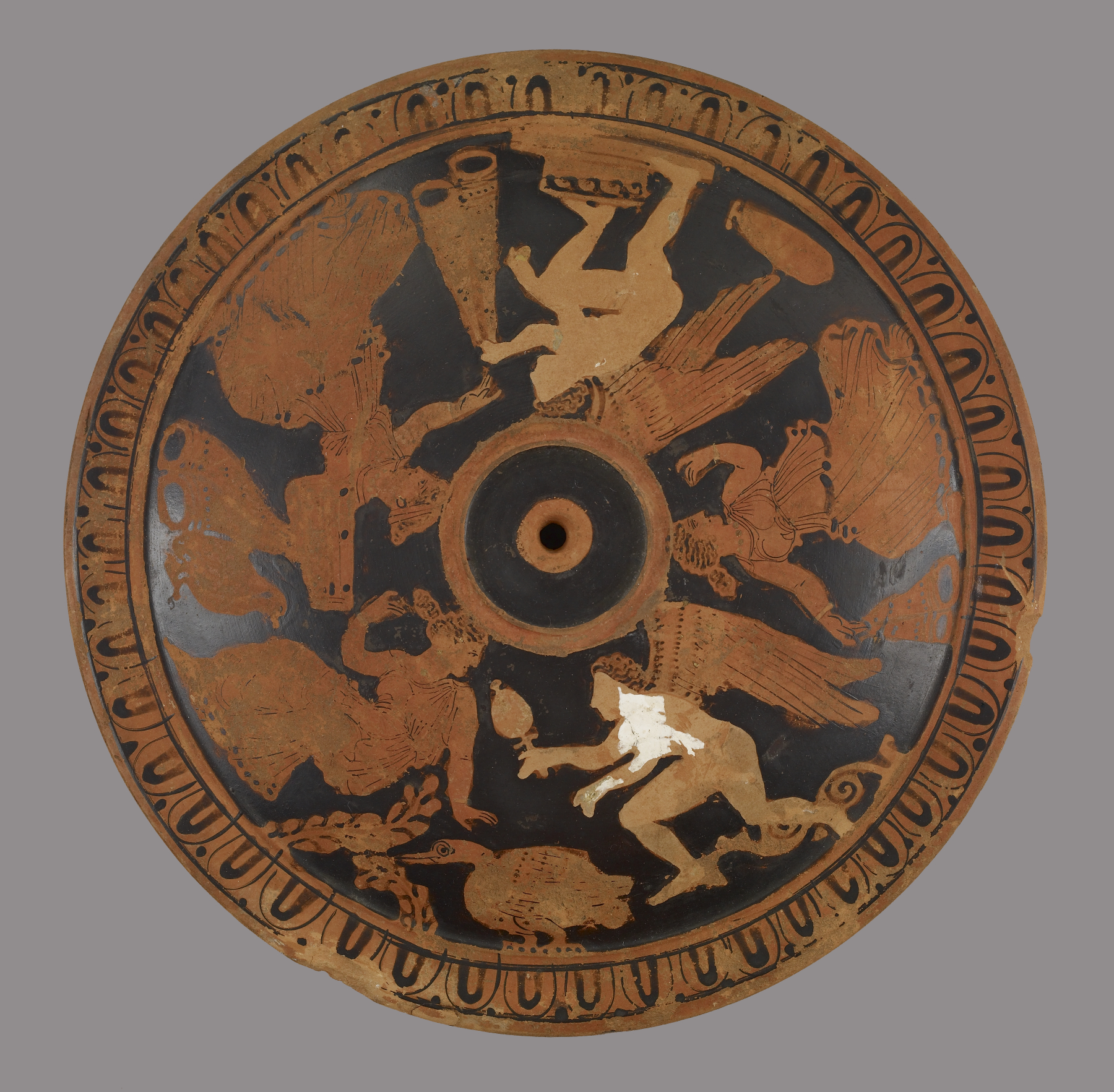
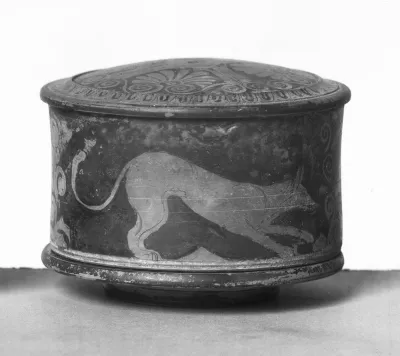
The cylindrical walls of this pyxis base are wrapped in a repeating pattern of triangular palmettes and crowned by a lid that shows a fantastic scene of women and erotes. A band of an egg and dot pattern on the outer edge of the lid serve as a ground for three women and two erotes amongst birds, plants, and a discarded alabstron, that form a wide concentric ring around the central handle. Each woman wears a heavy wool peplos and is bejeweled by bracelets, earrings and necklace. Two of the women holdsashes and run away from an eros, the flow of the garments suggested by the wave of thin black lines, but they look back to him as he steps onto a pedestal, also carrying a sash in his hand. The third woman is seated and glances over her left shoulder into the mirror held before her by the second eros. The flesh and garments of the women are the reddish-orange color of the clay, but the erotes are a slightly lighter color because they were once painted white and some traces of this pigement remain on an erotes’ neck and torso. Pyxides come in a variety of shapes and sizes. This particular shape of pyxis—distinguished from its predecessors by its low walls, wide diameter, and separate lid—was popular from the late fifth century to the fourth century BCE. Pyxides were used primarily by women for storing cosmetics, jewelry, or other trinkets, and they were also a popular dedication at female graves. The relationship between women and pyxides is apparent in the decoration as many feature scenes of women. Other pyxides were used as an ointment container by men, such as, physicians.For the latest information about this object, Pyxis and Cover with Women and Erotes, visit the Online Collection of the Walters Art Museum.
Images courtesy of The Metropolitan Museum of Art (CC0)