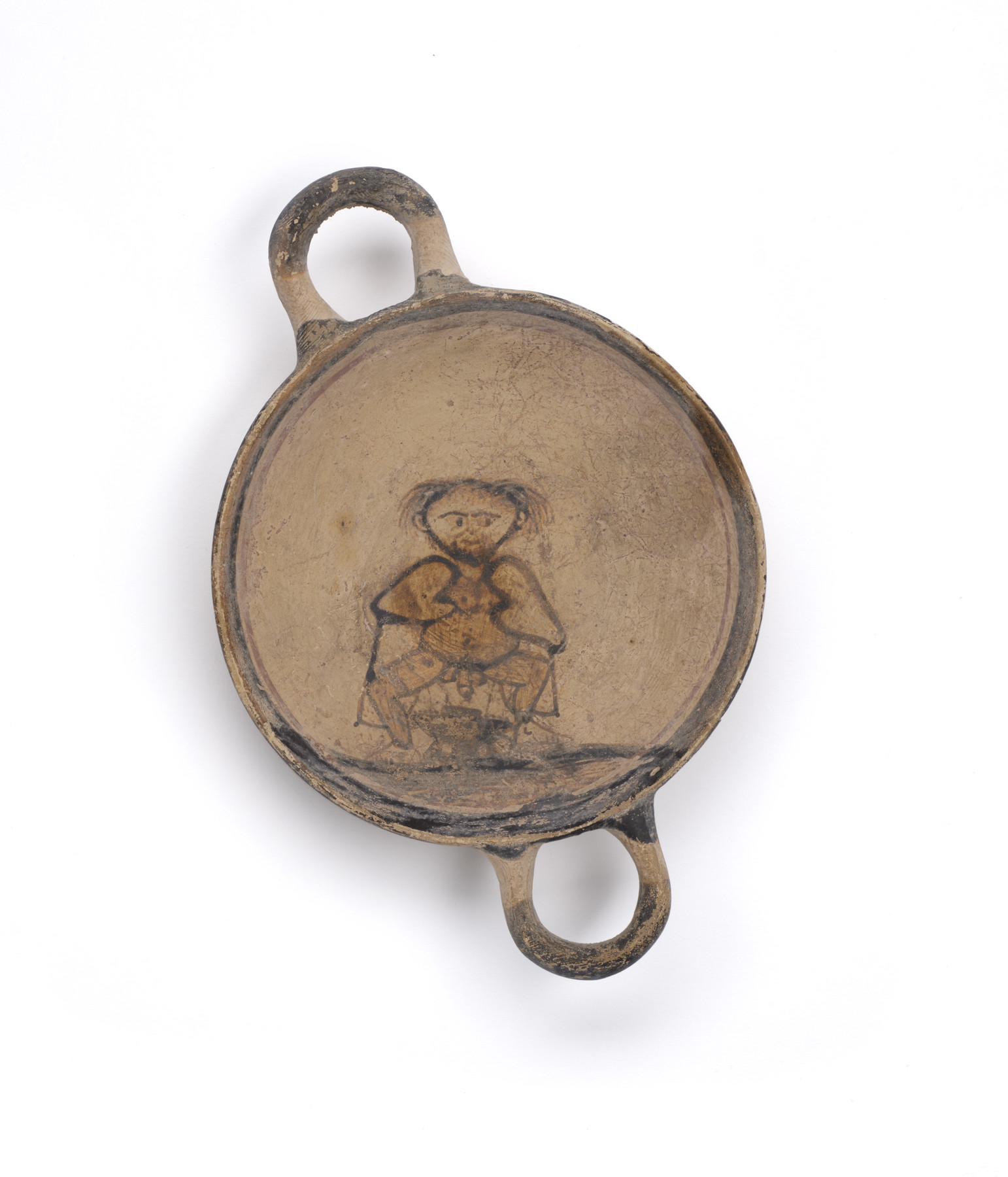
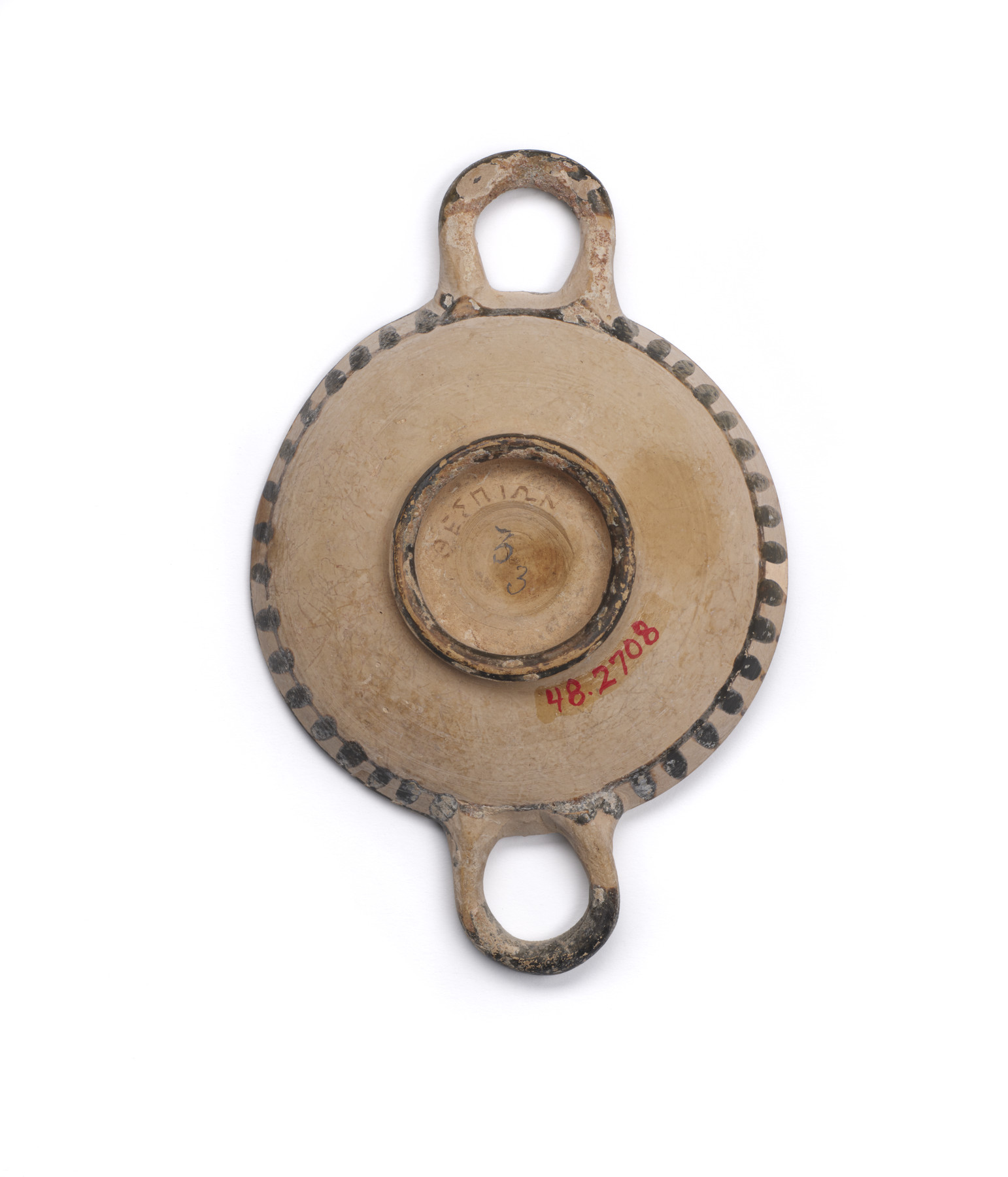
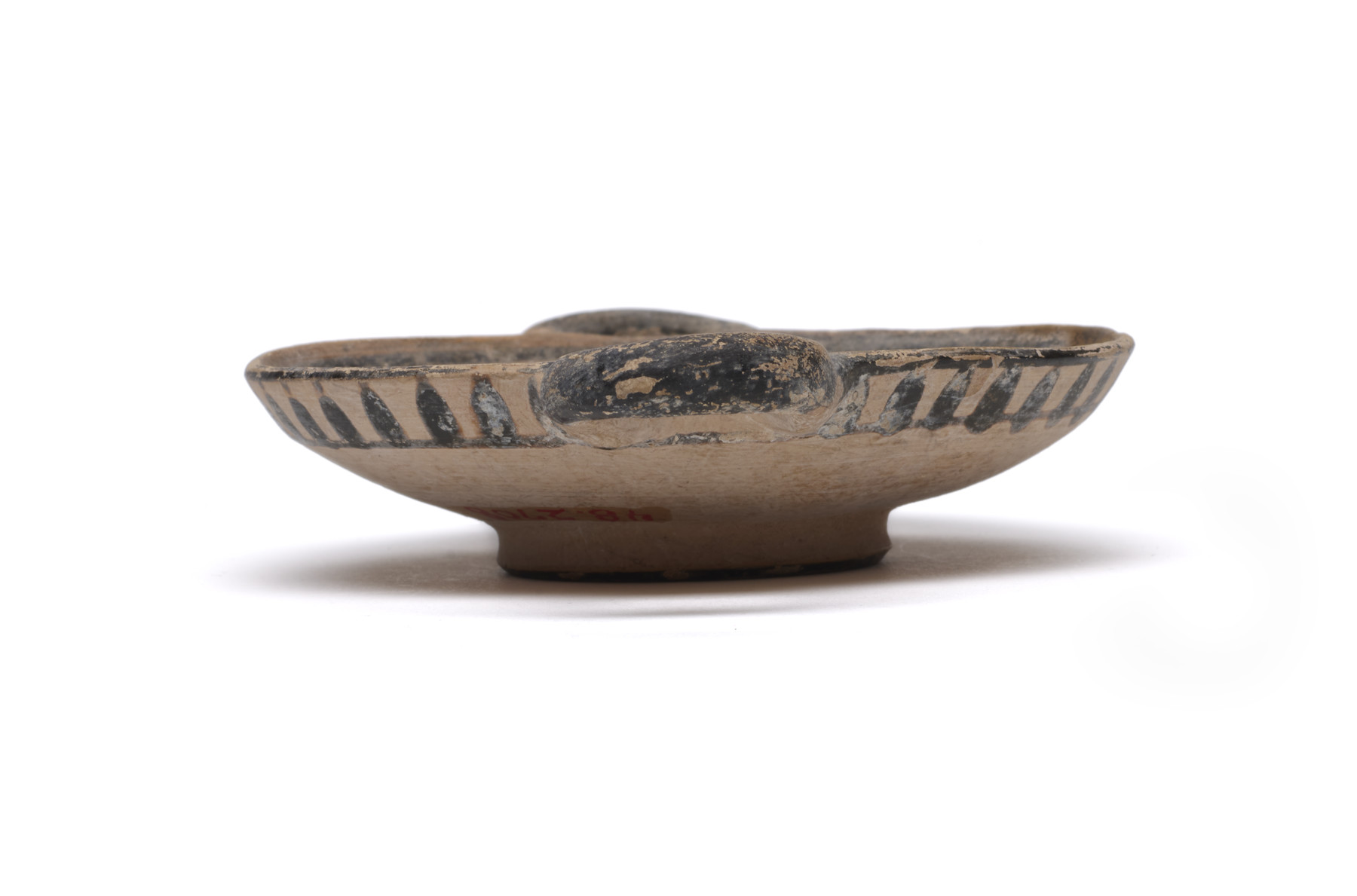
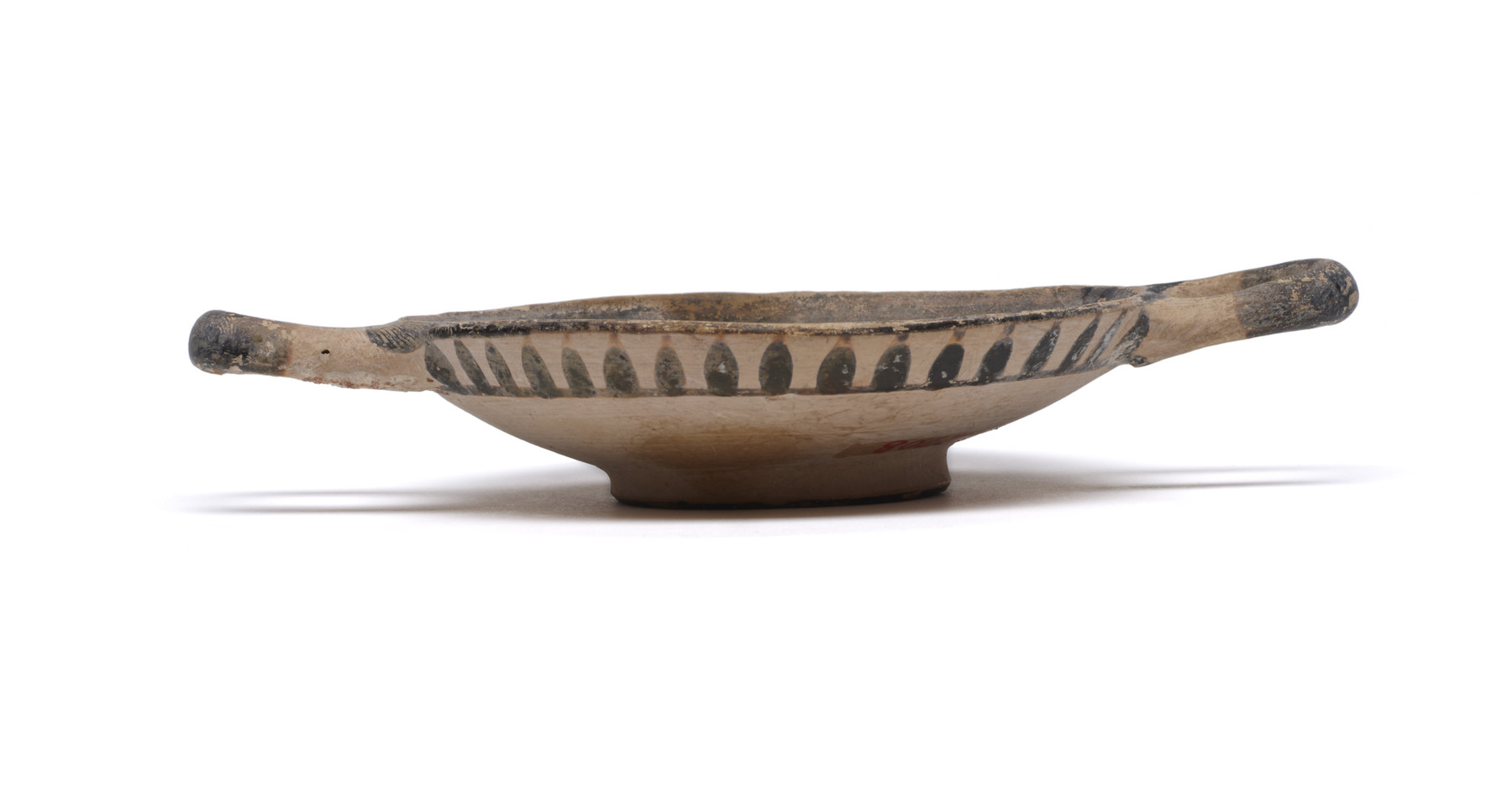
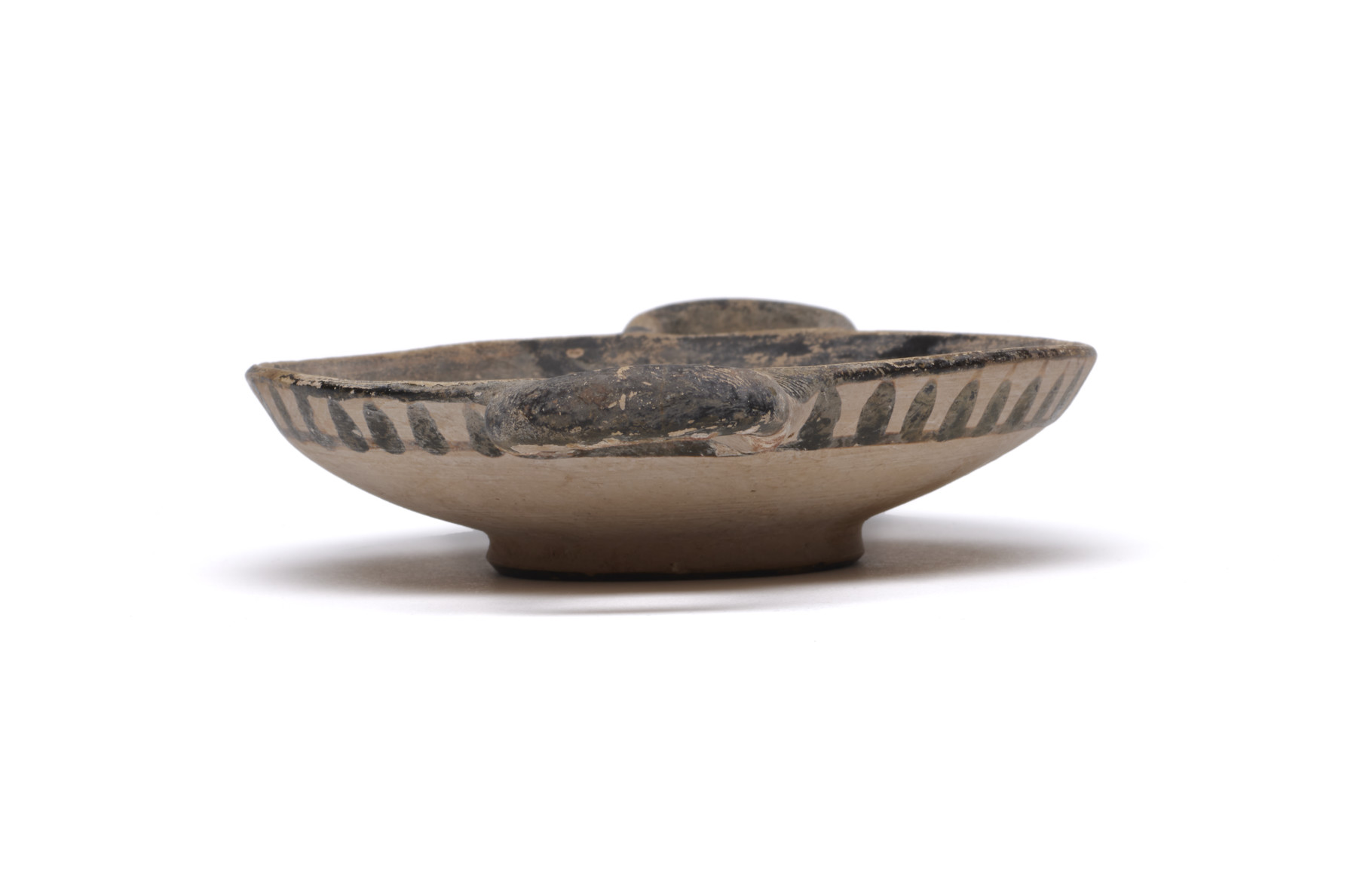
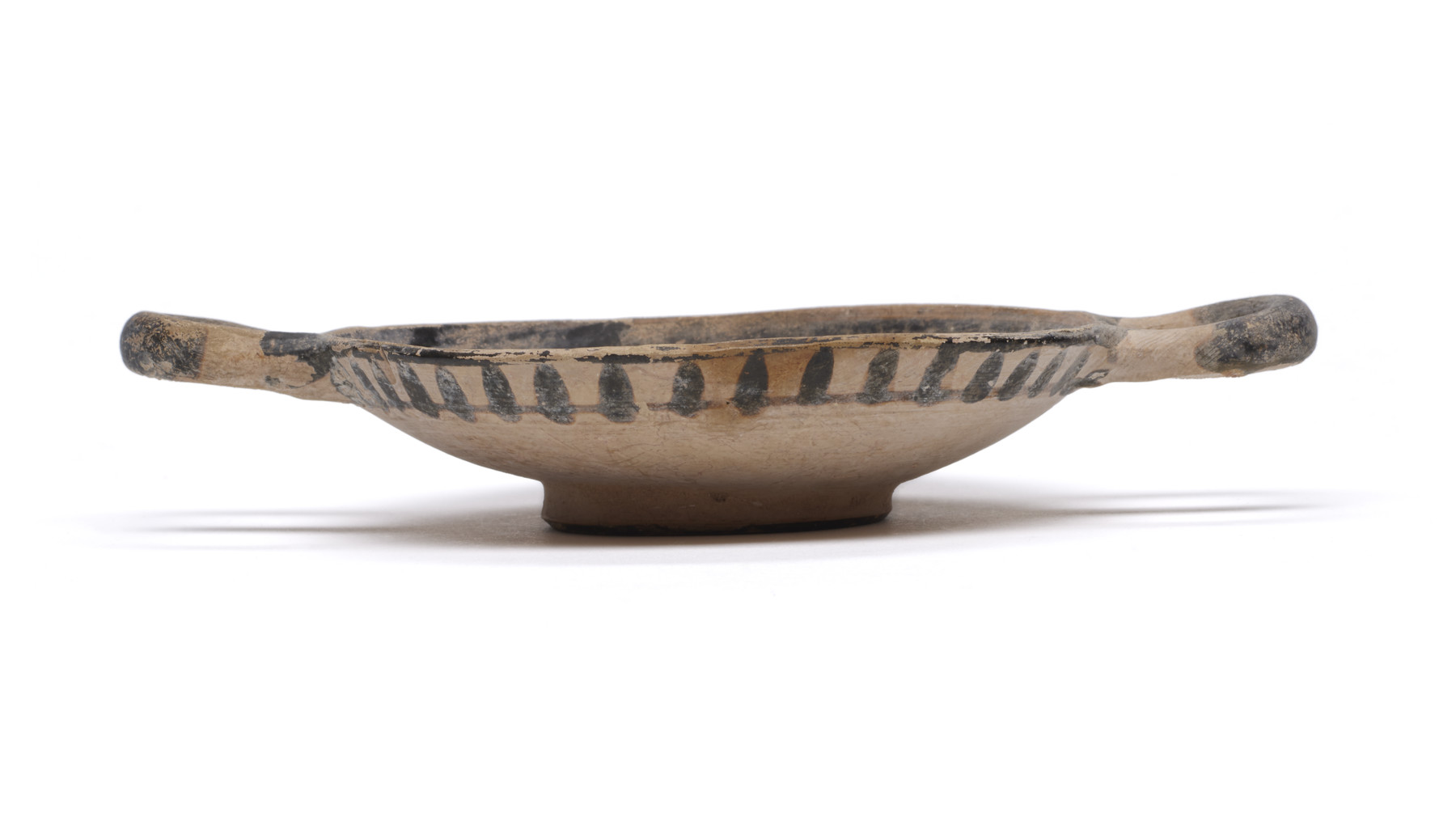
Painted on the interior of this small kylix, a man squats over a vessel, staring to his left with his oversized eyes. He may be wearing a cloak, which appears behind him and perhaps covering his arms, but it is pushed open to reveal his nude body, with the genitals particularly emphasized. The man’s bare feet are planted on a painted ground line. His shaggy hair projects from the sides of his head, perhaps indicating a bald spot on the top, and he has a short beard. Painted bands encircle the interior near the rim, but the field behind the figure is plain, showing the cream color of the clay. Minimal black paint appears on the two horizontal loop handles. The exterior is decorated by a row of painted petals at the rim and black paint on the ring foot. A diptini (painted inscription) appears on the bottom of the foot. This kylix belongs to a group of cups, plates, and pyxides known as the “Wide Group” after the first scholar to publish them, Sam Wide. All the known examples are relatively small and generally have single figure depictions on the interior, with limited painted decoration on the exterior. The single figures are sometimes deities, particularly Herakles, or comedic figures, as in this case. The word painted on the bottom, ΘΕΣΠΙΩΝ (Thespion), could be related to the polis of Thespiae in Boeotia and might be read as “Of the Thespians.” The small vessels seem to have been created for use as votive offerings.For the latest information about this object, Kylix with Grotesque Figure, visit the Online Collection of the Walters Art Museum.
Inscription
[Inscription] painted on underside of foot: ΘΕΣΠΙΩΝ. [Transliteration]: Thespion.
Images courtesy of The Metropolitan Museum of Art (CC0)