Shape
Pyxis
πυξίς
1977 vases
A lidded cylindrical box used for cosmetics, jewellery, or trinkets. Often decorated with women's domestic scenes, reflecting its association with the female sphere.
Function & Use
Container for cosmetics and jewellery
1977 examples
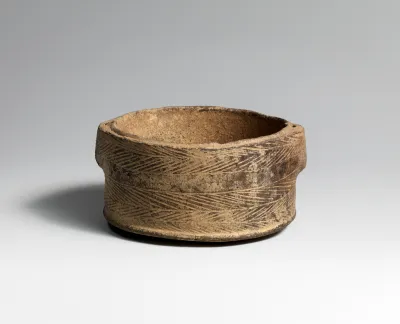
Terracotta box of a pyxis
ca. 3200–2800 BCE
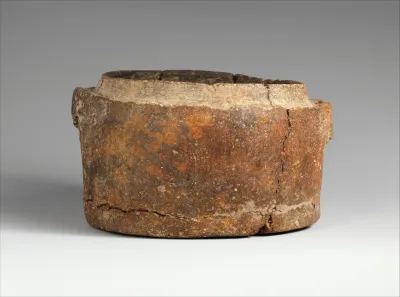
Terracotta box of a pyxis (small box)
ca. 3000–2800 BCE
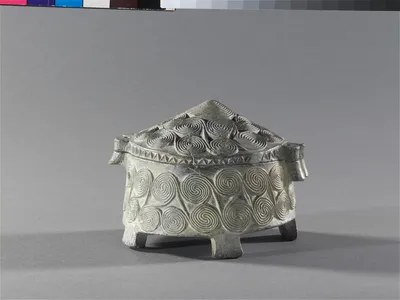
Deckelpyxis mit Spiralverzierung (Hüttenpyxis)
3000-2000 v. Chr.
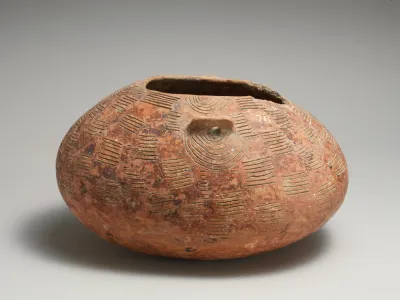
Terracotta pyxis (container) with lid
GEO
ca. 2500–1900 BCE
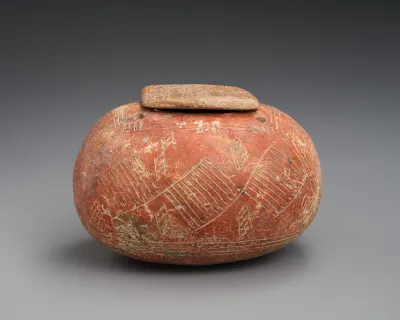
Terracotta pyxis (box) with lid
GEO
ca. 2000–1800 BCE
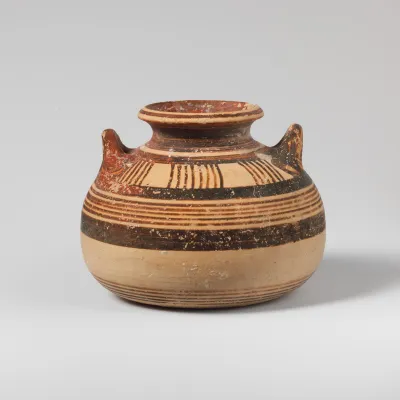
Terracotta alabastron (jar)
GEO
ca. 1600–1050 BCE
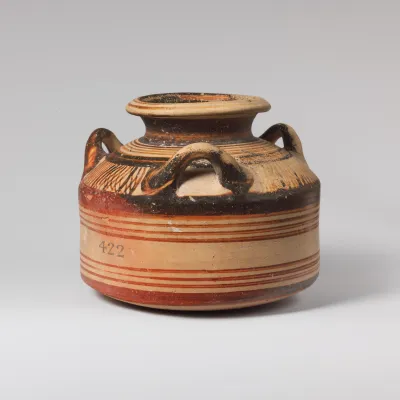
Terracotta alabastron (jar)
GEO
ca. 1600–1050 BCE
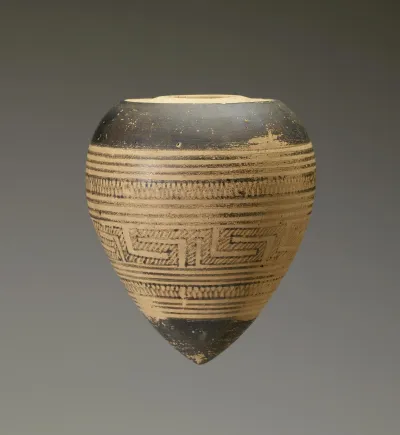
Pointed ""Pyxis""
GEO
6256
· 9th century BCE (Geometric)
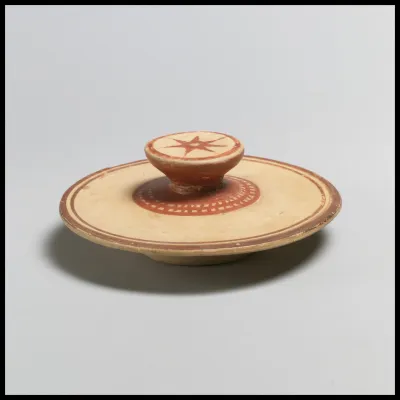
Pyxis lid
GEO
ca. 900–700 BCE
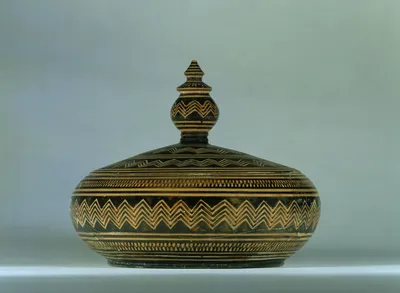
Büchse mit Deckel (Attisch - geometrische Deckelpyxis)
GEO
860-840 v. Chr.

Pyxis with Knobbed Lid
c. 850-800 BCE
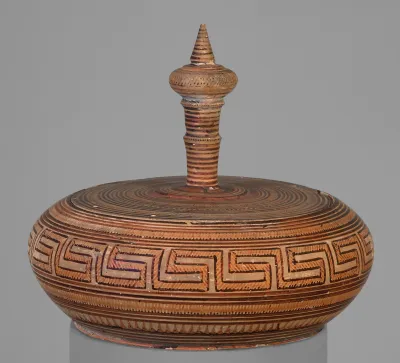
Terracotta pyxis (box with lid)
ca. 800–760 BCE

Horse Handle from a Pyxis Lid
c. 800-760 BCE
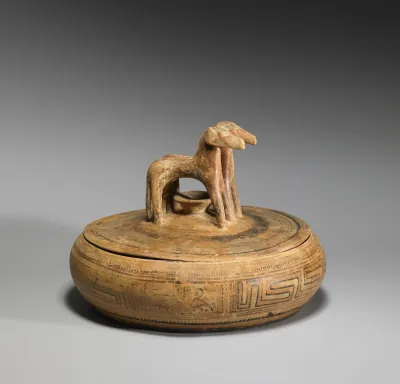
Pyxis and Lid with Two Standing Horses
6256
· 8th century BCE (Geometric)
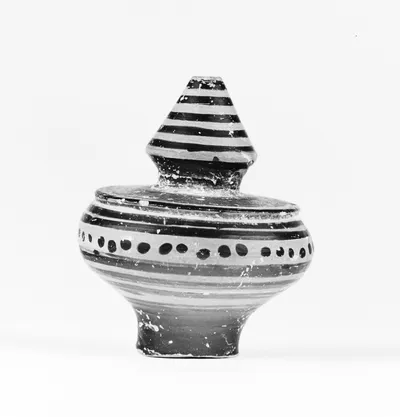
Knob of a Geometric Pyxis
GEO
8th century B.C.
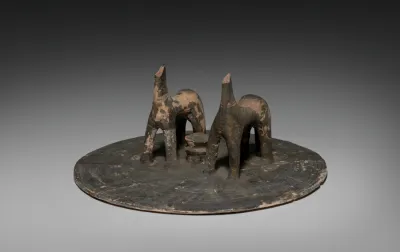
Geometric Horse Pyxis (Cylindrical Lid)
GEO
c. 760–750 BCE
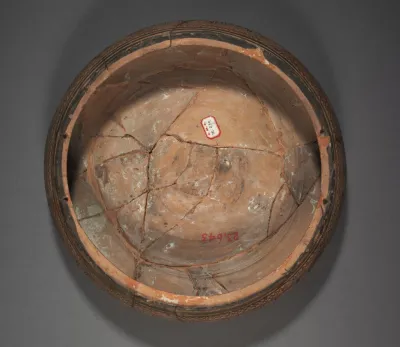
Geometric Horse Pyxis (Cylindrical Box)
GEO
c. 760–750 BCE
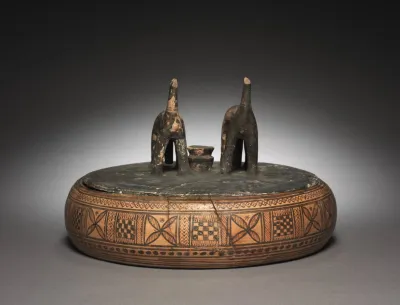
Geometric Horse Pyxis (Cylindrical Lidded Box)
GEO
c. 760–750 BCE
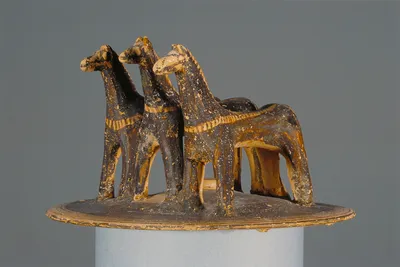
Geometric Pyxis Lid
GEO
760–750 B.C.
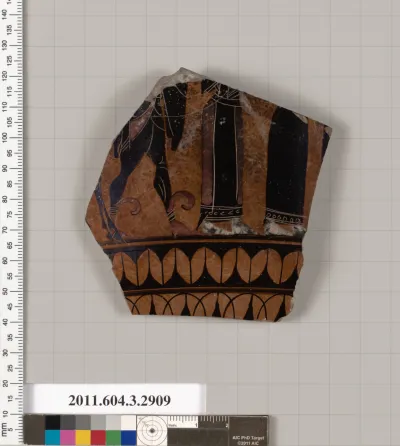
Terracotta fragment of an Nicosthenic pyxis (box)?
third quarter of the 6th century BCE
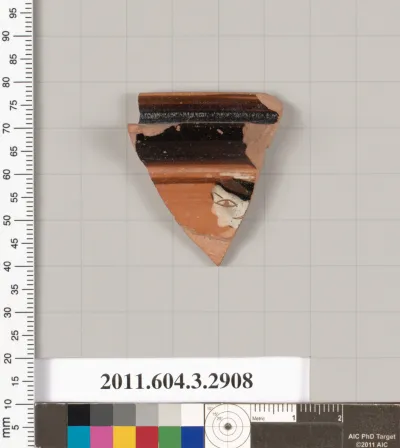
Terracotta fragment of a pyxis (box)?
late 6th century BCE

Horse Handle from a Pyxis Lid
c. 750-735 BCE
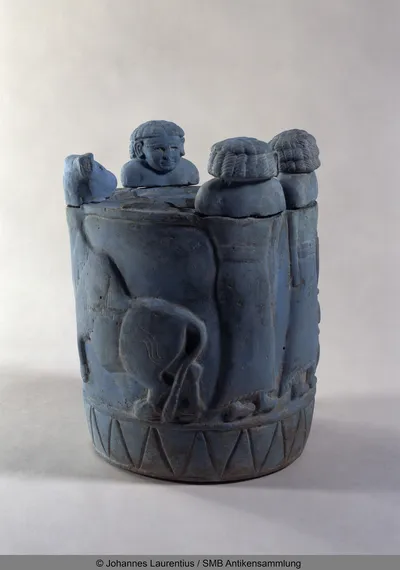
Fayencegefäβ (Nordsyrische Reliefpyxis)
750-700 v. Chr.
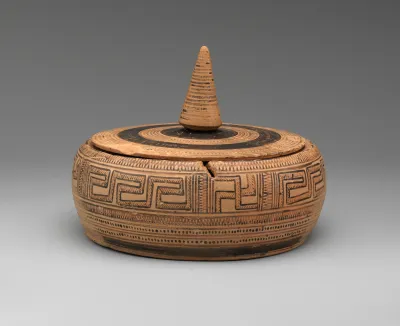
Terracotta pyxis (box with lid)
ca 750 BCE
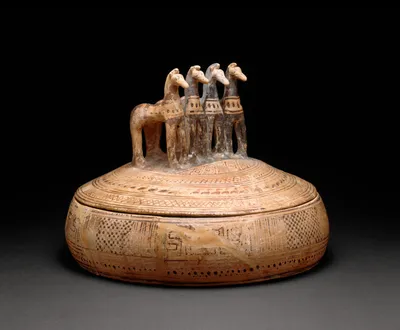
Pyxis (Container for Personal Objects)
GEO
Greek; Athens
· 730-720 BCE
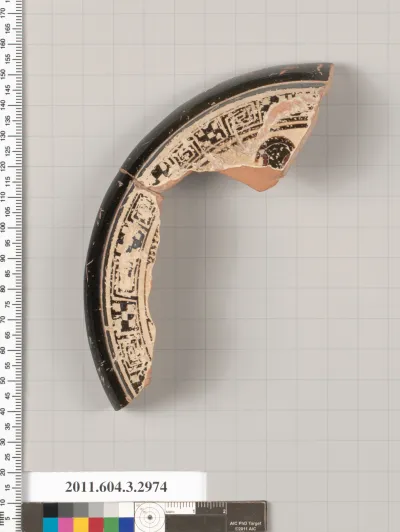
Terracotta fragment of a pyxis (box)?
490–480 BCE
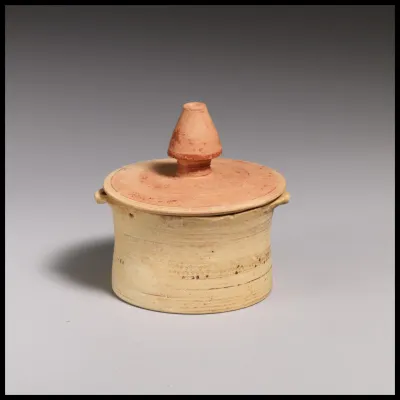
Terracotta pyxis (box)
7th century BCE
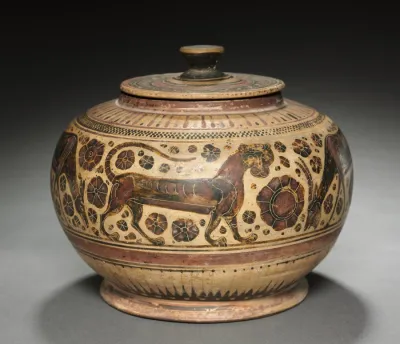
Black-Figure Pyxis (Cylindrical Lidded Box): Animals
BF
600s–500s BCE, with modern painting and incision
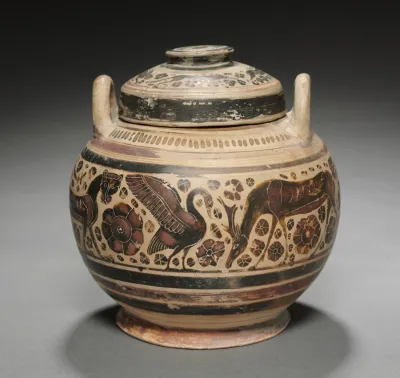
Black-Figure Pyxis (Cylindrical Lidded Box): Animals
BF
500s BCE, with modern painting and incision
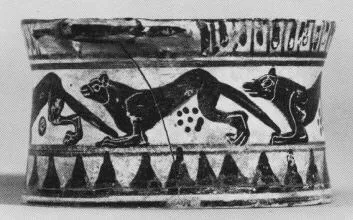
PYXIS (PROTOCORINTHIAN, BLACK-FIGURE)
BF
-675 TO -625
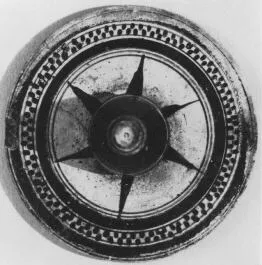
PYXIS (PROTOCORINTHIAN)
-675 TO -625
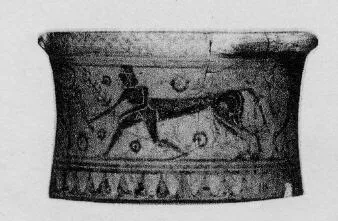
PYXIS (PROTOCORINTHIAN, BLACK-FIGURE)
BF
-675 TO -625
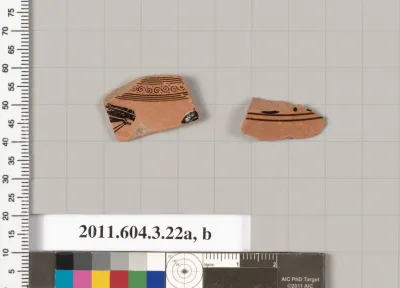
Terracotta fragments of a pyxis (box)
third quarter of the 6th century BCE
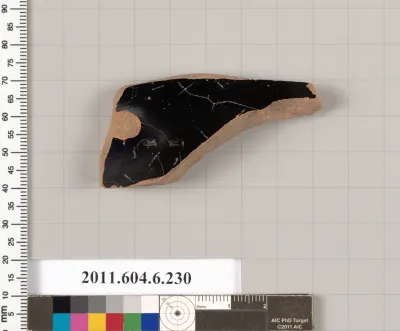
Terracotta fragment of a pyxis (box) ?
5th century BCE
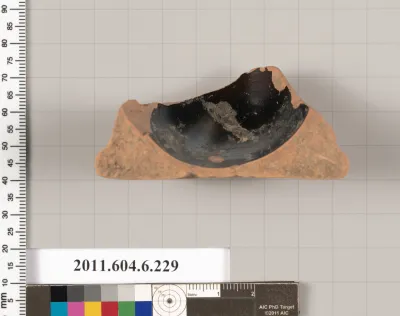
Terracotta fragment of a pyxis (box) ?
5th century BCE
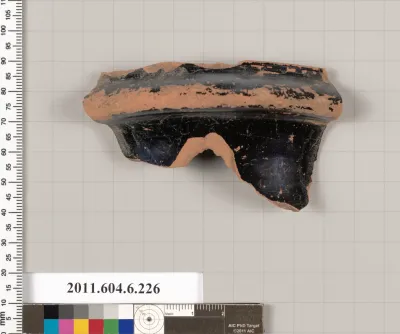
Terracotta fragment of a pyxis (box) ?
5th century BCE
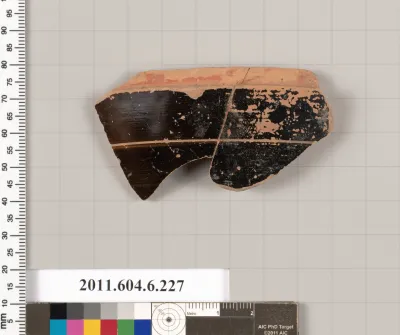
Terracotta fragment of a pyxis (box)
5th century BCE
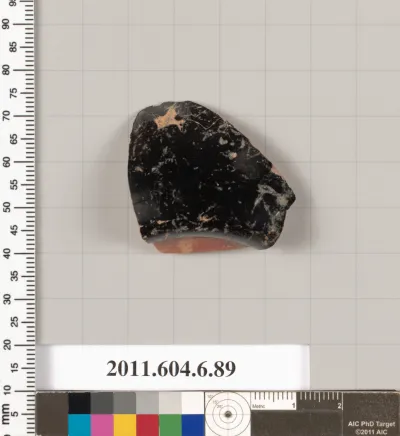
Terracotta fragment of a pyxis (box)?
late 6th/early 5th centuries BCE
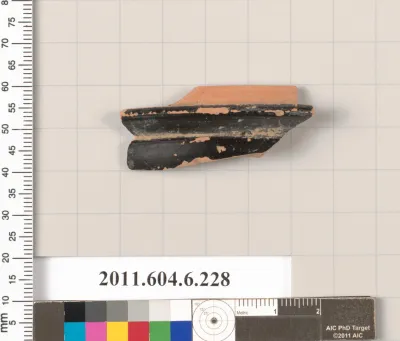
Terracotta fragment of a pyxis (box)
5th century BCE
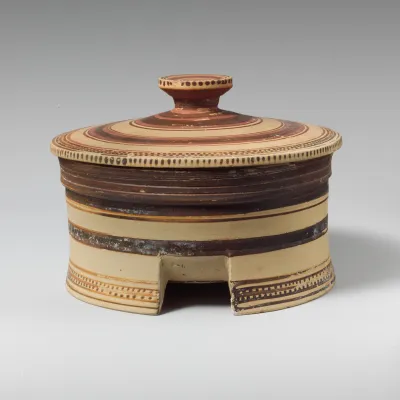
Terracotta tripod-pyxis (box)
ca. 625–575 BCE
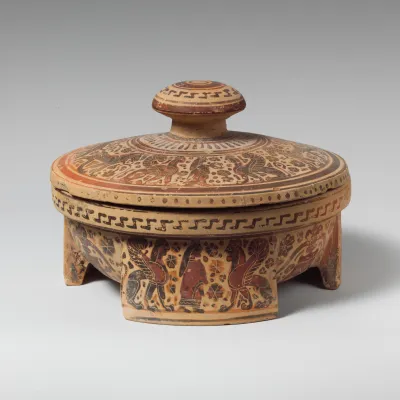
Terracotta tripod pyxis (box)
BF
ca. 620–590 BCE
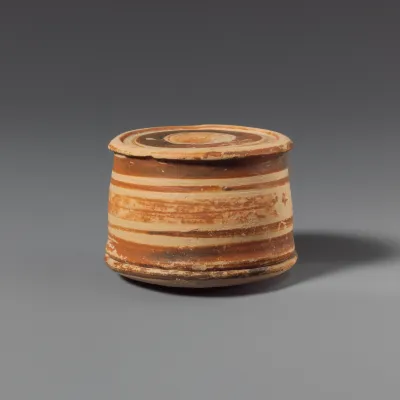
Terracotta pyxis (box)
BF
late 7th–6th century BCE

Pyxis with Three Feet and Cover
c. 600 BCE
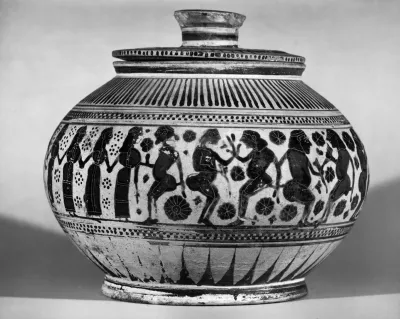
Pyxis mit Deckel, korinthisch (Pyxis mit Deckel, Korinthische Pyxis mit Deckel)
BF
600-575 v. Chr.
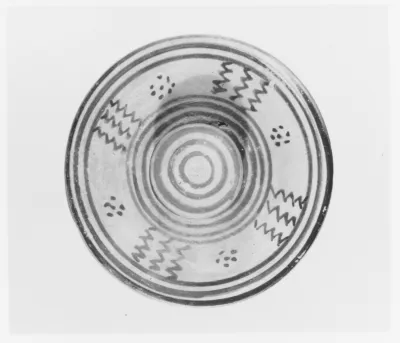
Lid of a pyxis
ca. 600 BCE
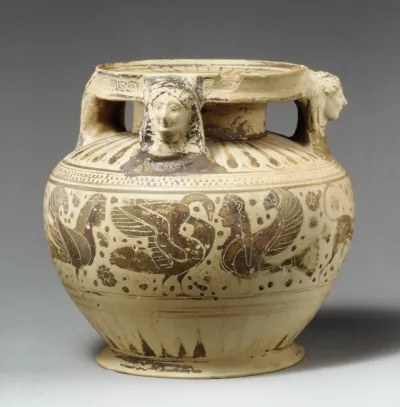
Terracotta pyxis (cosmetic box)
BF
ca. 550 BCE
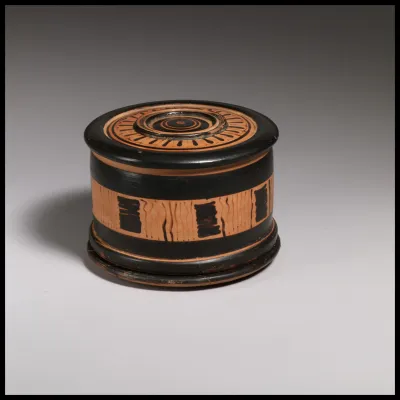
Terracotta pyxis (cosmetic box)
BF
6th century BCE
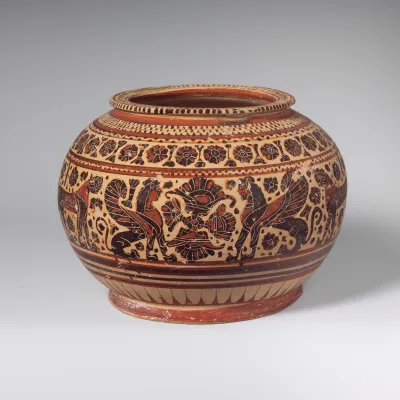
Terracotta pyxis (box)
BF
Attributed to the Canessa Painter
· ca. 590–570 BCE
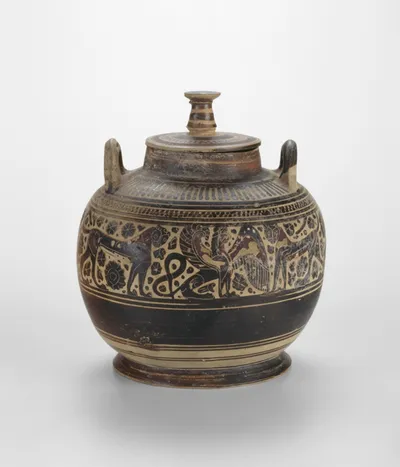
Pyxis (Container for Personal Objects)
BF
the Ampersand Painter
· 580-570 BCE
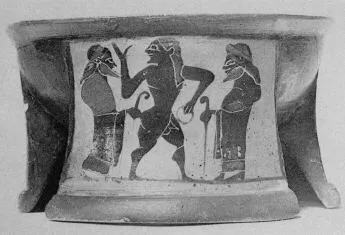
PYXIS, FRAGMENT (ATHENIAN, BLACK-FIGURE)
BF
-575 TO -525
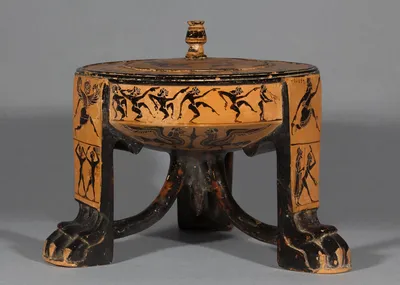
Böotische Dreifuβdeckelbüchse mit zugehörigem Deckel
575-550 v. Chr.
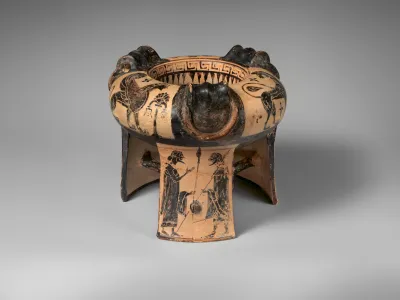
Terracotta tripod kothon (vessel for perfumed oil)
BF
the Group of the Boeotian Dancers
· mid-6th century BCE
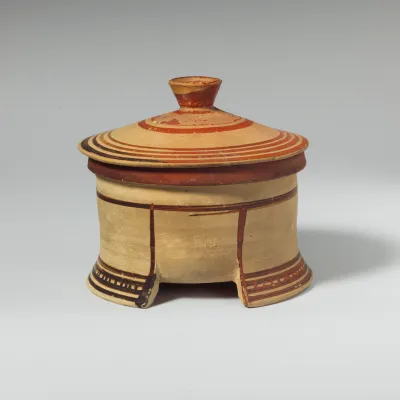
Terracotta tripod-pyxis (box)
ca. 575–525 BCE
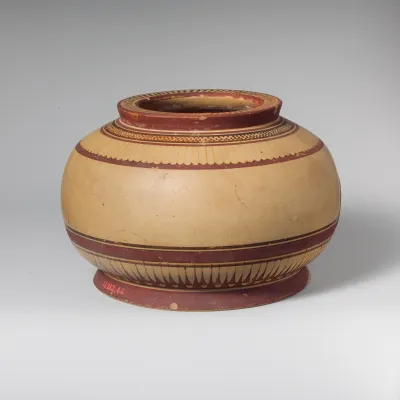
Terracotta pyxis (box)
ca. 575–550 BCE
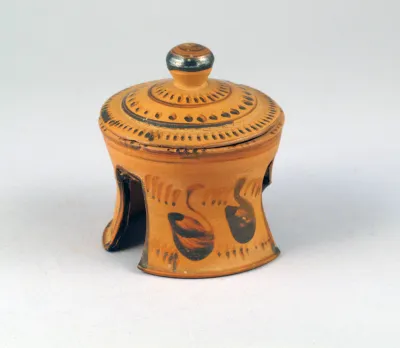
Pyxis with lid, miniature
the Swan Group
· mid-6th century BCE
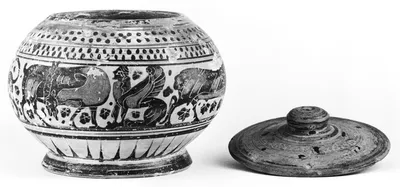
Corinthian Pyxis Lid
about 575 B.C.
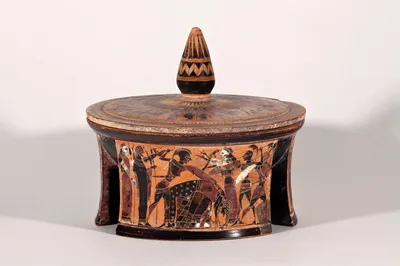
Dreifuβ (Attische Dreifuβbüchse)
575-550 v. Chr.
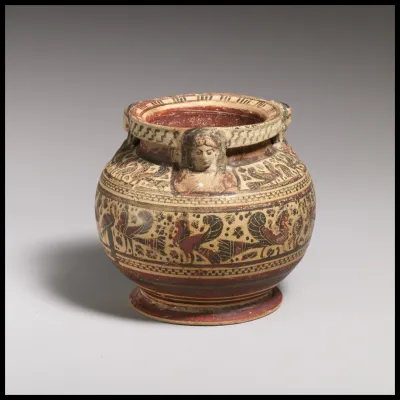
Terracotta pyxis (box)
BF
mid-6th century BCE
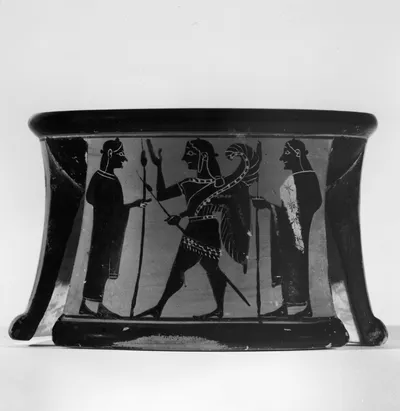
Dreifuβ (Attische Dreifuβpyxis)
BF
Maler von Heidelberg
· 575-550 v. Chr.

Pyxis, tripodic, with cover
575-525 B.C.
Images courtesy of The Metropolitan Museum of Art (CC0)