Guide to Greek Vase Shapes
The term "vase" in classical archaeology covers any ceramic vessel, from a tiny perfume flask to a storage jar taller than a man. Greek potters produced roughly thirty standard shapes, organised here by function.
I. Storage & Transport Vessels
Amphora

The most common and recognisable Greek vessel. A tall, two-handled jar used for storing and transporting wine, olive oil, grain, and other goods. Amphorae were the standard shipping container of the ancient Mediterranean — rough, undecorated transport amphorae had pointed bases for stacking in ship holds.
Finer decorated amphorae for household use come in several sub-types:
- Type A (belly amphora): Continuous profile from mouth to foot, wide body, two handles rising from the belly to just below the rim.
- Type B: Similar to A but with simpler, less articulated profile.
- Type C: One-piece amphora, handles from shoulder to lip.
- Neck amphora: A separate neck section above the shoulder, creating a clear distinction between neck and body. The most common fine amphora type.
- Panathenaic amphora: A special prize amphora filled with olive oil from Athena's sacred grove, awarded at the Panathenaic Games. The inscription reads τῶν Ἀθήνηθεν ἄθλων ("one of the prizes from Athens").
Pelike
Similar to an amphora but with a sagging, almost pear-shaped body — the widest point is low, near the base, giving it a bottom-heavy profile. Two vertical handles. Used for storing liquids, especially wine. First appears in the late 6th century BC. A favourite shape with red-figure painters.
Browse 3501 pelikai →Stamnos
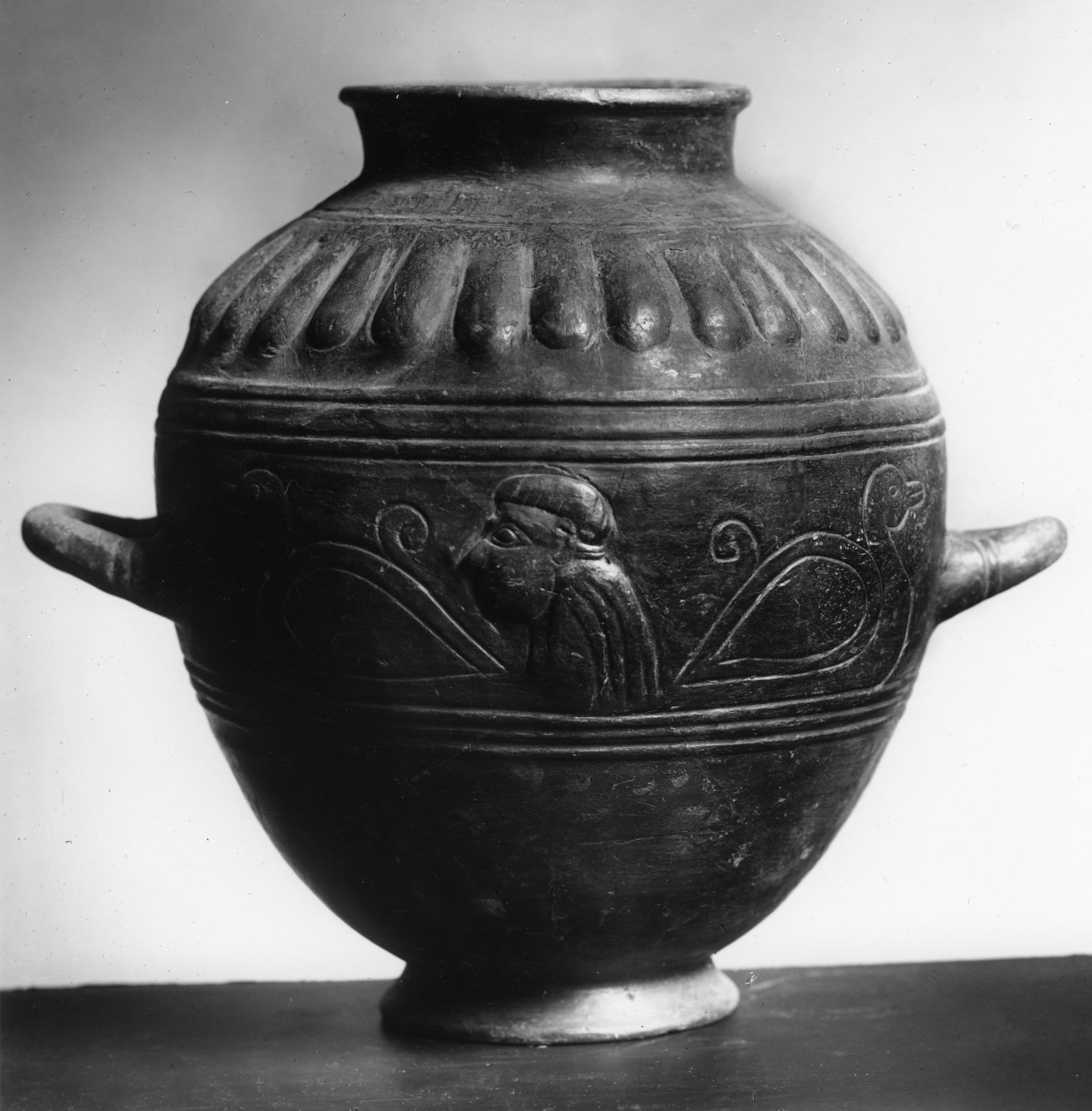
A broad, short-necked storage jar with two small horizontal handles set on the shoulder. Wider than it is tall, with a low centre of gravity. Used for storing wine and other liquids. Often depicted at symposia. Produced mainly in the late 6th–5th centuries BC.
Browse 1273 stamnoi →Hydria
A large water jar with three handles: two horizontal handles on the sides for lifting and carrying when full, and one vertical handle at the back for tilting and pouring. This practical three-handle design is one of the most distinctive in Greek pottery. Hydriai were also used as ballot boxes in Athenian democracy, as burial urns (especially for children), and as prizes in competitions.
Pithos
An enormous storage vessel — the largest of all Greek pottery forms, sometimes exceeding human height. Thick-walled, broad-mouthed, usually partially sunk into the ground for stability. Used for bulk storage of grain, wine, and olive oil. In mythology, it was a pithos (not a box) that Pandora opened.
Pyxis
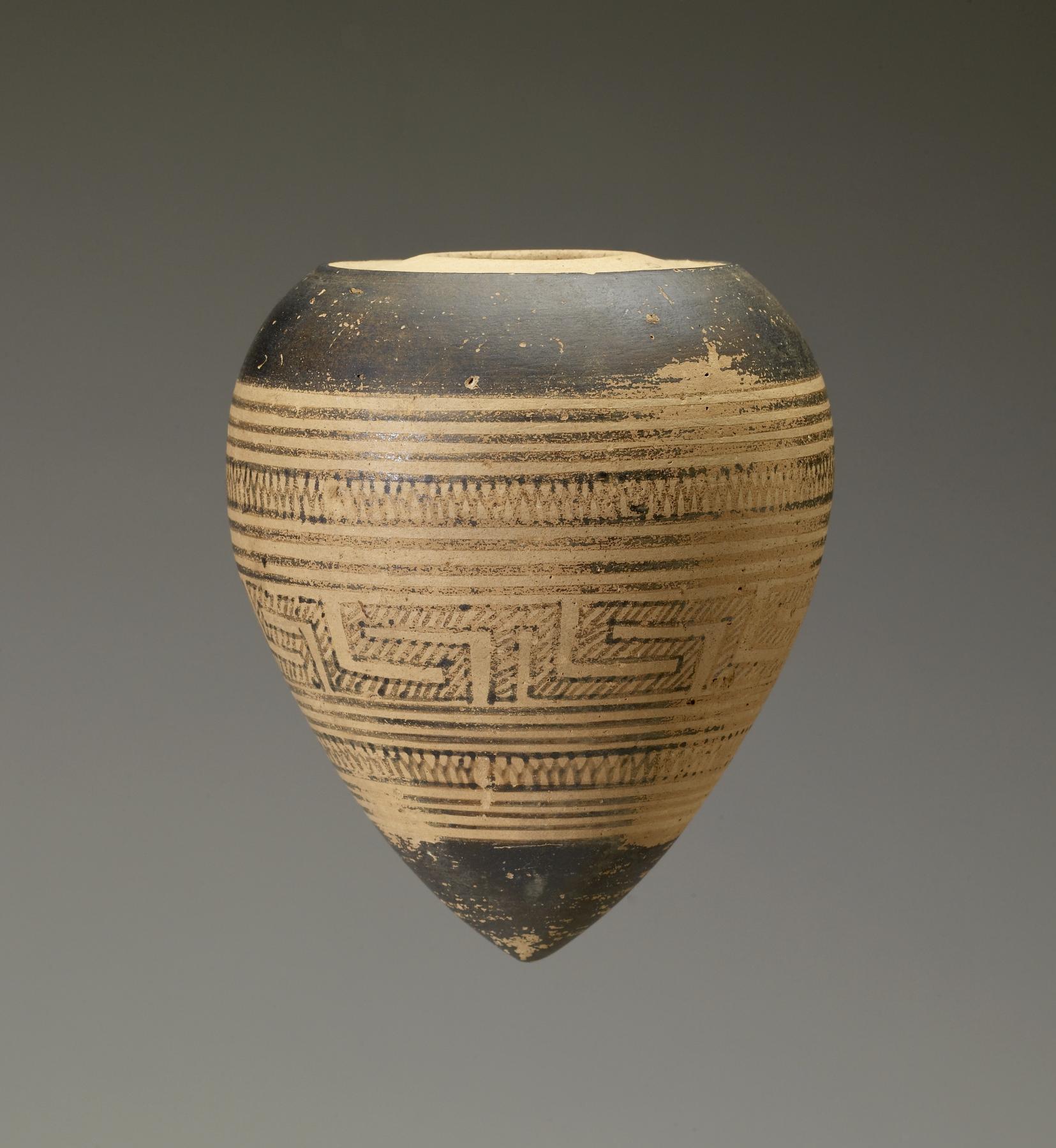
A small cylindrical lidded box, typically owned by women for storing jewellery, cosmetics, or other trinkets. Decoration often depicts women's domestic scenes — the toilette, weddings, or women among themselves. The name derives from boxwood (πύξος), the material from which such containers were originally carved.
Browse 2733 pyxides →II. Mixing Vessels
Krater
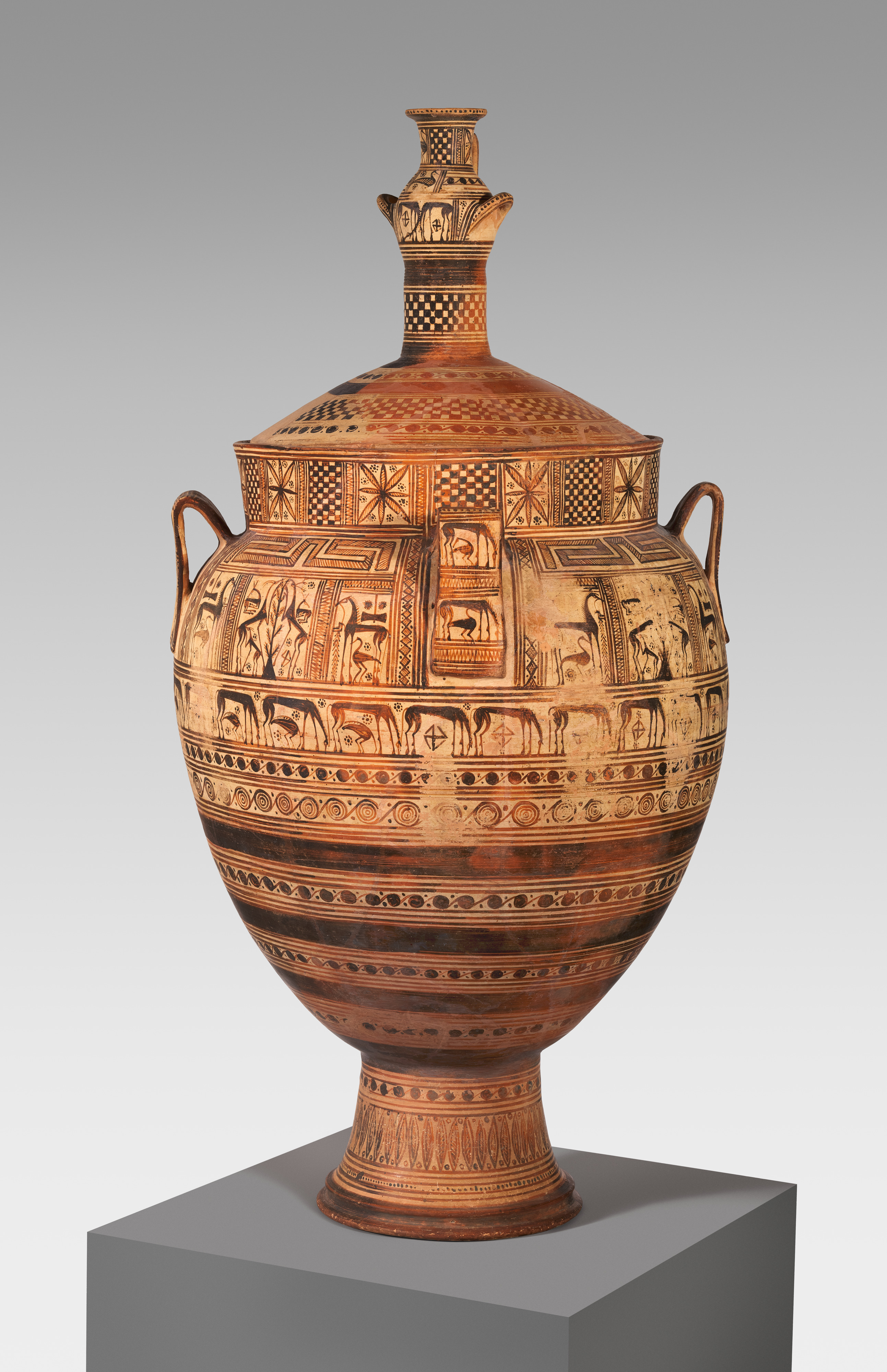
The centrepiece of the symposium. A large, wide-mouthed vessel used to mix wine with water — Greeks considered drinking unmixed wine barbaric; the standard ratio was roughly 3:1 or 5:3 water to wine. The krater was placed in the centre of the room, and the symposiarch controlled the mixture's strength.
Four main sub-types:
- Column krater: The earliest standard type. Named for the columnar handles that rise from the shoulder to a flat, projecting lip. Popular in black-figure.
- Volute krater: Named for handles that curl into scroll-shaped volutes above the rim. The François Vase (c. 570 BC, by Kleitias and Ergotimos) is the most famous early example.
- Calyx krater: The lower body spreads outward like the calyx of a flower. Handles placed low on the body. Almost always red-figure.
- Bell krater: Body shaped like an inverted bell. The latest of the four types, appearing in the early 5th century. Exclusively red-figure.
Dinos
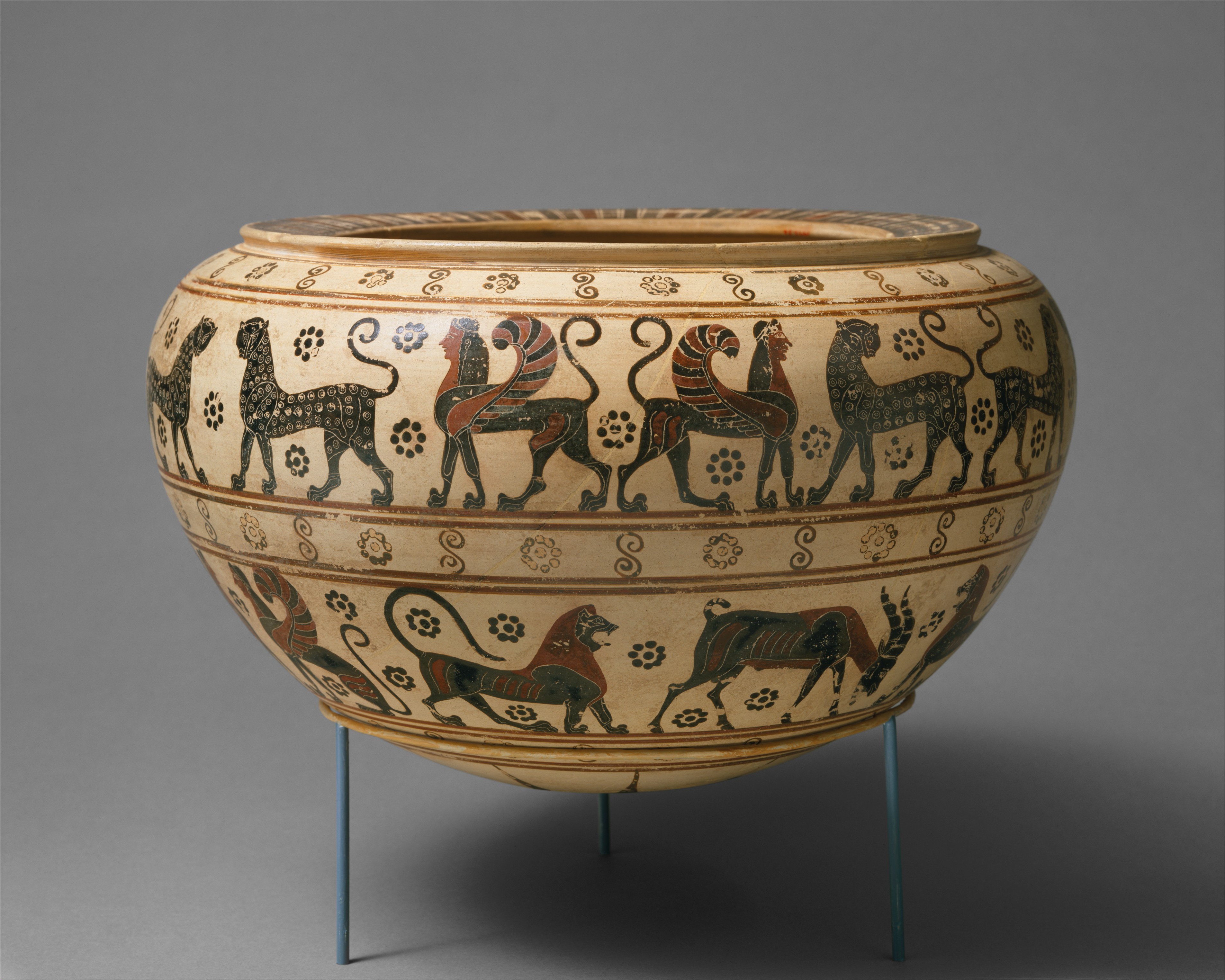
A large, round-bottomed bowl without handles, used like a krater for mixing wine with water. Because it has no base, it required a separate ceramic stand or metal tripod to remain upright. The Sophilos dinos depicting the wedding of Peleus and Thetis (c. 580 BC) is one of the earliest signed works in Greek pottery.
Browse 557 dinoi →Lebes
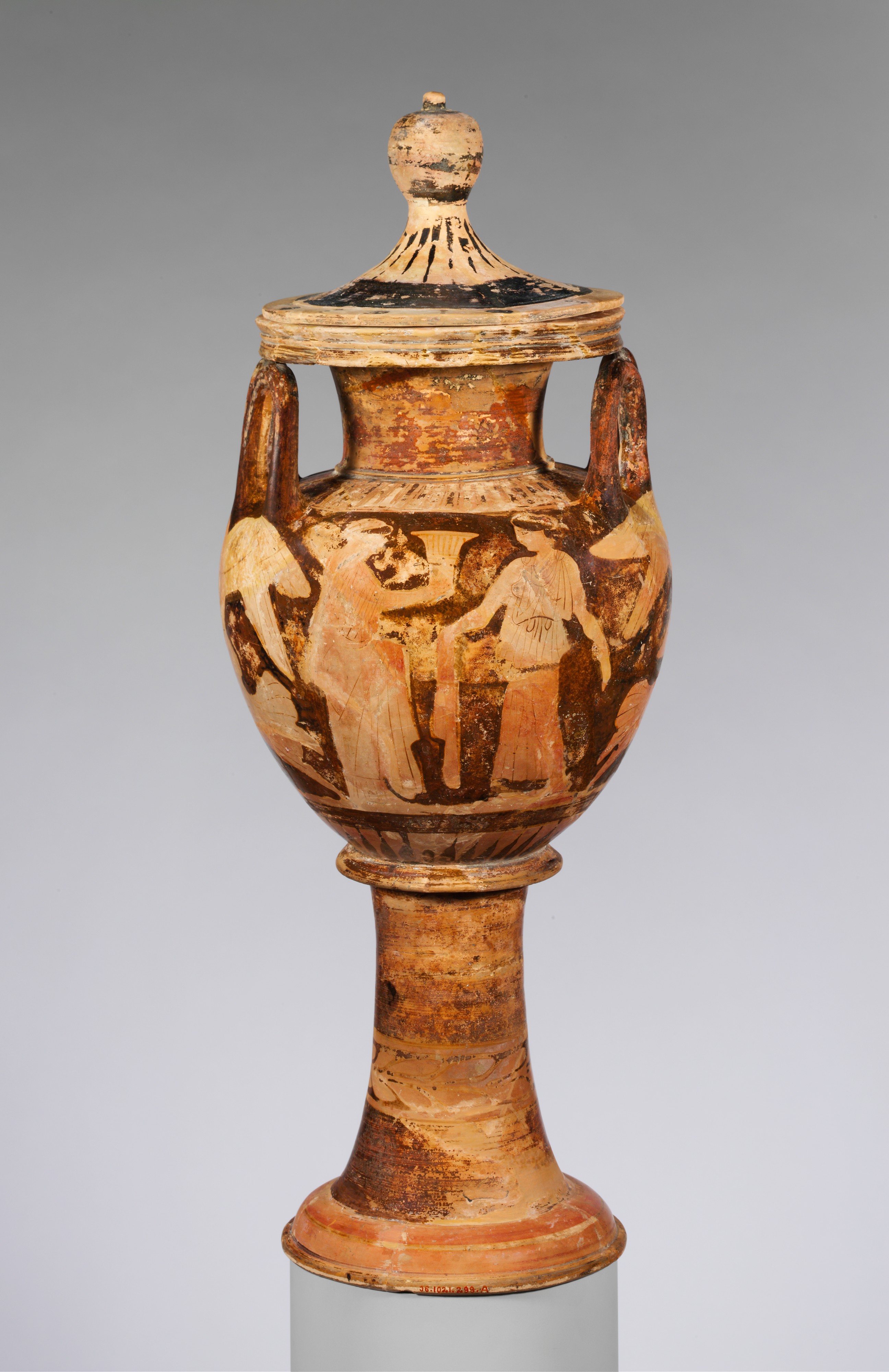
A deep bowl, often with a separate stand. The lebes gamikos (λέβης γαμικός, "marriage lebes") is a distinctive sub-type with two upright handles and often a conical stand and lid. Used in wedding ceremonies — probably for the ritual sprinkling of the bride with water. Scenes painted on lebetes gamikoi typically depict wedding processions and bridal preparations.
Browse 87 lebetes gamikoi →III. Pouring Vessels
Oinochoe

The standard wine jug, used to transfer wine from the krater to drinking cups. A single handle at the back and typically a trefoil (three-lobed) mouth designed as a pouring spout.
The chous (χοῦς) is an important sub-type: a round-bodied oinochoe associated with the Anthesteria festival. Miniature choai were given to children at the age of three, filled with wine, as a rite of passage. The olpe (ὄλπη) is the earliest form, characterised by an S-shaped profile.
Browse 9019 oinochoai →Loutrophoros
A tall, elegant vessel with an elongated neck and two handles, used to carry water for the bridal bath before a wedding. Loutrophoroi also served as grave markers for those who died unmarried — a poignant symbol of the marriage they never had. The shape is distinctive and instantly recognisable by its extreme proportions.
Browse 1138 loutrophoroi →IV. Drinking Vessels
Kylix
The most common Greek drinking cup and one of the most important vessels for vase painting. A broad, shallow bowl raised on a stem from a foot, with two horizontal handles. The broad interior provided a circular field (the tondo) for painting — the image was gradually revealed as the drinker emptied the cup, creating a moment of surprise and conversation at the symposium.
Eyes or Gorgon faces frequently decorated the exterior, transforming the drinker's face into a mask when the cup was raised.
Kantharos
A deep wine cup made distinctive by its high-swung handles, which rise above the rim in an exaggerated loop. Strongly associated with the god Dionysos — he is frequently depicted holding one. The depth of the bowl suited deep draughts.
Browse 2242 kantharoi →Skyphos
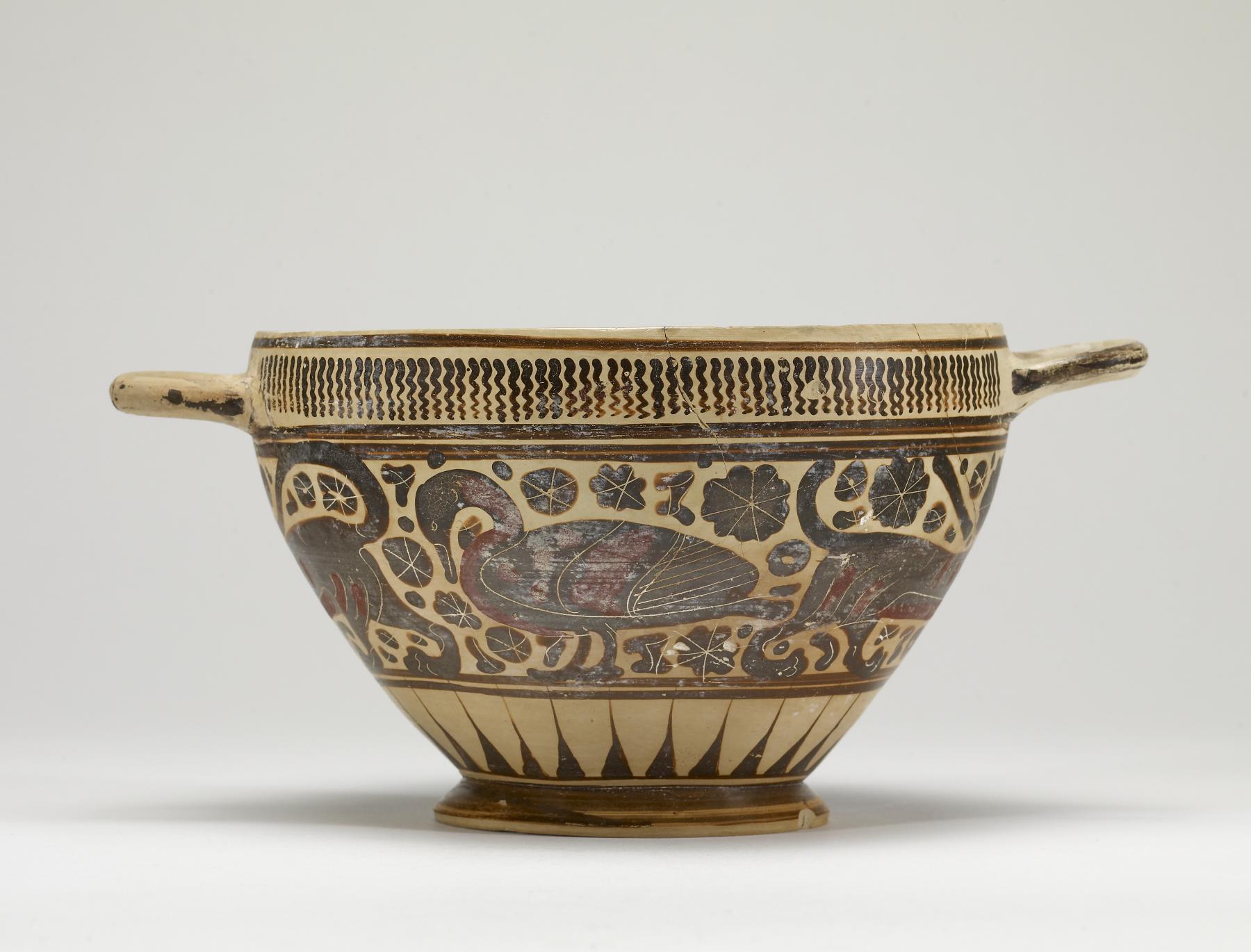
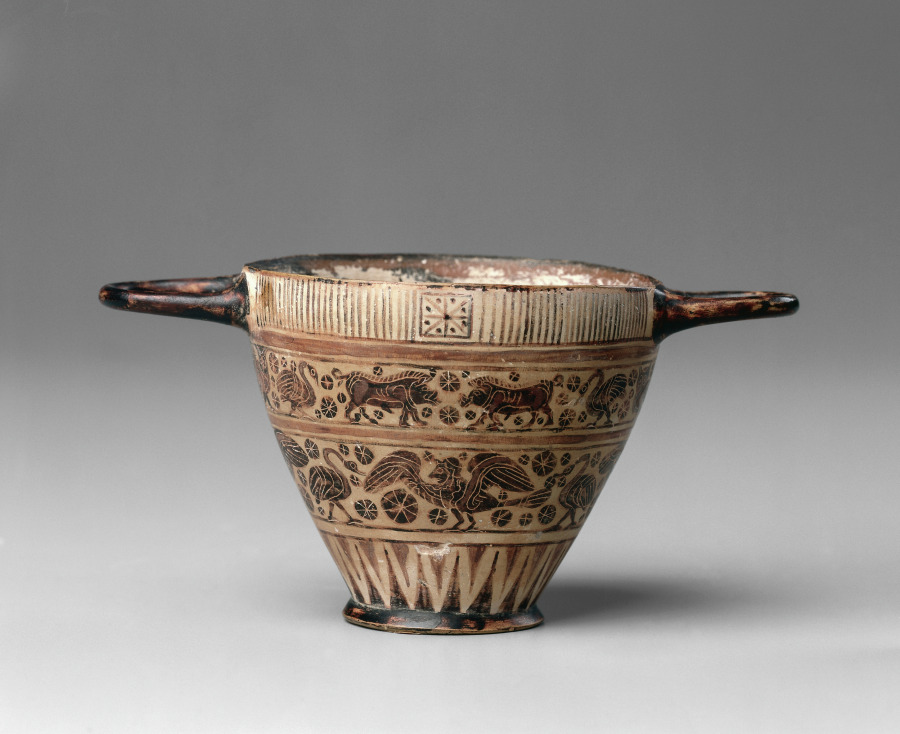
A deep drinking cup with two small horizontal handles near the rim and a low base — closer to a modern mug than the broad, shallow kylix. Pioneered in Corinth during the Geometric period (8th century BC) and remaining in use into the Roman period. Associated with the hero Herakles.
Browse 9688 skyphoi →Rhyton
A drinking vessel in the form of a horn, often terminating in an animal head (ram, bull, donkey, griffin). Some rhyta had a small hole at the tip, allowing wine to be poured through in a stream — creating a theatrical effect at the symposium. Rhyta show strong Near Eastern and Persian influence.
Mastos
A breast-shaped cup with a pointed nipple at the base, making it impossible to set down without spilling — the drinker had to drain it in one go. A playful, symposium-culture novelty.
Phiale
A shallow, handleless libation bowl with a raised boss (omphalos) in the centre of the interior. Used for pouring liquid offerings to the gods. The Greek equivalent of the Roman patera. Frequently depicted in the hands of deities and worshippers.
Browse 493 phialai →Kyathos
A ladle-like cup with a tall, single, looped handle rising well above the rim. Used to scoop wine from the krater and transfer it to drinking cups. Also served as a standard unit of liquid measure.
V. Oils, Perfumes & Cosmetics
Lekythos
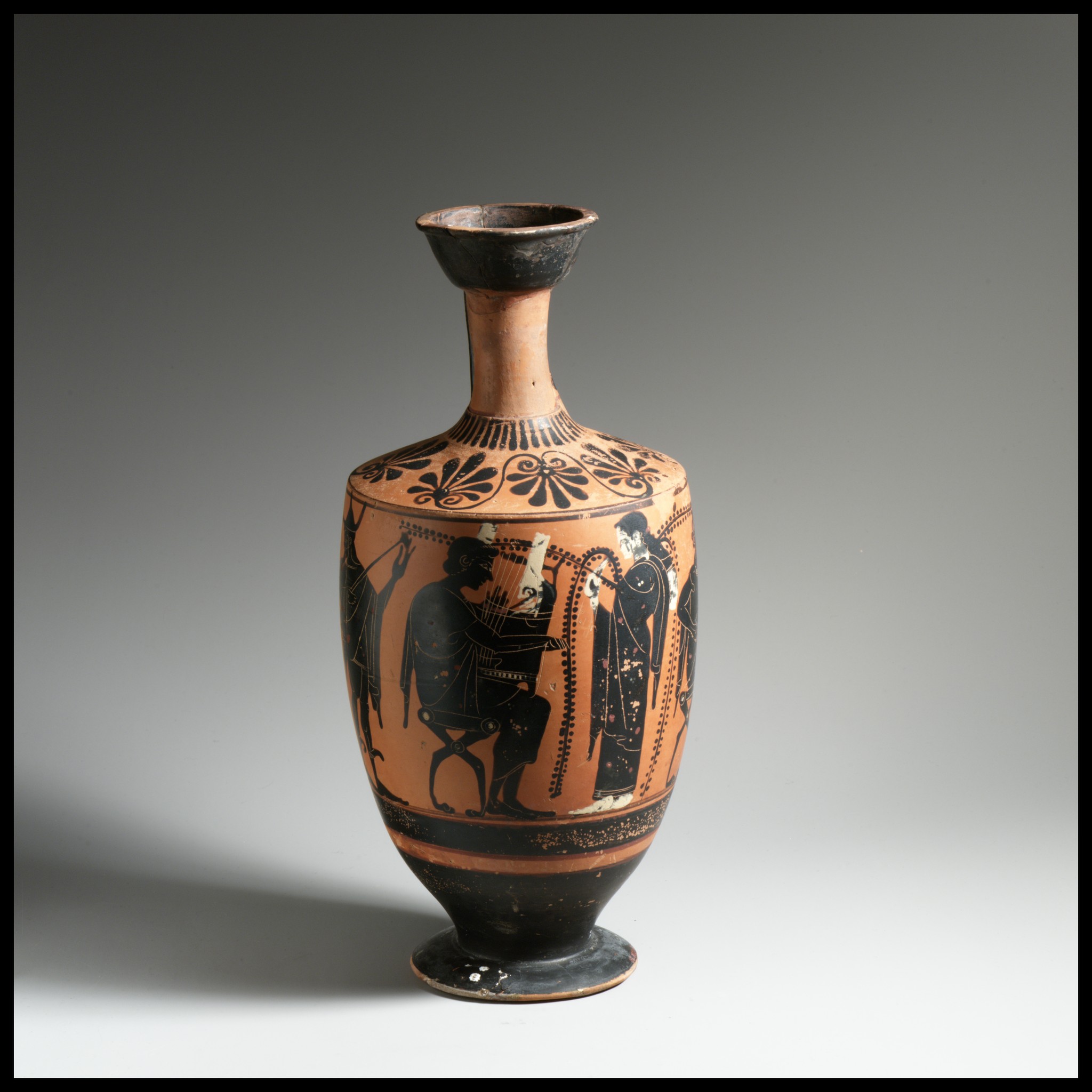
A tall, narrow-bodied vessel with a single handle and narrow neck, used for storing and pouring oil. The narrow neck controlled the flow, preventing waste. The lekythos has strong funerary associations — it was used to anoint the bodies of the dead and was one of the most common grave offerings.
White-ground lekythoi (5th century BC) are among the most beautiful and moving objects in Greek art, painted with delicate, often poignant funerary scenes on a white slip background.
Aryballos

A small, spherical or globular flask with a very narrow neck and wide, flat mouth. Used to hold perfumed oil, especially by athletes — commonly depicted hanging from the wrist by a cord at the palaistra, alongside a strigil. Often among the smallest decorated Greek vessels.
Browse 2231 aryballoi →Alabastron
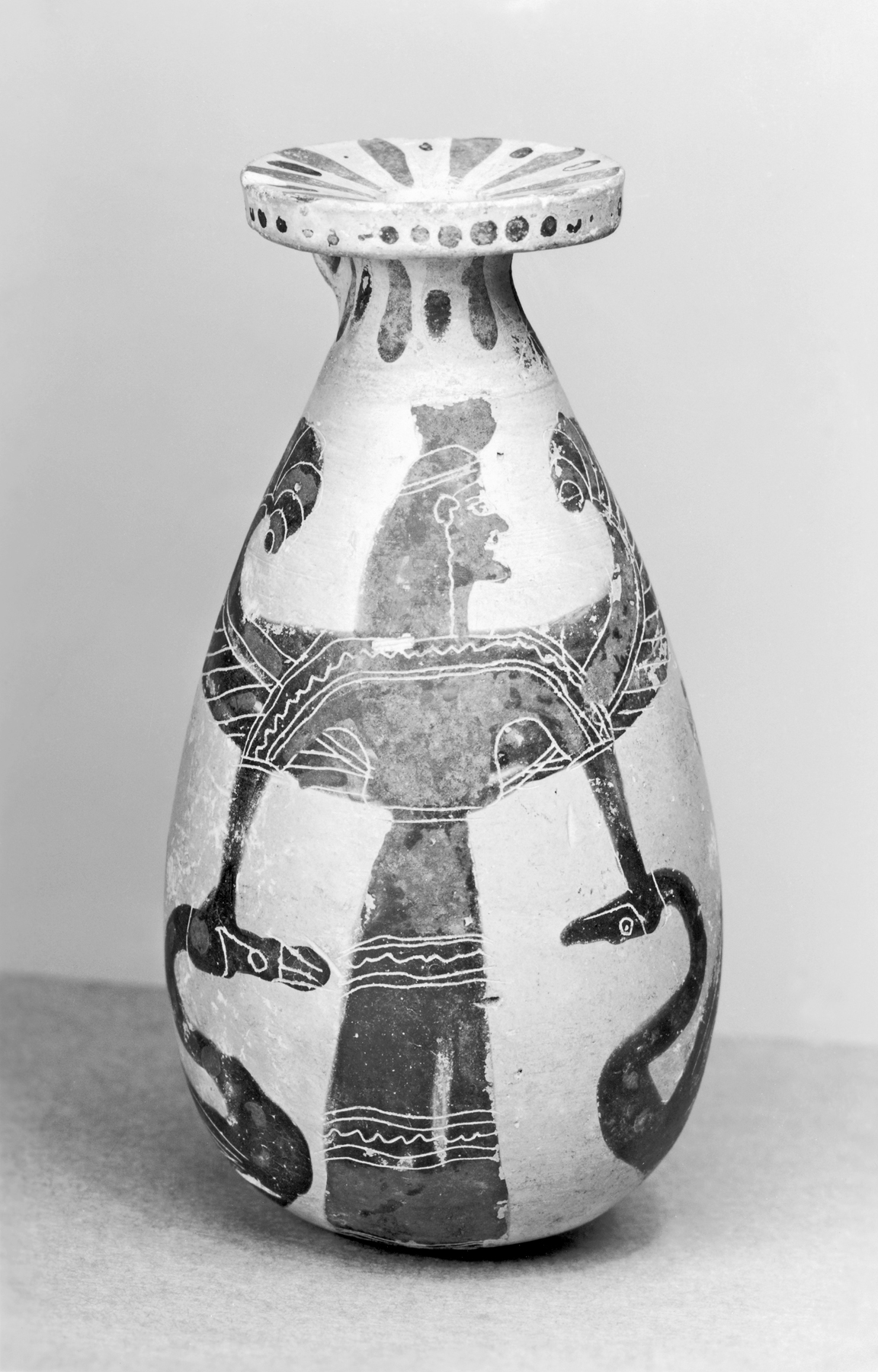
A slender, elongated flask with a narrow body, narrow neck, and a broad, flat rim. Originally an Egyptian form carved from alabaster. The shape was ideal for aromatic oils; the narrow aperture limited evaporation. Typically associated with women — frequently depicted in scenes of the feminine toilette.
Browse 2256 alabastra →Askos
Named for the wineskin it resembles: a low, squat vessel with an arched handle over the top and a small spout. The restricted opening suggests it was used for dispensing liquids in small, controlled quantities — fine oil, vinegar, or honey.
Exaleiptron
A vessel for storing fine oil or perfume, with a distinctive inverted lip designed to prevent spillage. Usually lidded. Depicted in scenes of women bathing or during funerary rites.
VI. Specialist & Ritual Vessels
Psykter

A distinctive mushroom-shaped vessel used as a wine cooler. The bulbous body sits on a tall, narrow foot. The psykter was placed inside a krater filled with cold water, cooling the wine within. The short production run (late 6th to mid-5th century BC) makes surviving examples relatively rare.
Painters exploited the shape creatively: because the psykter sat half-submerged, they painted continuous scenes around the body that appeared to bob and move as wine was ladled from the krater.
Browse 139 psykters →Kernos
A pottery ring with multiple small attached vessels, each designed to hold a different offering. Used in religious rituals, particularly cults of Demeter and Kore (Persephone). Each small cup might contain grain, oil, honey, wine, or other offerings. An unusual and distinctive ritual form.
VII. Minor & Less Common Forms
Epichysis
A small jug for pouring liquids, often with a long spout. Less common than the oinochoe.
Guttus
A small vessel with a narrow spout for dispensing oil drop by drop — for refilling lamps or for precise application. Latin name used conventionally.
Lekanis
A shallow dish with a foot, two horizontal handles, and a single-handled lid. The lid could be inverted to serve as a second dish. Used for storing small articles and for serving food.
Fish Plate
A flat dish with a short foot and a central depression to collect excess oil, used for serving fish and seafood. Produced from the 4th century BC onward, popular in both Attica and Magna Graecia. Usually decorated with fish and marine life.
VIII. Anatomy of a Greek Vase
- Mouth / Lip — The top edge. May be flared, offset, rolled, or trefoil (three-lobed, as on oinochoai).
- Neck — The section between the mouth and the shoulder. May be absent (open forms like kraters) or very elongated (loutrophoroi).
- Shoulder — The widest upper section where the body begins to curve outward.
- Body / Belly — The main section. Its profile — ovoid, spherical, conical, bell-shaped — is the primary distinguishing feature.
- Handles — Vertical (amphorae, lekythoi), horizontal (kylikes, skyphoi), or looped (kantharoi). Handle form is often the key to sub-type identification.
- Foot — The base. May be a disk, stepped profile, ring, or absent altogether.
- Tondo — The circular interior field of a kylix. A prized area for painting.
IX. Shape & Dating
Shapes evolved over time, and these changes are one of the primary tools for dating unpainted pottery. General trends from the Archaic into the Classical period include:
- Bodies becoming slimmer and more elongated
- Feet becoming more refined (from heavy disk bases to elegant stepped or ring feet)
- Handles becoming more refined and thinner
- Proportions shifting — necks lengthening, bodies narrowing
These gradual shifts mean that an experienced eye can often date a vessel to within a generation from its shape alone, even without painted decoration.
X. Shape, Function & the Symposium
Understanding vase shapes means understanding the symposium — the male drinking party that was central to aristocratic Greek social life. The shapes form a functional chain:
- Wine stored in amphorae or pelikai
- Mixed with water in the krater (the centrepiece)
- Cooled in the psykter (placed inside the krater)
- Ladled out with the kyathos
- Poured into cups via the oinochoe
- Drunk from kylikes, skyphoi, or kantharoi
Each vessel in the chain has its own decorative tradition — kraters received grand mythological scenes befitting their central position, while kylikes offered intimate tondo paintings revealed only to the individual drinker.
See also: How Ancient Vases Were Made — the journey from clay pit to customer.
References & Further Reading
- Richter, G.M.A. The Shapes and Names of Athenian Vases (1935)
- Boardman, J. Athenian Black Figure Vases (1974)
- Boardman, J. Athenian Red Figure Vases: The Archaic Period (1975)
- Boardman, J. Athenian Red Figure Vases: The Classical Period (1989)
- Boardman, J. Early Greek Vase Painting (1998)
- Clark, A. Understanding Greek Vases (J. Paul Getty Museum, 2002)