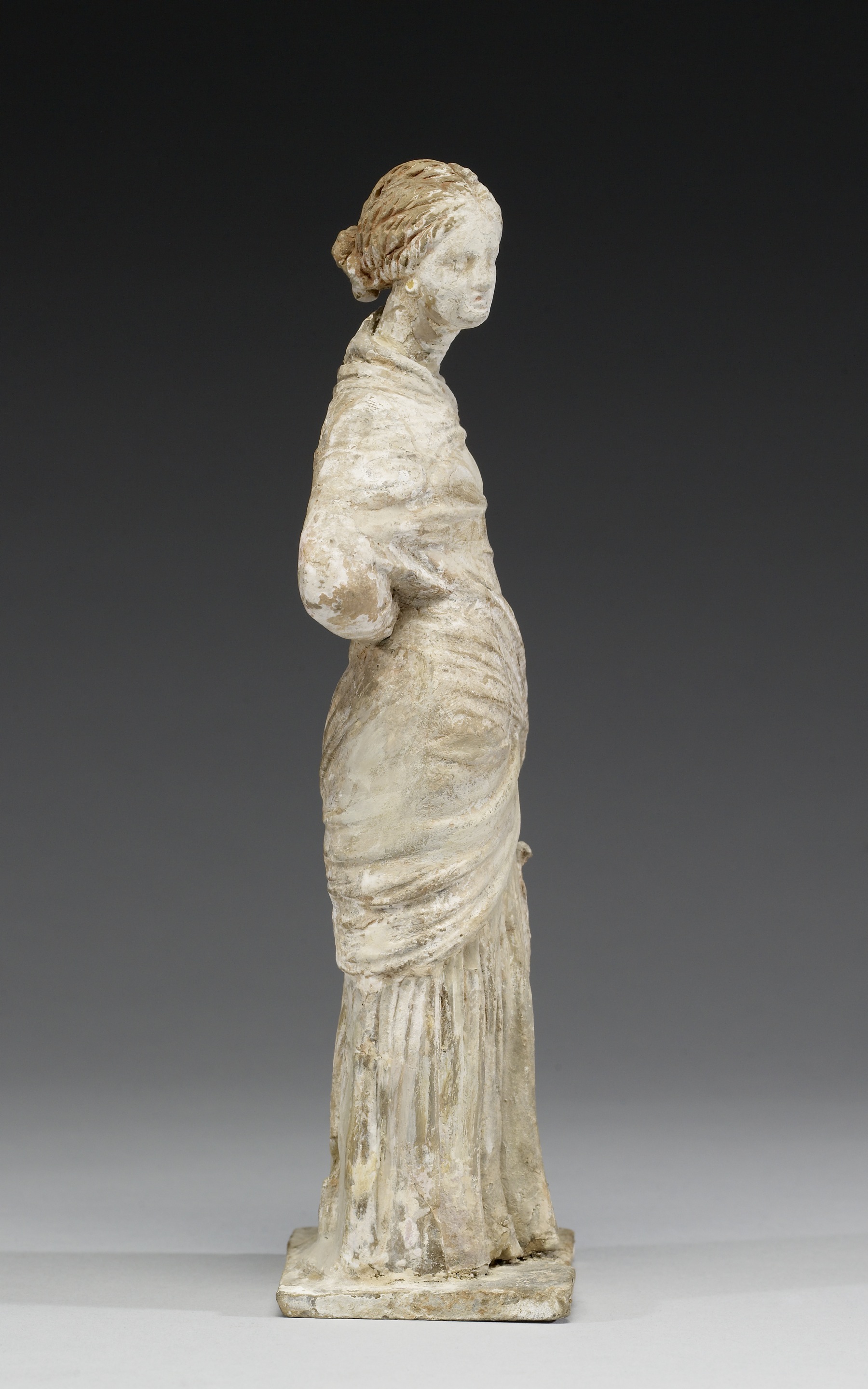
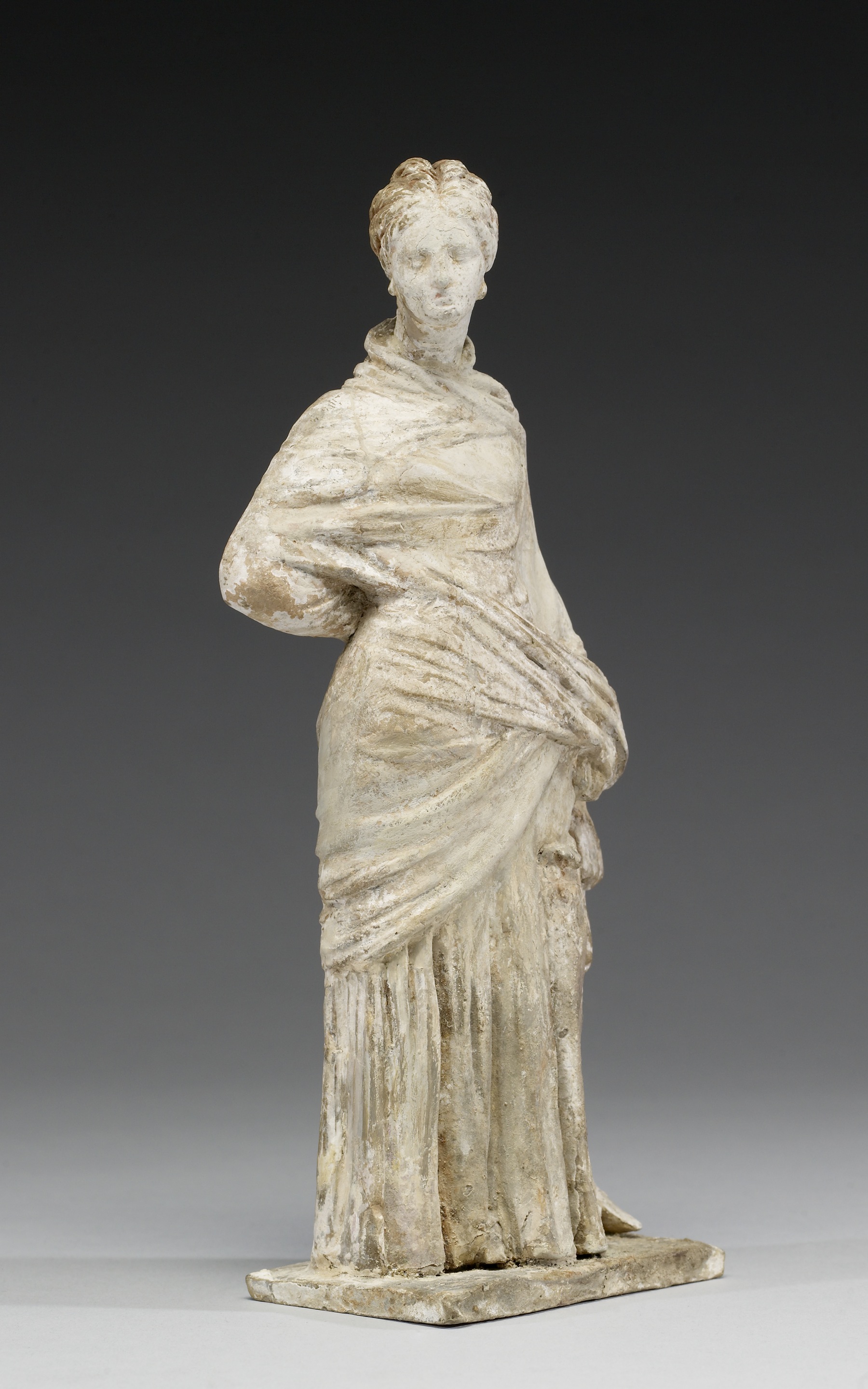
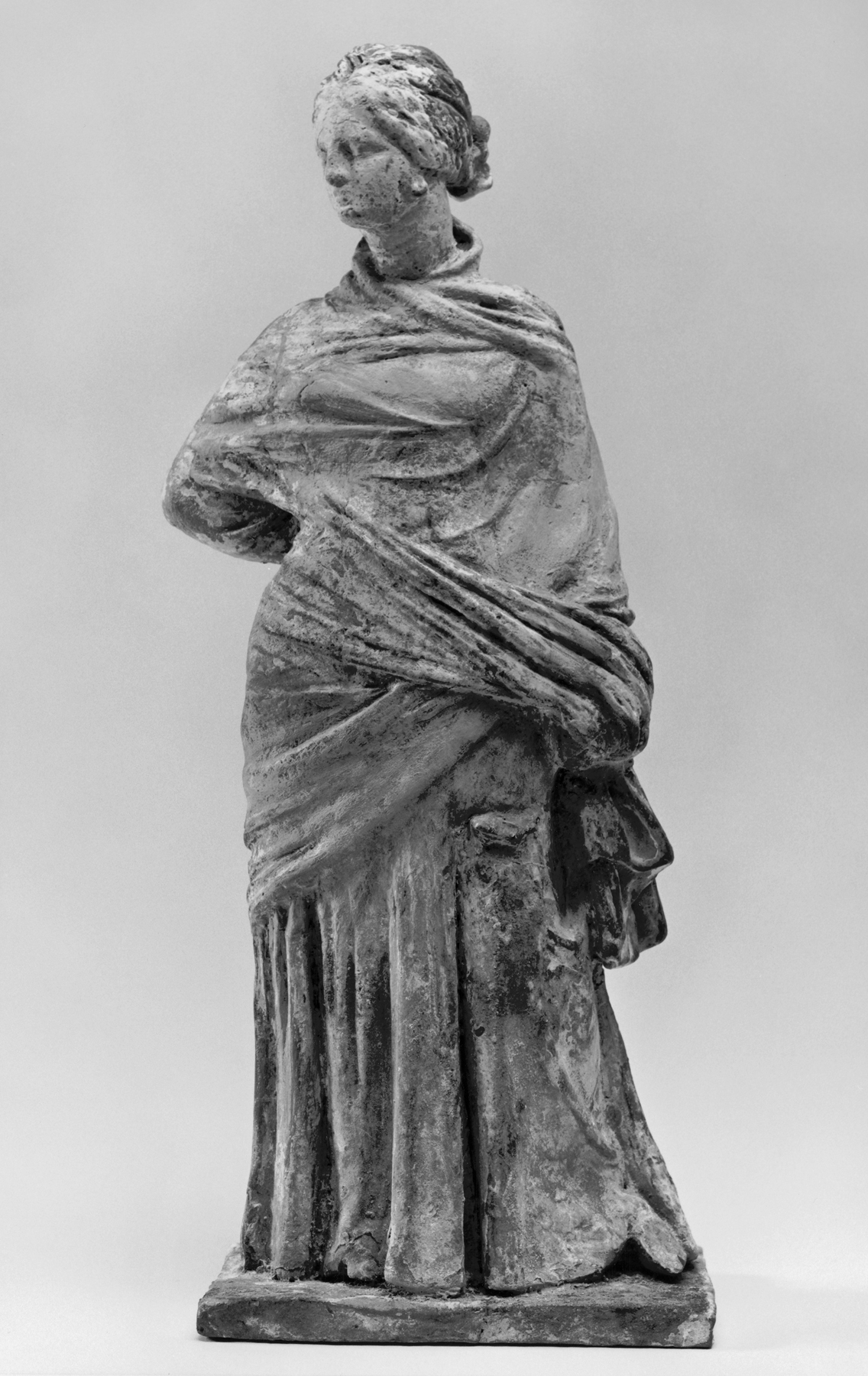
Standing Draped Woman
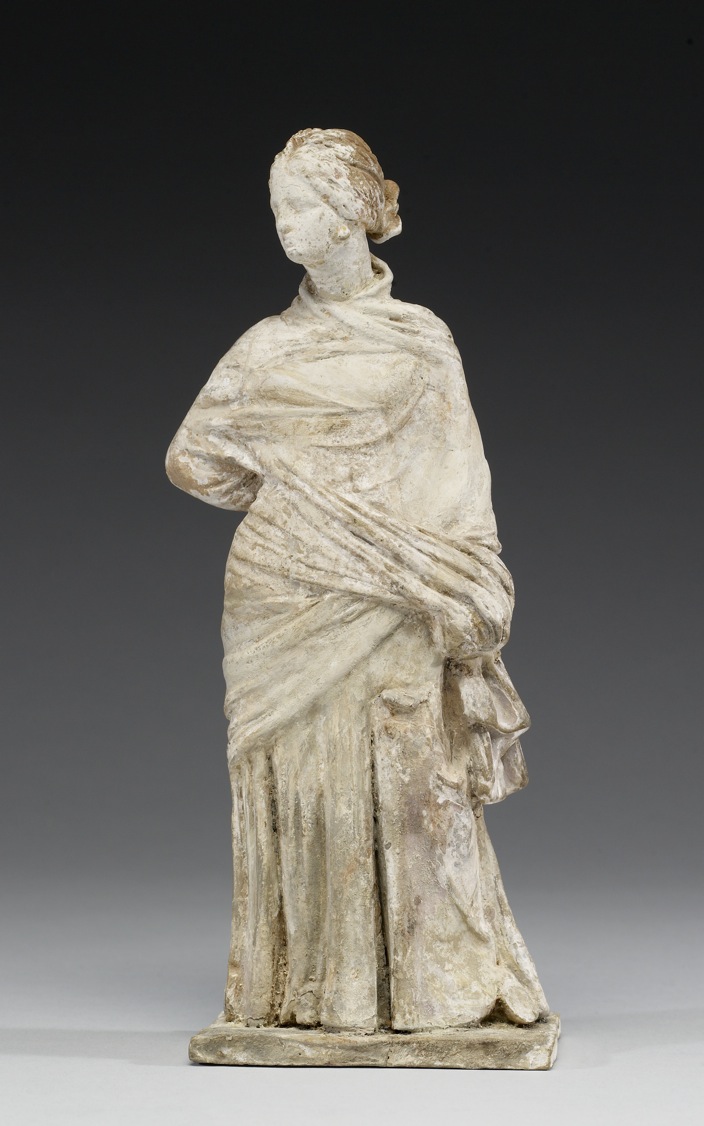
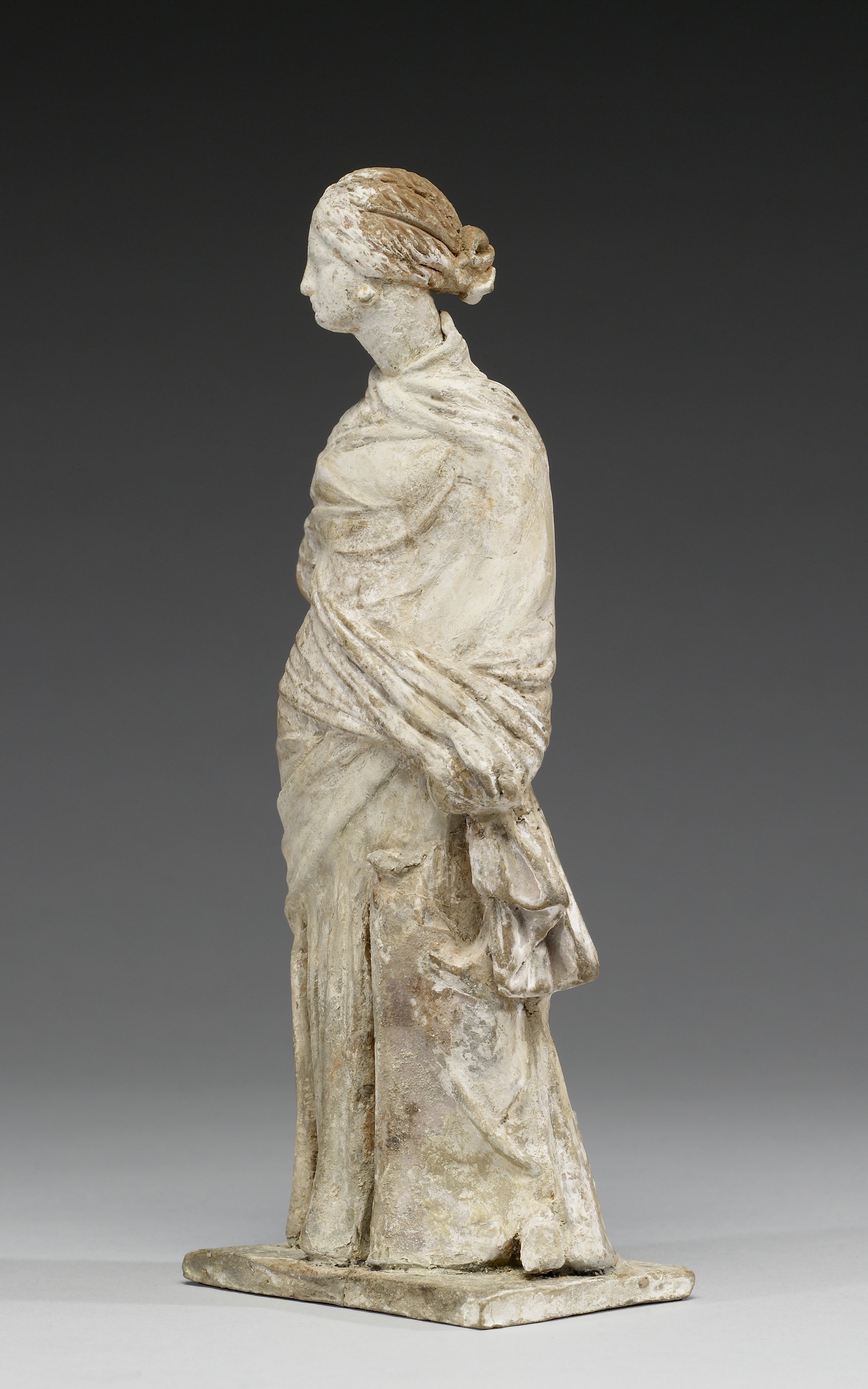
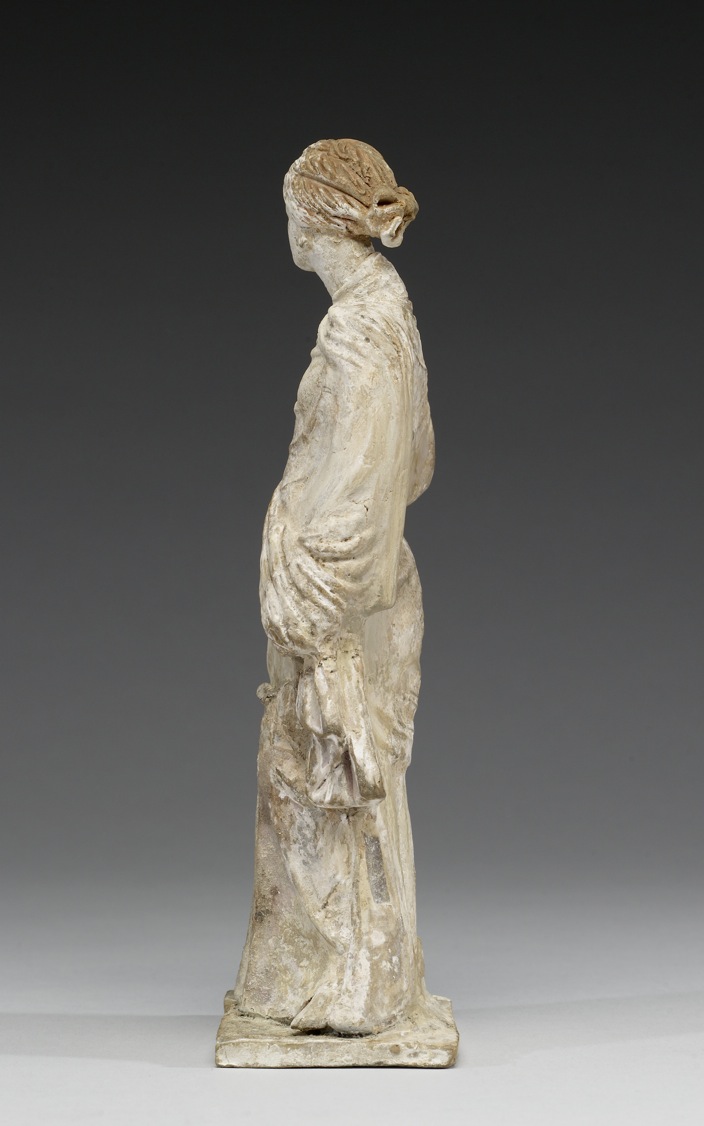
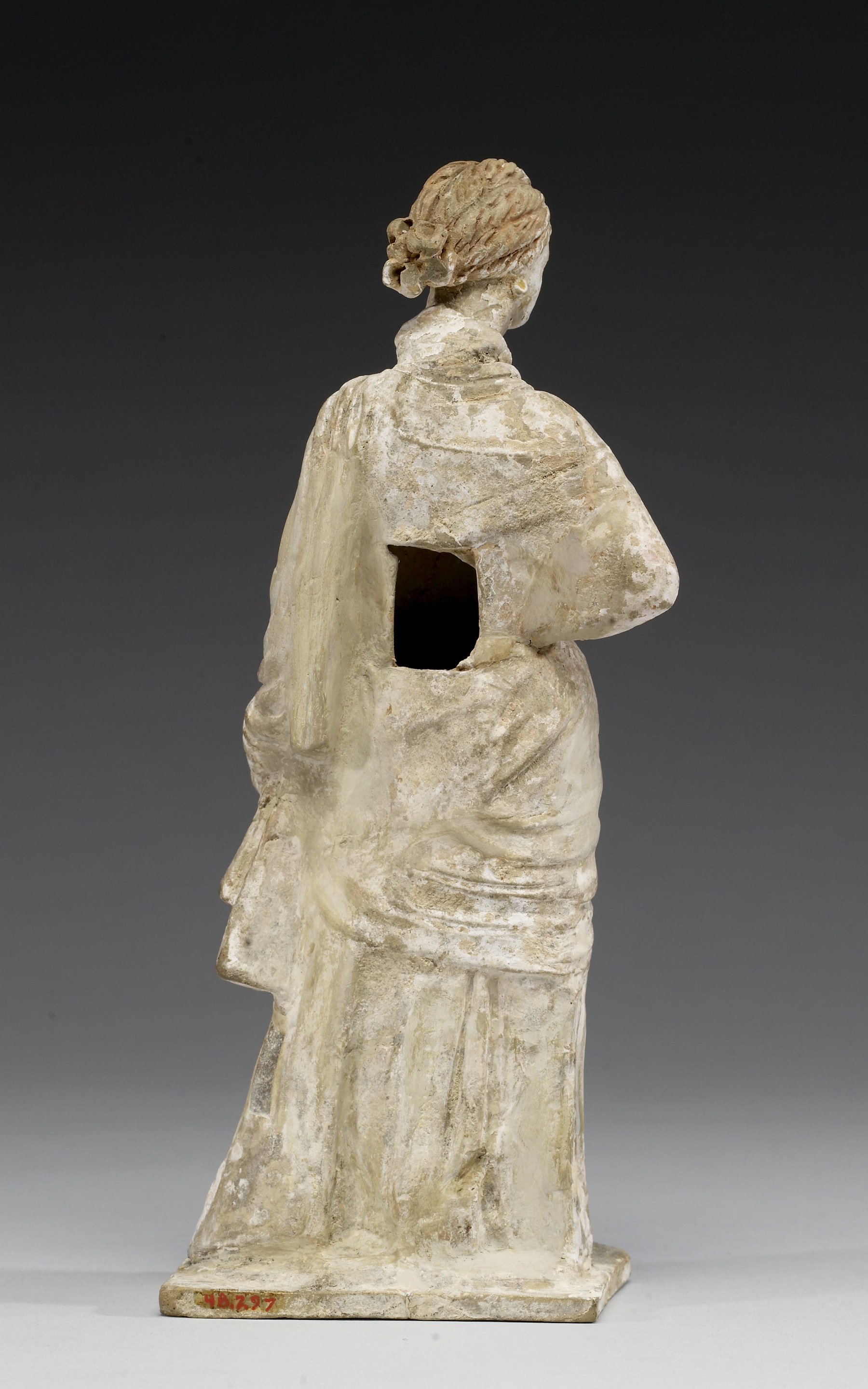
A voluminous himation (mantle) conceals the upper body of this standing woman but also accentuates her dynamic pose, with one arm placed behind her back and one hip jutting out, evoking the curving stances of large-scale sculpture produced in the Hellenistic period. Under the mantle, she wears a long peplos or chiton, the vertical folds of which contrast to the horizontal and diagonal folds of the mantle. While the statuette is modeled in the round, the drapery is more schematic and flatter on the back. White paint survives on her face and drapery, while her elaborate coiffure was painted brown. When purchased, this piece was reconstructed holding a fan in its left hand, which has since been removed. Although generally referred to as Tanagra figurines after the most famous findspot, Tanagra (modern Schimatari) in Boeotia, Greece, statuettes of this type have been found at other sites in the ancient world, including Myrina and Smyrna (modern Izmir) in Asia Minor. The most common forms of the statuettes depict young women sitting, standing, or in the process of graceful movement, but there are also examples showing men or children. The statuettes were used as grave offerings, votives, decorative objects, and perhaps toys. The hair, clothing, skin, and jewelry of the pieces were originally painted, although most of the colors are presently faded.For the latest information about this object, Standing Draped Woman, visit the Online Collection of the Walters Art Museum.
Images courtesy of The Metropolitan Museum of Art (CC0)