
Geometric Pyxis Lid
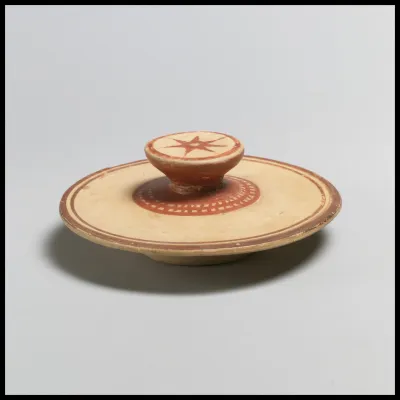
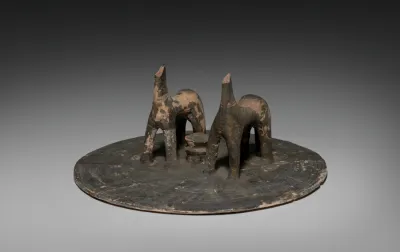
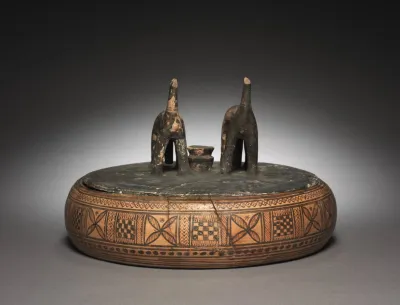
Three small terracotta horses decorate a lid that once belonged to a Geometric pyxis. The horses appear to wear harnesses and may represent a chariot team. Horses were expensive to maintain, requiring extensive land and upkeep. They therefore became symbols of aristocratic wealth and power in Greece in the mid-600s B.C.
Pyxides are terracotta vessels that were used to hold jewelry, cosmetics, and other small items. Although usually found in graves, the fact that some were repaired shows that they were also used in life. Pyxides with horses decorating their lids appear to be an Athenian invention that began around 900 B.C. and reached a peak of popularity around 750 B.C. The number of horses on the lid could vary from one to four. Stylistic features indicate that this example, however, was made not in Athens but in Boeotia, to the north.
Pyxides are terracotta vessels that were used to hold jewelry, cosmetics, and other small items. Although usually found in graves, the fact that some were repaired shows that they were also used in life. Pyxides with horses decorating their lids appear to be an Athenian invention that began around 900 B.C. and reached a peak of popularity around 750 B.C. The number of horses on the lid could vary from one to four. Stylistic features indicate that this example, however, was made not in Athens but in Boeotia, to the north.
Images courtesy of The Metropolitan Museum of Art (CC0)