
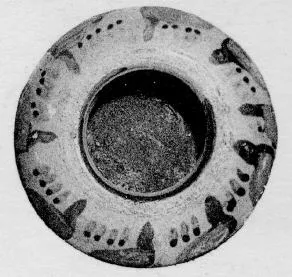
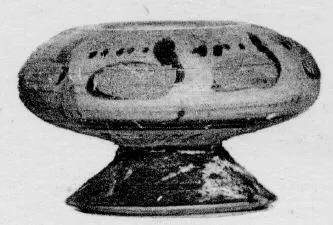
Pyxis (Container for Personal Objects)
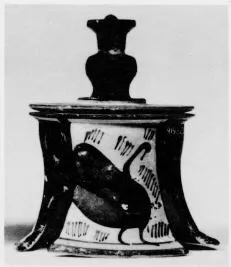
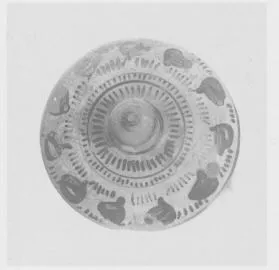
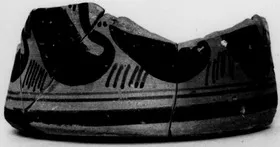
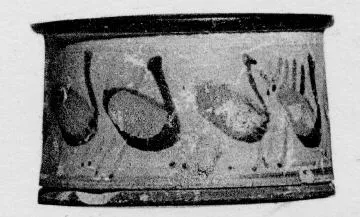
Located on the narrow isthmus that joins the Greek mainland and the Peloponnese, with natural harbors facing east and west, Corinth was the major port of trade in Greece for most of the Archaic period (700–480BC). Producers exported scented oil around the Mediterranean in terra-cotta containers that survive today in the thousands. Around the time that this jar was made, Egypt’s king, Amasis (r. 570–526 B.C.), in the interest of trade, gave the Greeks the Egyptian port city of Naucratis, where Greek and Egyptian cultures mingled. The small sphinx on this jar is indicative of this cultural encounter, as Greeks would have been familiar with the part human, part-lion creatures, which lined the entryway to most Egyptian temples. Including a sphinx on this jar added a touch of the exotic East, which would have appealed to the citizens of Corinth. The identities of most Greek vase painters are unknown, so sometimes they are named after a distinctive feature. The artist who decorated this container is called the Ampersand Painter because here and elsewhere the looping tail of the sphinx (a winged feline with a human head) takes the shape of an ampersand, the proper name for the symbol &, which is shorthand for the word "and".
Images courtesy of The Metropolitan Museum of Art (CC0)