Rhyton with the Forepart of a Horse
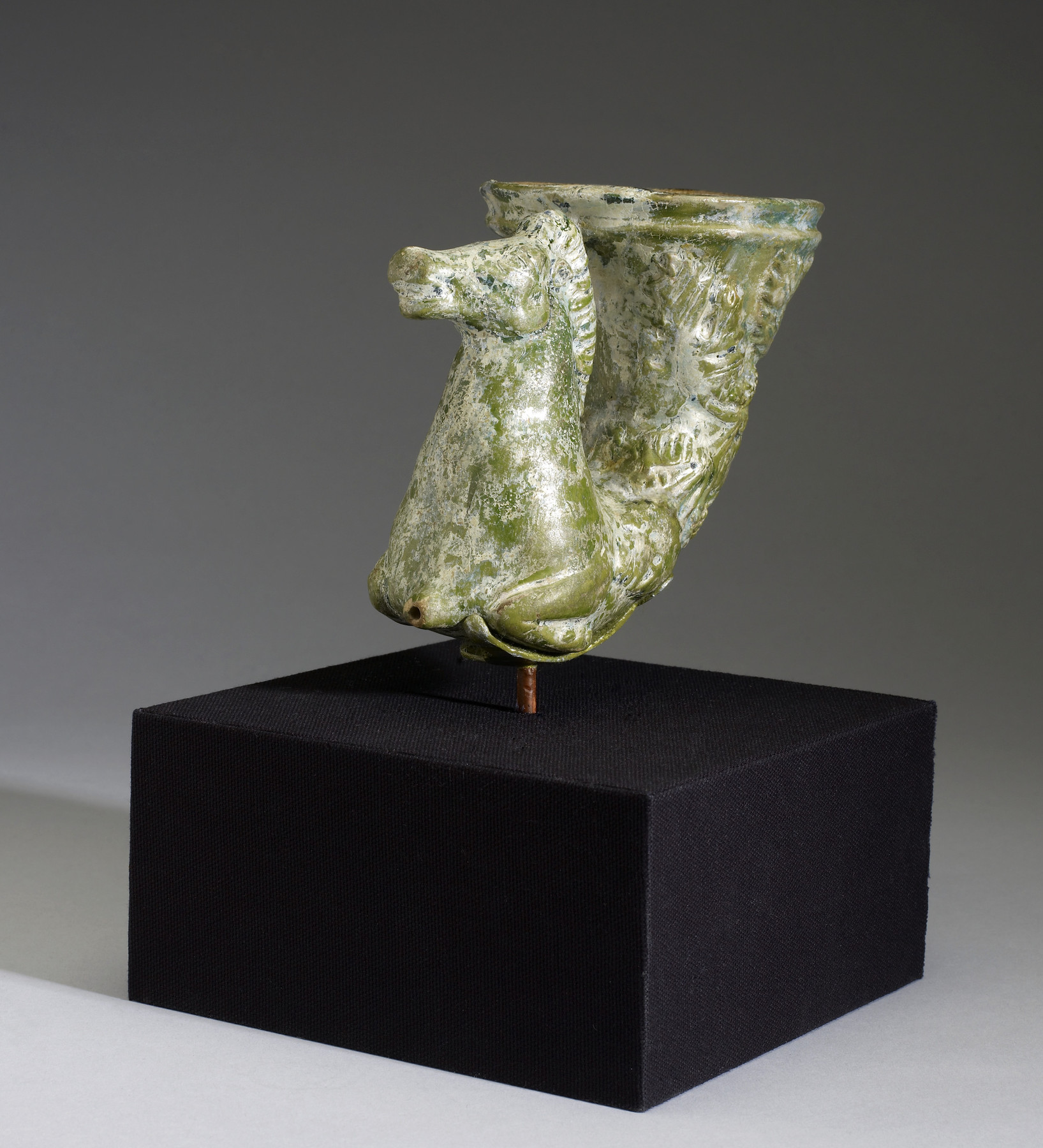
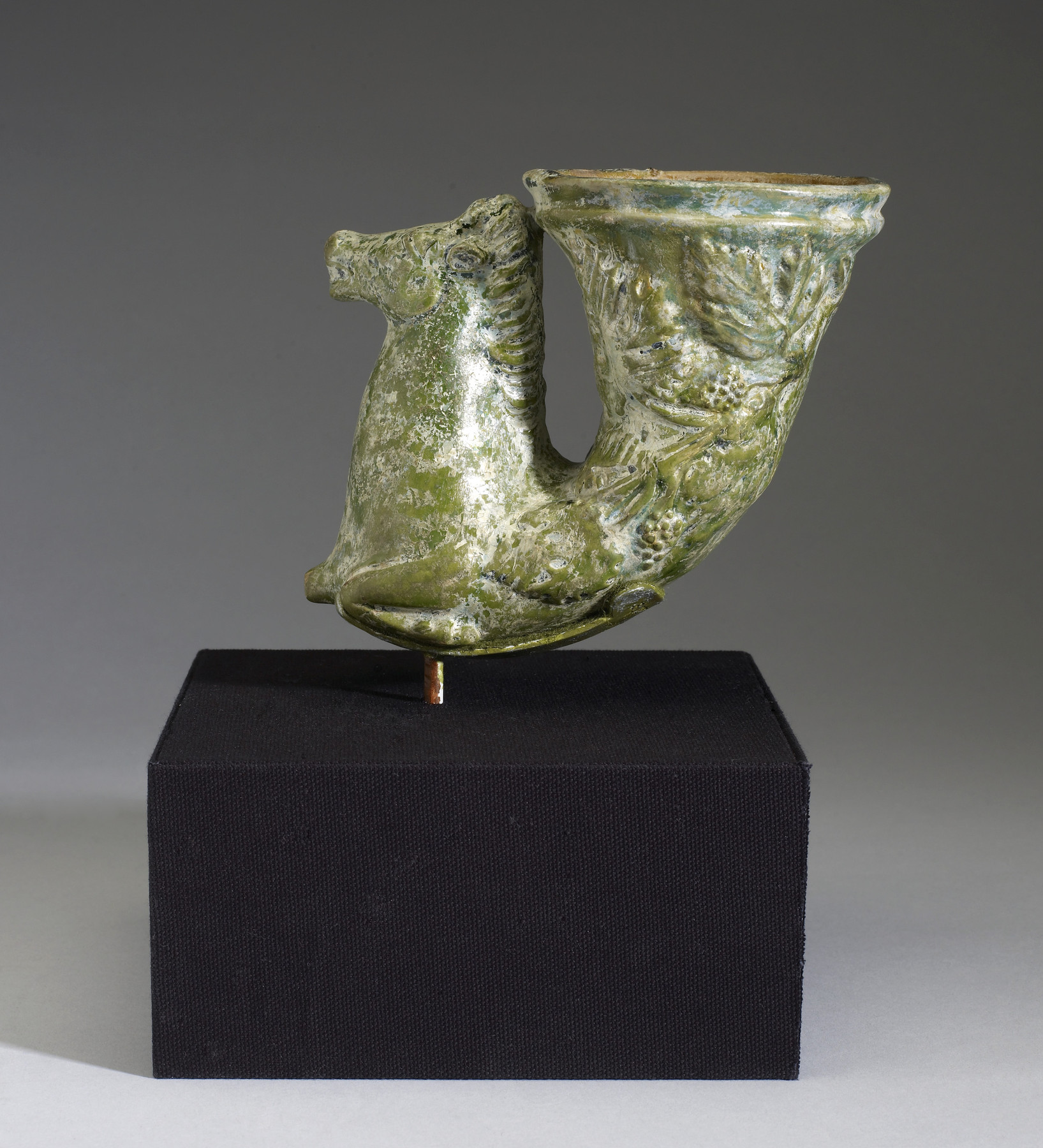
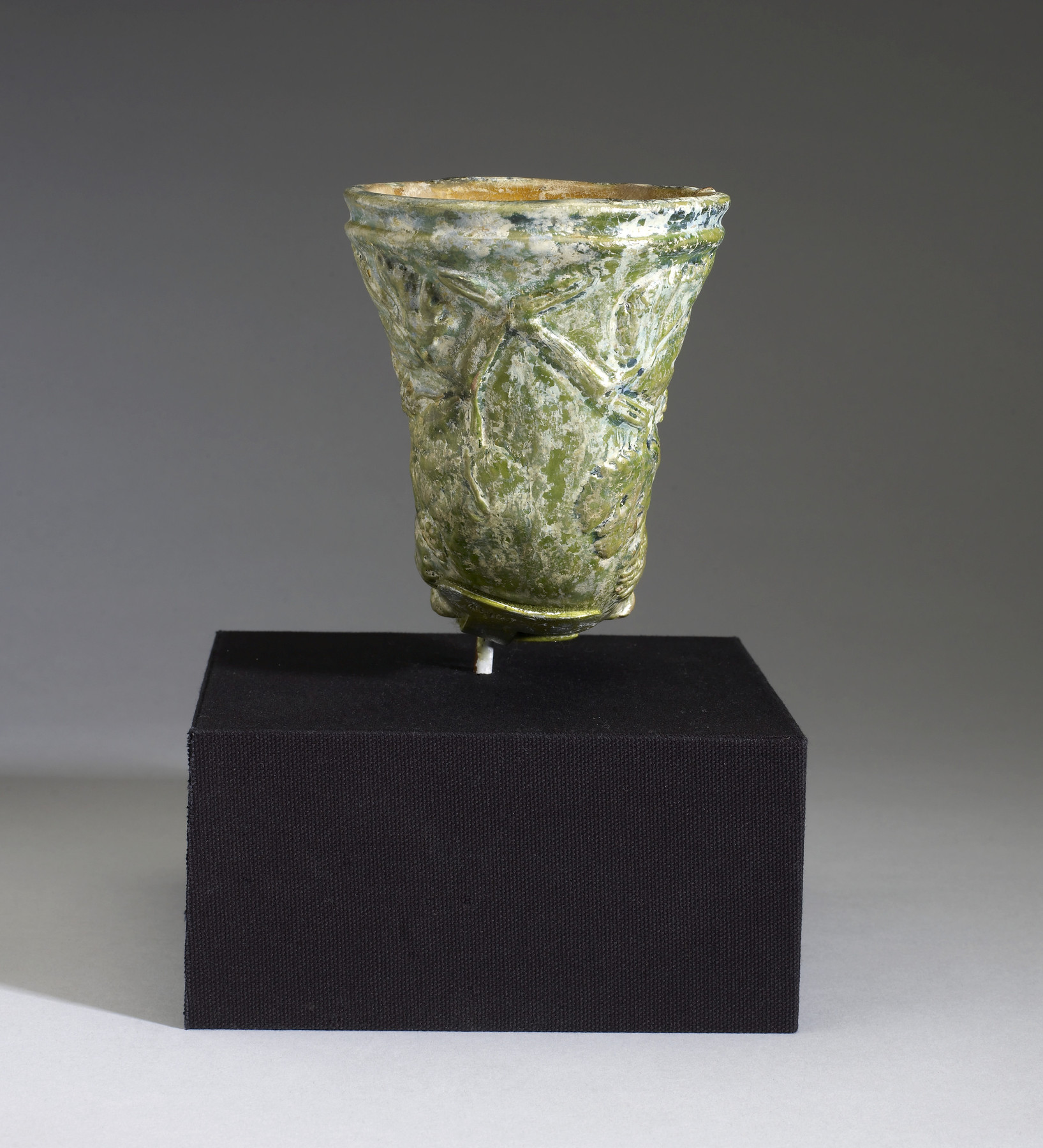
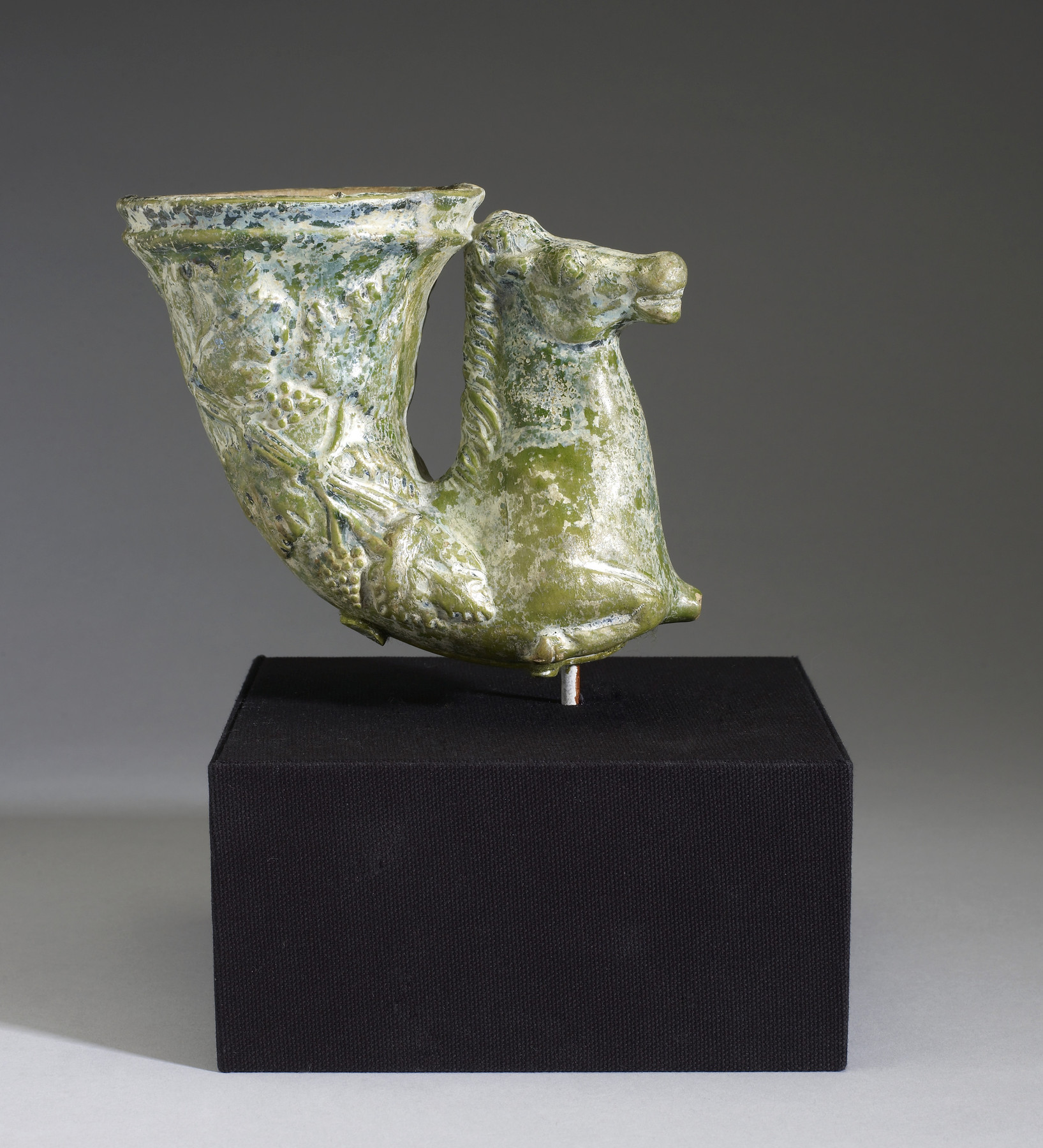
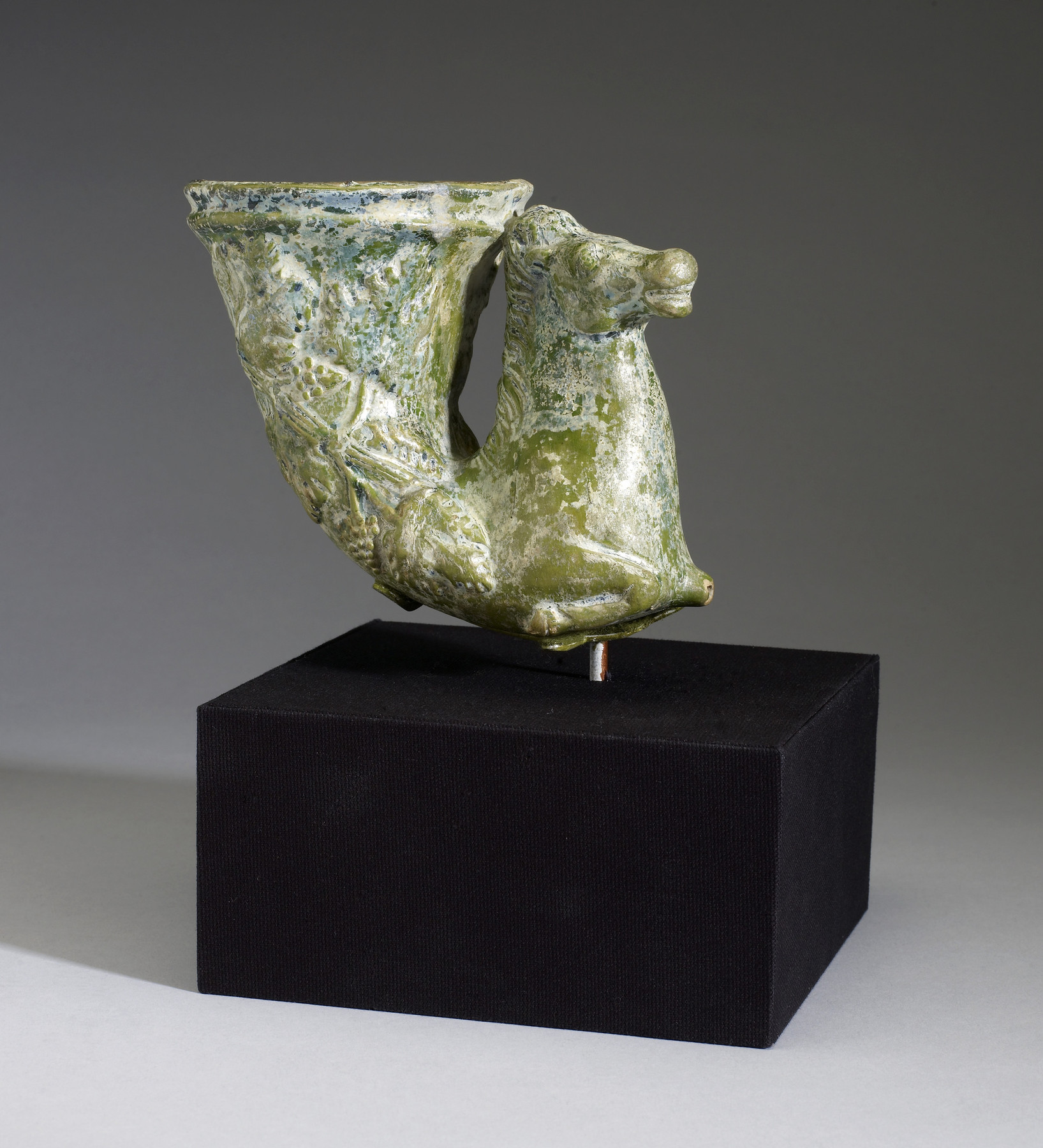
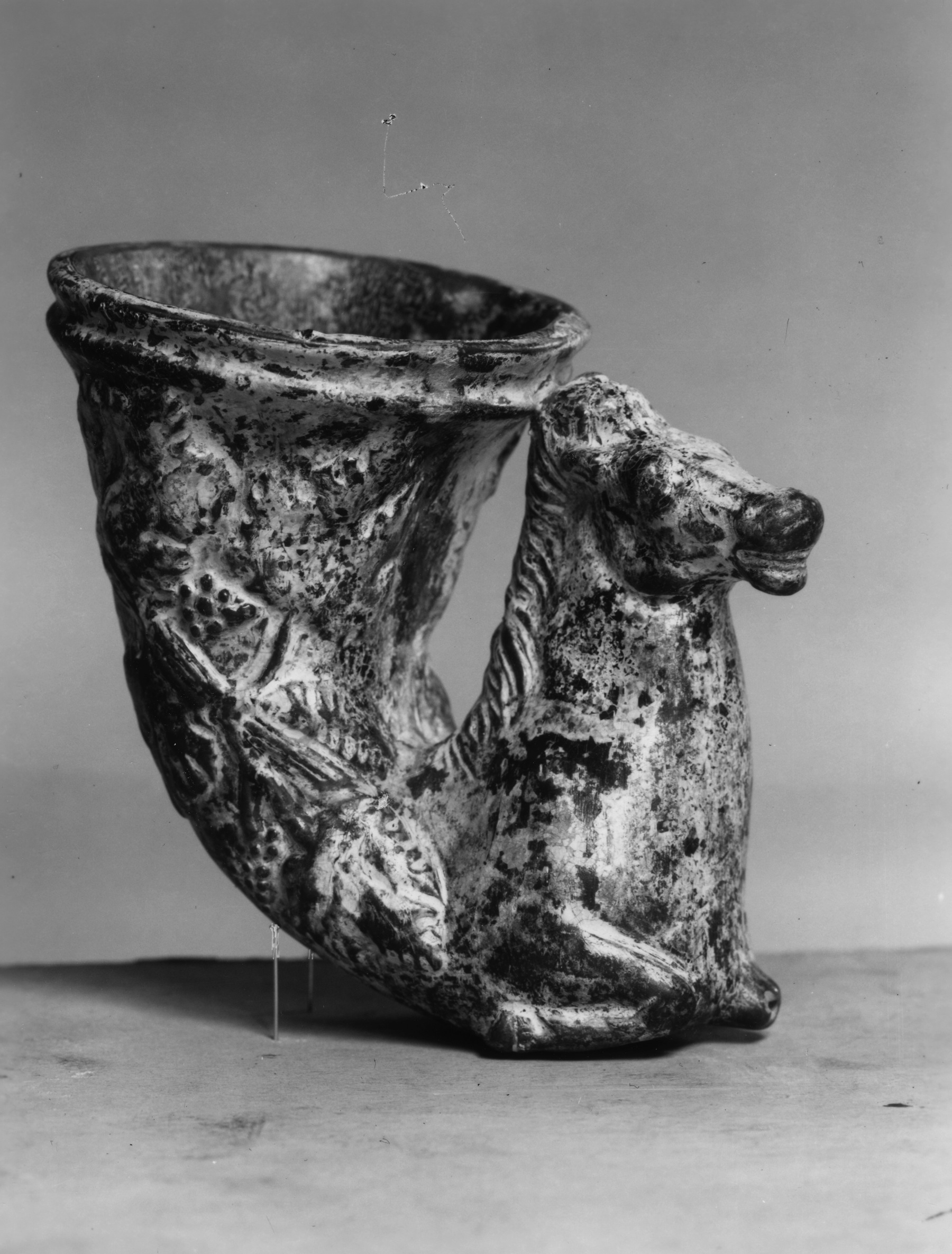
The low-relief grape bunches, leaves, and vines on the upper portion of this rhyton reference the wine that the vessel would have held. The lower portion is in the shape of a protome (the foreparts) of a horse, possibly in movement, with head turned and raised, its mouth slightly open. The folded legs of the horse possibly aided in balancing the vessel upright when it was not in use. This type of rhyton may have been used to aerate wine, which would have been poured into the conical neck and then flowed out of the small spout between the horse’s legs into a drinking vessel (or perhaps directly into the mouth of the drinker). The form especially recalls metal versions from contexts in the Eastern Mediterranean and Near East, where rhyta with protomai of horses, lions, bulls, stags, and sphinxes all appear. The slightly iridescent olive green glaze of the exterior is only partially obscured by accretions, while the interior is yellow, as with other lead-glazed vessels. The form and decoration of lead-glazed, mold-made vessels of the late Hellenistic to early Roman period may have been influenced by vessels made of metal, glass, and other ceramic relief wares. Sometimes linked to a type of ceramic vessel named in the Roman period “Rhosian ware” (rhosica vasa), the lead-glazed pottery vessels were made mostly in Tarsos, on the southeastern coast of Turkey, and elsewhere in Asia Minor, with the technology spreading to workshops in the Italian peninsula as well.For the latest information about this object, Rhyton with the Forepart of a Horse, visit the Online Collection of the Walters Art Museum.
Images courtesy of The Metropolitan Museum of Art (CC0)