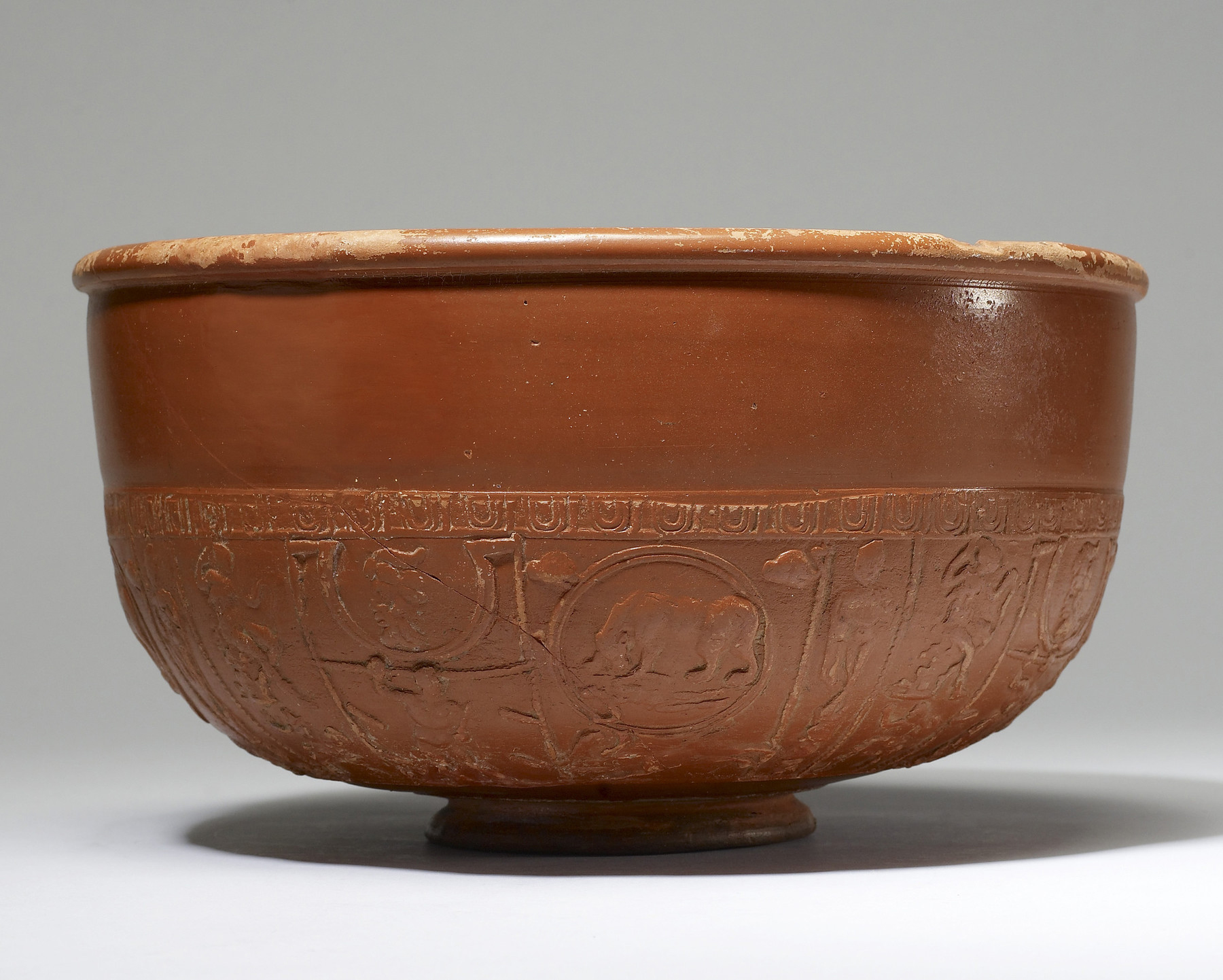
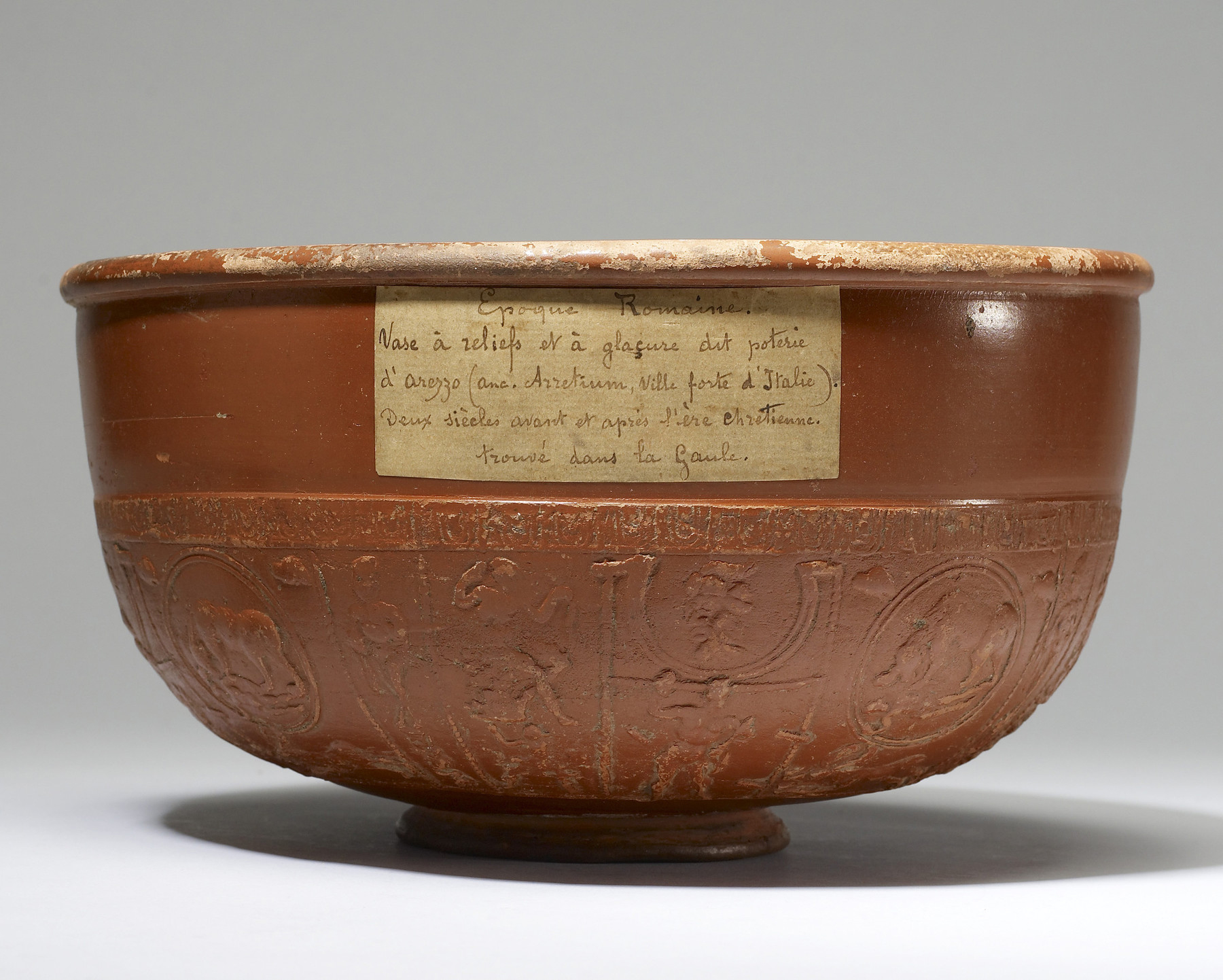
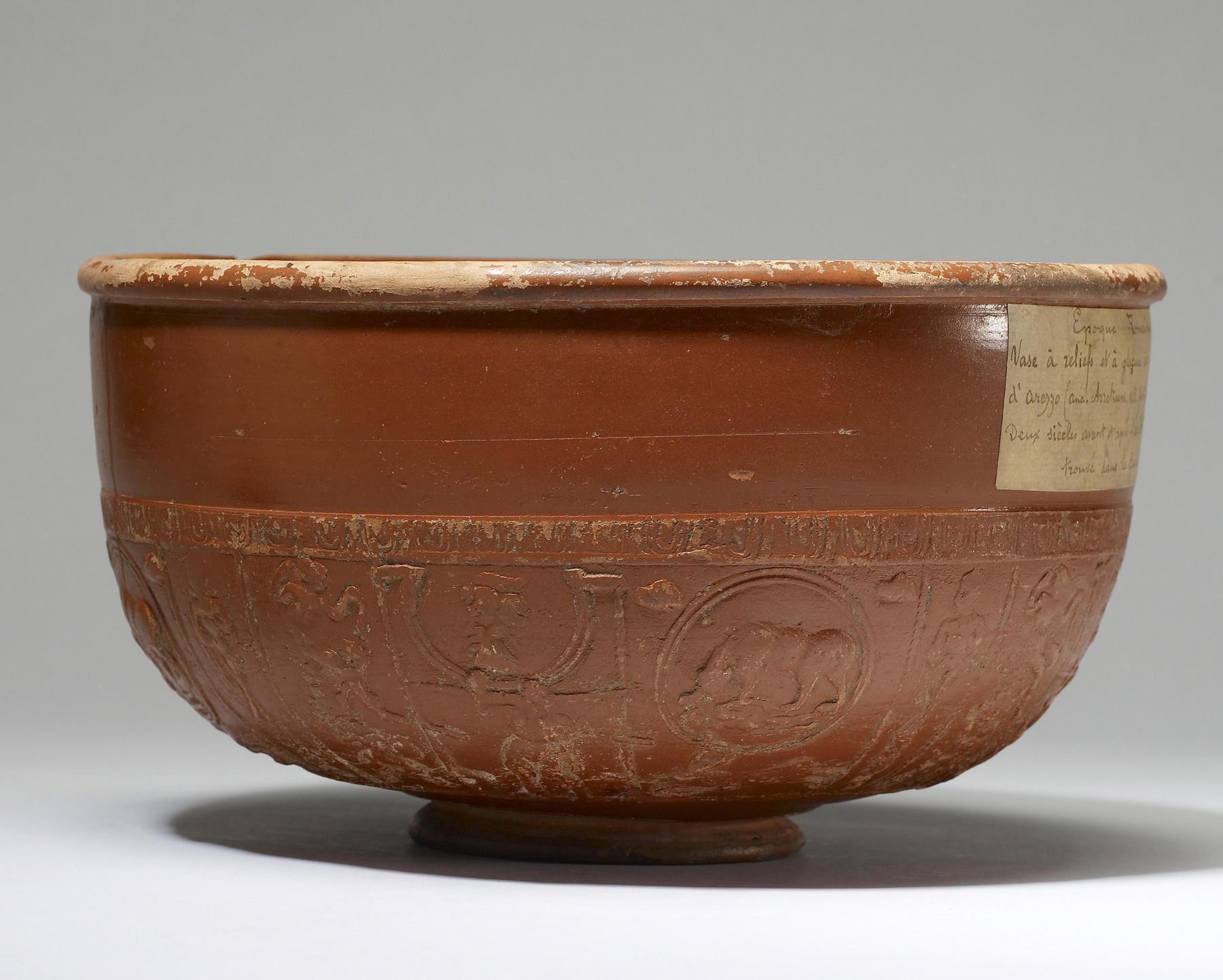
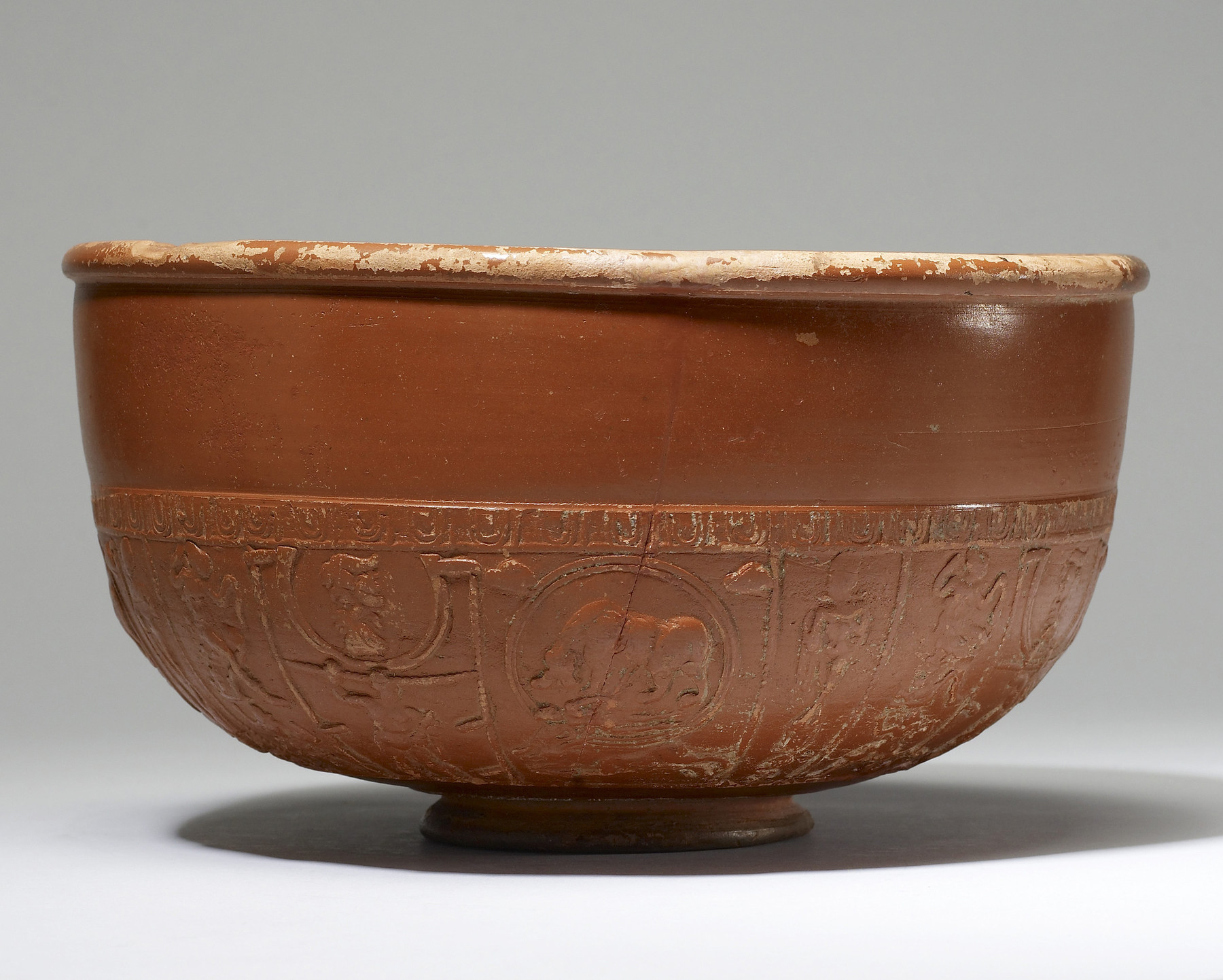
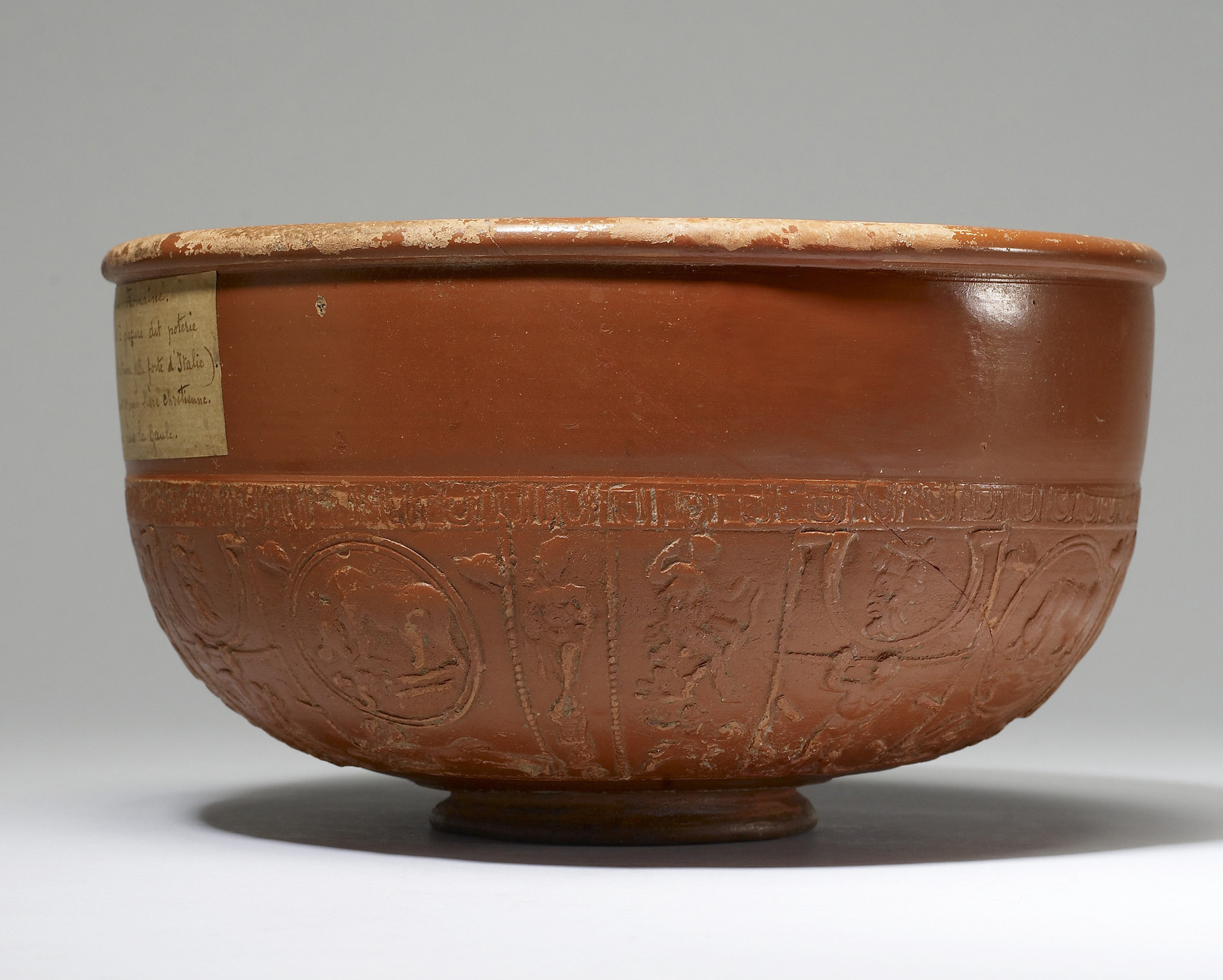
Bowl with Mythological Figures in Relief
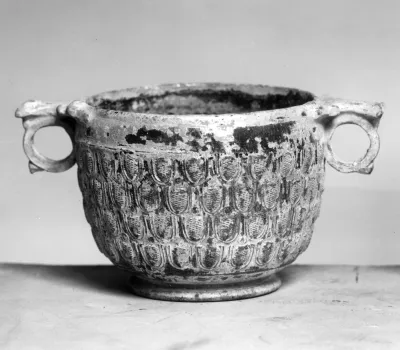
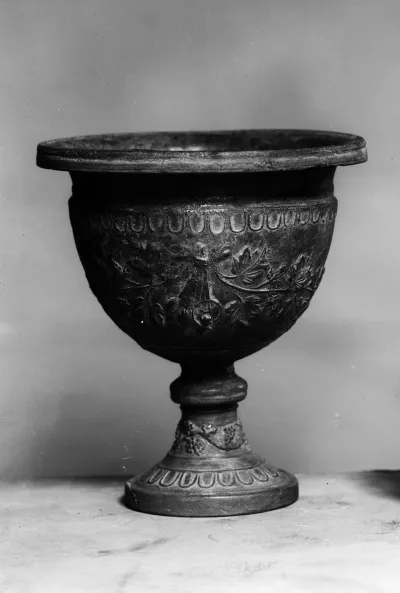
Crafted in a mold that was impressed with stamps, the bottom portion of this bowl is filled with relief decoration of mythological figures. The lively mythological scenes are framed on the top with a variation on the egg-and-dart motif and a wide, plain rim. Four distinct motifs, each consisting of two stamps, repeat four times around the bowl. A statue on a pedestal, perhaps Apollo or Dionysus, stands above a dolphin. Next a woman seated on a rock lifts her veil, while beneath her an Amazon runs with her shield. A satyr head in a semicirclular frame hovers above the standing figure of Zeus with his thunderbolt, and finally a leaping stag appears below a circular frame that contains a bear before a corpse. Terra sigillata is a type of fine Roman ceramic known for its relief decoration and smooth red slip. The vessel and decorations were formed in a mold and were sometimes embellished with stamps, roller-dies, appliqués, barbotine, and incision. This type of pottery emerged around 40 BCE in Arretium (modern Arezzo) in central Italy and had an enormous influence across the Empire. In Gaul (modern France), cities like Lezoux, Montans, and the ancient site of La Graufesenque developed into prolific centers of terra sigillata wares. A potter’s name-stamp is almost always impressed on the vessel either on the floor or as part of the relief decoration.For the latest information about this object, Bowl with Mythological Figures in Relief, visit the Online Collection of the Walters Art Museum.
Inscription
[Sticker] On foot: Lyon, 1847. Collection St. Thomas à Roanne.; [Sticker] On bowl: Époque romaine. Vase à reliefs et à glaçure dite poterie d’Arezzo (anc. Azzetium, ville forte d’Italie). Deux sièles avant et après l’ère chrétienne. Trouvé dans la Gaule.; [Translation] “Roman period. Vase with reliefs and glaze known as pottery of Arezzo (ancient Azzetium, fortified city of Italy). Two centuries before and after the Christian era. Found in Gaul.
Images courtesy of The Metropolitan Museum of Art (CC0)