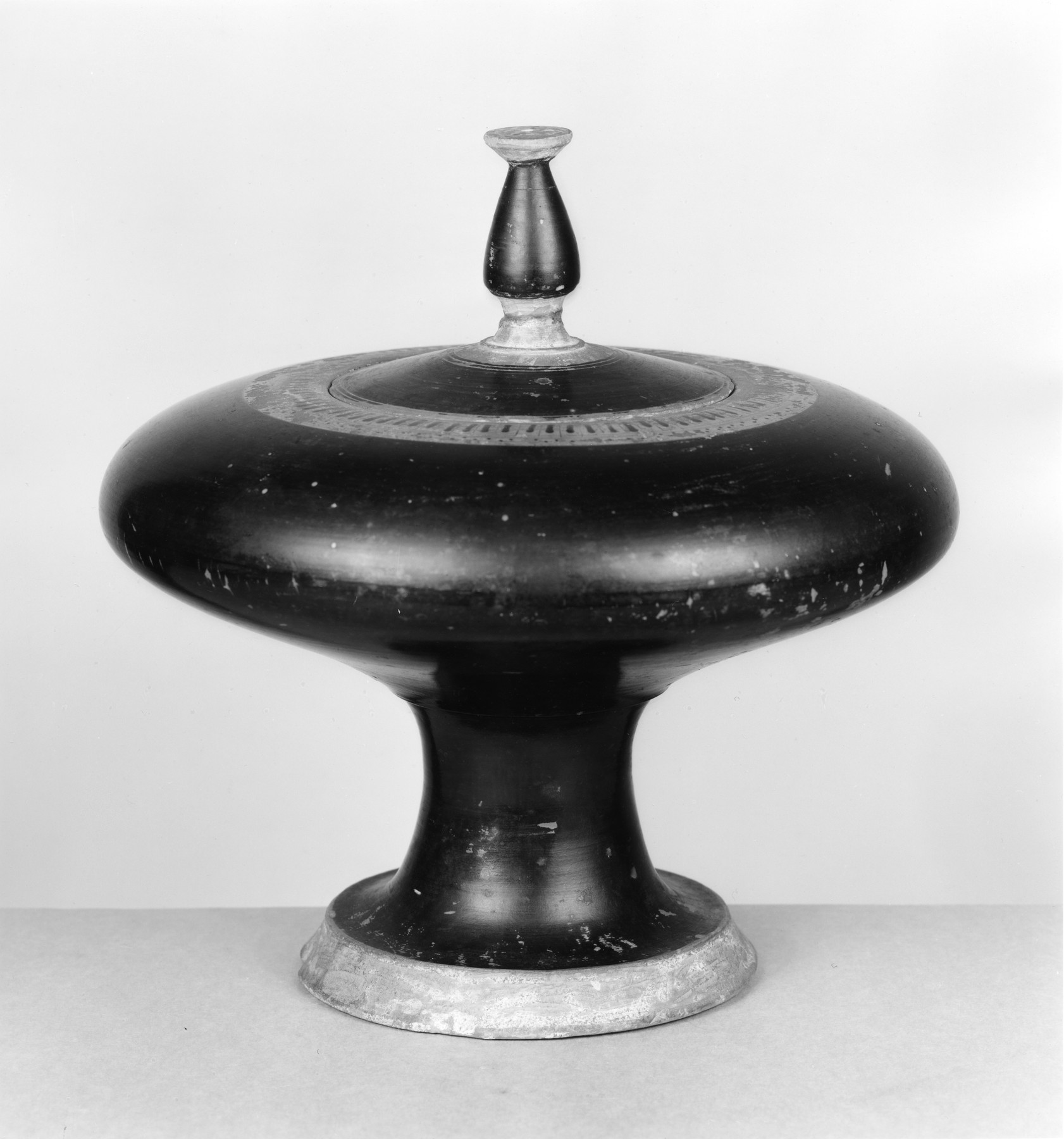
Exaleiptron
The lid and body of this vessel are glazed black, with the exception of a reserved red band decorated with a tongue and dot pattern surrounding the opening of the bowl. The rim or lip descends vertically into the bowl to prevent the contents, likely a liquid such as oil or water, from spilling. The ancient name of this vessel type is unknown—it is sometimes also referred to as a plemocoe or a kothon, though most modern scholarship terms it an exaleiptron—but its function as a vessel for liquid seems clear from the unusual construction of the lip. Exaleiptra seem to have been associated with women; they are depicted on vase paintings in contexts of weddings and beautification, and examples are found as offerings in women’s graves or in sanctuaries as votives. A female figure holding a vase of this shape can be seen on the red-figure hydria 48.263.For the latest information about this object, Exaleiptron, visit the Online Collection of the Walters Art Museum.
Images courtesy of The Metropolitan Museum of Art (CC0)