Satire
A genre the Romans claimed as their own
66 works in the library
"Satire is entirely ours," wrote Quintilian, and the Romans were right to claim it. While Greek literature had produced invective, parody, and moral criticism in various forms, it was Roman writers who created satire as a distinct literary genre with its own conventions, metres, and lineage. The tradition began with Lucilius in the second century BC, whose free-ranging, combative verse established the template: hexameter poems mixing personal attack, moral commentary, literary criticism, and autobiographical anecdote in a style that prized frankness above polish.
Horace refined the genre beyond recognition. His Satires (which he called Sermones — "conversations") replaced Lucilius' aggression with urbane self-mockery, philosophical moderation, and gentle social observation. Persius, writing under Nero, took the opposite path: dense, allusive, and morally severe, his six satires are among the most difficult poems in Latin. Juvenal, the last great Roman satirist, returned to indignation with a fury that has never been surpassed. His portraits of corrupt patrons, scheming women, and decadent aristocrats in imperial Rome — "it is difficult not to write satire" — defined the genre for posterity.
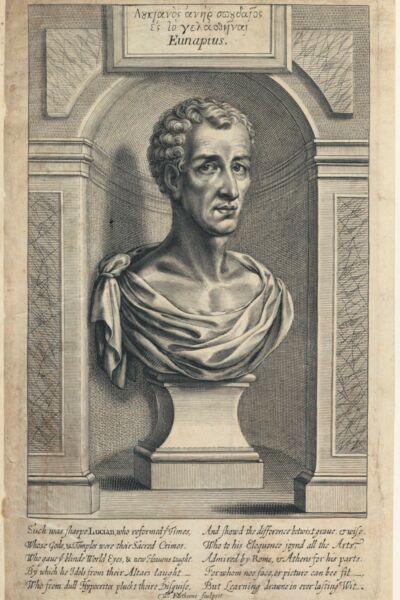
Prose satire took its own forms. Petronius' Satyricon, a picaresque novel of life among freedmen and rogues in Neronian Italy, parodies epic conventions while preserving the most vivid portrait of Roman low life that survives. Lucian, writing in Greek under the Empire, turned satirical wit against philosophers, gods, and the pretensions of the educated classes in dialogues of brilliant comic invention. The satirical impulse — the urge to expose, ridicule, and reform — proved one of antiquity's most durable literary legacies.