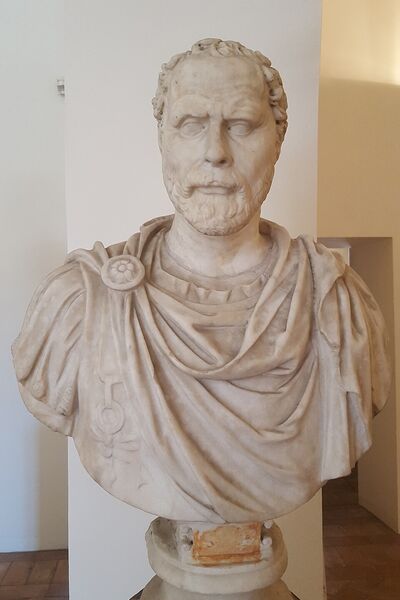
Isaeus
Isaeus
The orator of inheritance law
c. 420 BC – c. 350 BC
Isaeus was born around 420 BC, probably in Athens, though one ancient tradition makes him a Chalcidian. He studied under Isocrates and later taught Demosthenes, forming a crucial link in the chain of Attic oratory. He specialised in inheritance law — virtually all his surviving speeches concern disputed estates — which has made his reputation more solid among legal historians than literary critics.
Eleven complete speeches and fragments of about fifty others survive. They deal with the tangled world of Athenian inheritance: contested wills, disputed adoptions, competing claims from legitimate and illegitimate children, and the complex rules governing female inheritance. The cases are often Byzantine in their complexity, but Isaeus handles them with clarity and forensic skill.
His importance is twofold. Legally, his speeches are our primary source for Athenian inheritance law, which was far more complicated than is often assumed. Rhetorically, he represents the transition from the smooth elegance of Lysias to the forceful argumentation of Demosthenes. Ancient critics recognised this: Dionysius of Halicarnassus saw in Isaeus the seeds of Demosthenes' mature style.
Works (12)
-
1
On Behalf of Euphiletus oratory
A defence of Euphiletus' citizenship, arguing that he was wrongly removed from his deme register.
-
2
On The Estate of Apollodorus oratory
A dispute over the estate of Apollodorus, involving a contested adoption.
-
3
On The Estate of Aristarchus oratory
A dispute over the estate of Aristarchus, involving adoption and inheritance rights.
-
4
On the Estate of Astyphilus oratory
A dispute over the estate of Astyphilus, involving a contested will claimed to be forged.
-
5
On The Estate of Ciron oratory
A dispute over the estate of Ciron, turning on the question of who is the legitimate heir.
-
6
On The Estate of Cleonymus oratory
A dispute over the estate of Cleonymus, who died without a valid will. The speaker claims the estate based on kinship.
-
7
On the Estate of Dicaeogenes oratory
A dispute over the estate of Dicaeogenes, involving a contested will and adoption.
-
8
On the Estate of Hagnias oratory
A dispute over the estate of Hagnias — the most complex and longest-running inheritance case in Athenian history.
-
9
On the Estate of Menecles oratory
A dispute over the estate of Menecles, involving a contested adoption.
-
10
On the Estate of Nicostratus oratory
A dispute over the estate of Nicostratus, who died abroad. Multiple claimants appear.
-
11
On the Estate of Philoctemon oratory
A dispute over the estate of Philoctemon, involving claims of illegitimacy and forged documents.
-
12
On The Estate Of Pyrrhus oratory
A dispute over the estate of Pyrrhus, involving questions of legitimate marriage and inheritance rights.