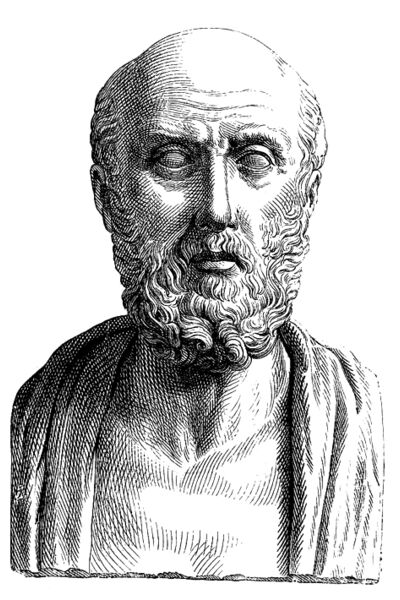
Hippocrates
Hippocrates
The father of medicine
c. 460 BC – c. 370 BC
Hippocrates of Cos was born around 460 BC on the island of Cos and died around 370 BC, probably in Thessaly. He was the most famous physician of antiquity, and his name became attached to a vast collection of medical writings — the Hippocratic Corpus — that were produced over a period of several centuries by many different authors.
Which, if any, of the sixty-odd treatises in the Corpus were actually written by Hippocrates himself is one of the great unsolved problems of classical scholarship. The ancient biographical tradition is unreliable, and the treatises differ markedly in style, doctrine, and date. What they share is a commitment to rational, empirical medicine: diseases have natural causes, not divine ones, and the physician's task is to observe carefully, reason clearly, and intervene cautiously.
The most famous text in the Corpus is the Oath, which established the ethical framework for medical practice. The Aphorisms ('Life is short, the art long, opportunity fleeting, experience treacherous, judgement difficult') became the most quoted medical text in history. Other treatises cover surgery, dietetics, gynaecology, epidemiology, and the relationship between environment and health. Together, they represent the foundation of Western medicine.
Works (19)
- 1
-
2
De aere, aquis, locis prose
A treatise on the effects of climate, water, and geography on health and character. The foundation of environmental medicine.
- 3
-
4
De articulis prose
A treatise on joint dislocations — reduction techniques for shoulders, hips, jaws, and spines.
-
5
De capitis vulneribus prose
A treatise on head wounds — classification, treatment, and trepanation. Practical surgical instruction.
- 6
-
7
De diaeta in morbis acutis oratory
A treatise on the treatment of acute diseases, emphasising diet and regimen over aggressive intervention.
- 8
-
9
De fracturis prose
A treatise on bone fractures — how to set them, splint them, and manage complications.
- 10
-
11
De morbis popularibus prose
Case histories recording the progress of diseases in individual patients — the earliest clinical records. Seven books of detailed observations.
-
12
De morbo sacro prose
On the sacred disease — epilepsy. Hippocrates argues that epilepsy is not divine punishment but a natural brain disorder. A landmark in the history of...
-
13
De officina medici prose
A treatise on the doctor's surgery — equipment, lighting, positioning, and the proper arrangement of instruments.
-
14
De prisca medicina prose
The oldest surviving Greek medical treatise. Hippocrates argues that medicine should be based on observation and experience, not philosophical theory.
- 15
-
16
Jusjurandum prose
The Hippocratic Oath. The most famous medical document of all time — a physician's pledge to do no harm, maintain confidentiality, and honour his teac...
-
17
Praeceptiones prose
Ethical precepts for physicians — how to conduct oneself, set fees, and maintain the dignity of the profession.
-
18
Prognosticon prose
A guide to predicting the course of diseases from symptoms. Hippocratic prognosis at its most systematic.
- 19