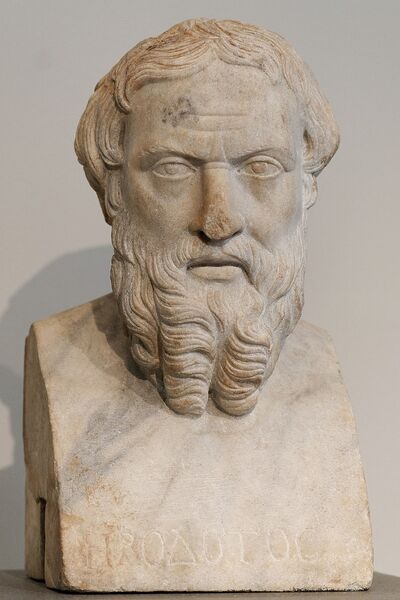
Herodotus
Herodotus
c. 484 BC – c. 425 BC
Herodotus was born around 484 BC in Halicarnassus (modern Bodrum), a Greek city under Persian rule on the coast of Caria. He travelled extensively — Egypt, Babylon, Scythia, southern Italy — and eventually settled in Thurii, the Athenian colony in southern Italy, where he probably died sometime after 430 BC.
His Histories is the first great work of prose literature in Western civilisation and the founding text of historiography. In nine books, Herodotus traces the origins and course of the conflict between Greece and Persia, from the reign of Croesus of Lydia through the Persian invasions of 490 and 480–479 BC. But the narrative is gloriously expansive: it encompasses the customs of the Egyptians, the geography of Scythia, the rise of the Persian Empire, and dozens of marvellous stories and digressions that make the work a portrait of the entire known world.
Cicero called him the 'father of history'. Plutarch called him the 'father of lies'. Both assessments capture something real. Herodotus was credulous about some things and sceptical about others; he reported what he was told and sometimes noted his own doubts. Modern archaeology has confirmed many details once dismissed as invention. The Histories remains one of the most enjoyable books ever written — humane, curious, digressive, and endlessly surprising.
Works
- 1