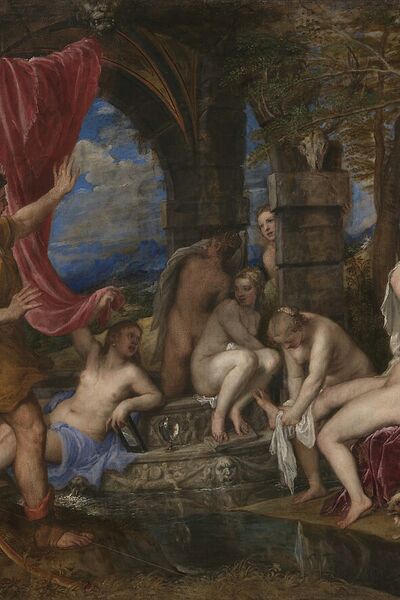
Callimachus
Callimachus
The poet-scholar of Alexandria
c. 310 BC – c. 240 BC
Callimachus was born around 310 BC in Cyrene, in North Africa, and spent his career in Alexandria, where he catalogued the Library's holdings in the Pinakes — the first bibliography in Western history. He was the most influential Greek poet of the Hellenistic age, though most of his work survives only in fragments.
Six Hymns survive complete, along with a collection of epigrams and substantial papyrus fragments of the Aetia ('Causes'), a long elegiac poem on the origins of Greek customs and rituals. His aesthetic programme — short, polished, learned, allusive — defined Hellenistic poetry and, through the Roman neoterics and Augustan poets, shaped Latin literature profoundly. Catullus, Propertius, and Ovid all worked in his shadow.
His famous declaration, 'a big book is a big evil,' was directed against bloated, unrevised epics. Whether he was attacking Apollonius Rhodius specifically is debated, but the principle was clear: poetry should be crafted, not merely long.
Works (8)
- 1
-
2
Epigrams and Fragments poetry
A collection of epigrams and fragments from Callimachus' lost works, including the Aetia and Iambi.
-
3
Hymn to Apollo poetry
A hymn celebrating Apollo's oracle at Delphi and his role as patron of poetry. Contains Callimachus' most famous statement of poetic principles.
-
4
Hymn to Artemis poetry
A hymn to Artemis — the goddess as a child, asking Zeus for her bow and her mountains. Callimachus' most charming mythological narrative.
-
5
Hymn to Athena poetry
A dramatic hymn — Athena bathes in a stream, and the blind seer Tiresias stumbles upon her. His mother begs the goddess to restore his sight; Athena g...
-
6
Hymn to Delos poetry
A hymn on the birth of Apollo and Artemis on the floating island of Delos. Callimachus weaves contemporary politics into the mythological narrative.
-
7
Hymn to Demeter poetry
A dramatic hymn in which Demeter punishes Erysichthon for cutting down her sacred grove by cursing him with insatiable hunger.
-
8
Hymn to Zeus poetry
A hymn to Zeus — his birth on Crete, his rise to power, and his role as protector of kings. Callimachus' learned, allusive style at its most controlle...