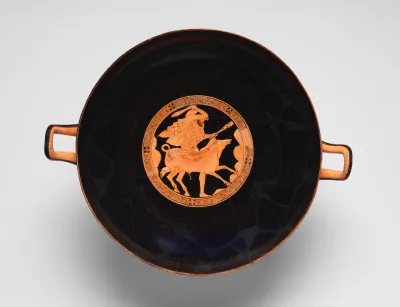
Painter
the Penthesilea Painter
Style & Characteristics
Powerful, emotionally charged compositions; bold drawing; innovative use of the tondo space; psychological depth in facial expressions. His best work combines technical mastery with dramatic narrative.
Name & Etymology
Named after the famous kylix in Munich (Antikensammlungen 2688) showing Achilles killing Penthesilea, the Amazon queen. The moment of eye contact between killer and victim at the point of death is one of the most celebrated images in Greek art.
Named by J.D. Beazley
in ARV² (1963)
Attribution Confidence
High
No signed works, but the name-vase is universally recognised as a masterpiece. Over 200 attributed vases. Strongly consistent style.
The Penthesilea Painter was one of the leading Athenian red-figure cup-painters of the Early Classical period, active c. 470–450 BC. He headed a large and productive workshop. His masterpiece, the Munich kylix showing Achilles and Penthesilea, is celebrated for its psychological intensity — Achilles falls in love with the Amazon queen at the very moment he kills her.
Scholarly Controversies
The large workshop attributions (the "Penthesilea workshop") include works of varying quality, leading to debate about workshop organisation and the extent of the master's personal hand.
11 vases by the Penthesilea Painter

Terracotta fragment of a kylix (drinking cup)
Kylix
· 460–450 BCE

Terracotta fragment of a skyphos (deep drinking cup)
Skyphos
· 460–450 BCE
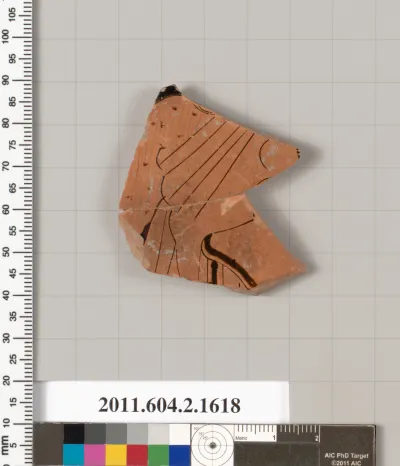
Terracotta fragment of a skyphos (deep drinking cup)
Skyphos
· 460–450 BCE
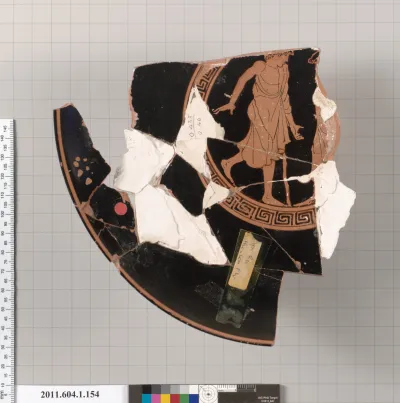
Terracotta fragment of a kylix (drinking cup)
RF
Kylix
· second quarter of the 5th century BCE
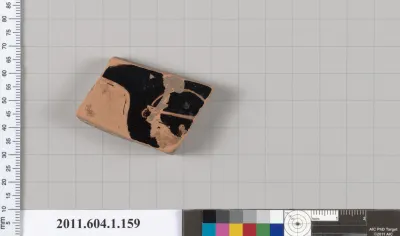
Terracotta fragment of a kylix (drinking cup)
RF
Kylix
· 470–450 BCE
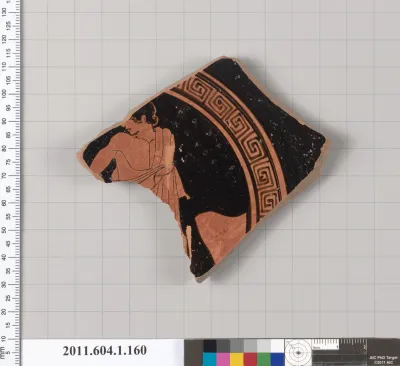
Terracotta fragment of a kylix (drinking cup)
RF
Kylix
· 470–450 BCE
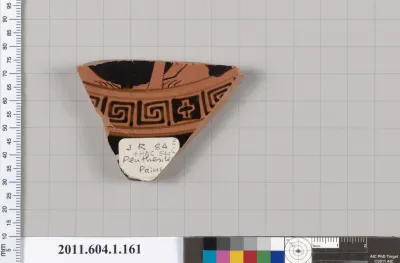
Terracotta fragment of a kylix (drinking cup)
RF
Kylix
· 470–450 BCE
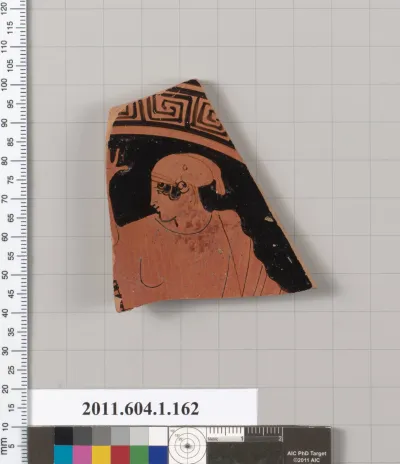
Terracotta fragment of a kylix (drinking cup)
RF
Kylix
· 470–450 BCE

Drinking cup (kylix): Iris presents a warrior to Zeus(?); Warrior's departure
RF
Kylix
· c. 470 BCE
Terracotta kylix (drinking cup)
RF
Kylix
· ca. 460 BCE
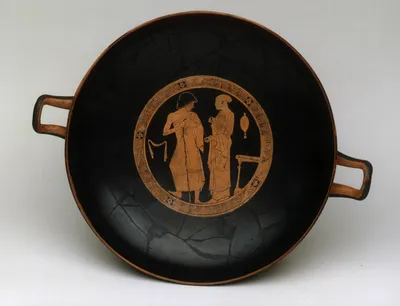
Kylix (Drinking Cup)
RF
Kylix
· about 460 BCE
Images courtesy of The Metropolitan Museum of Art (CC0)