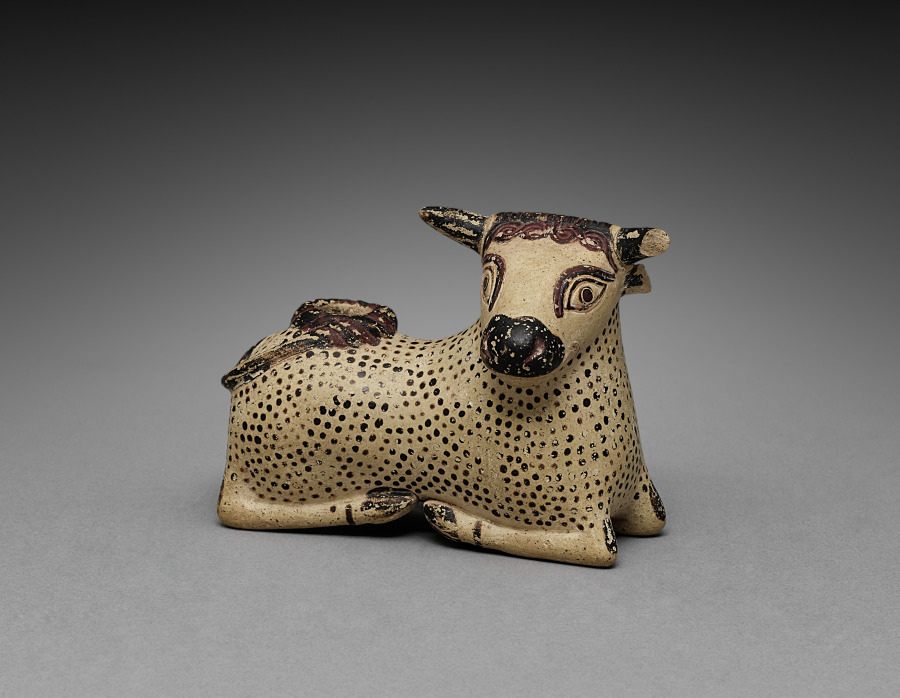
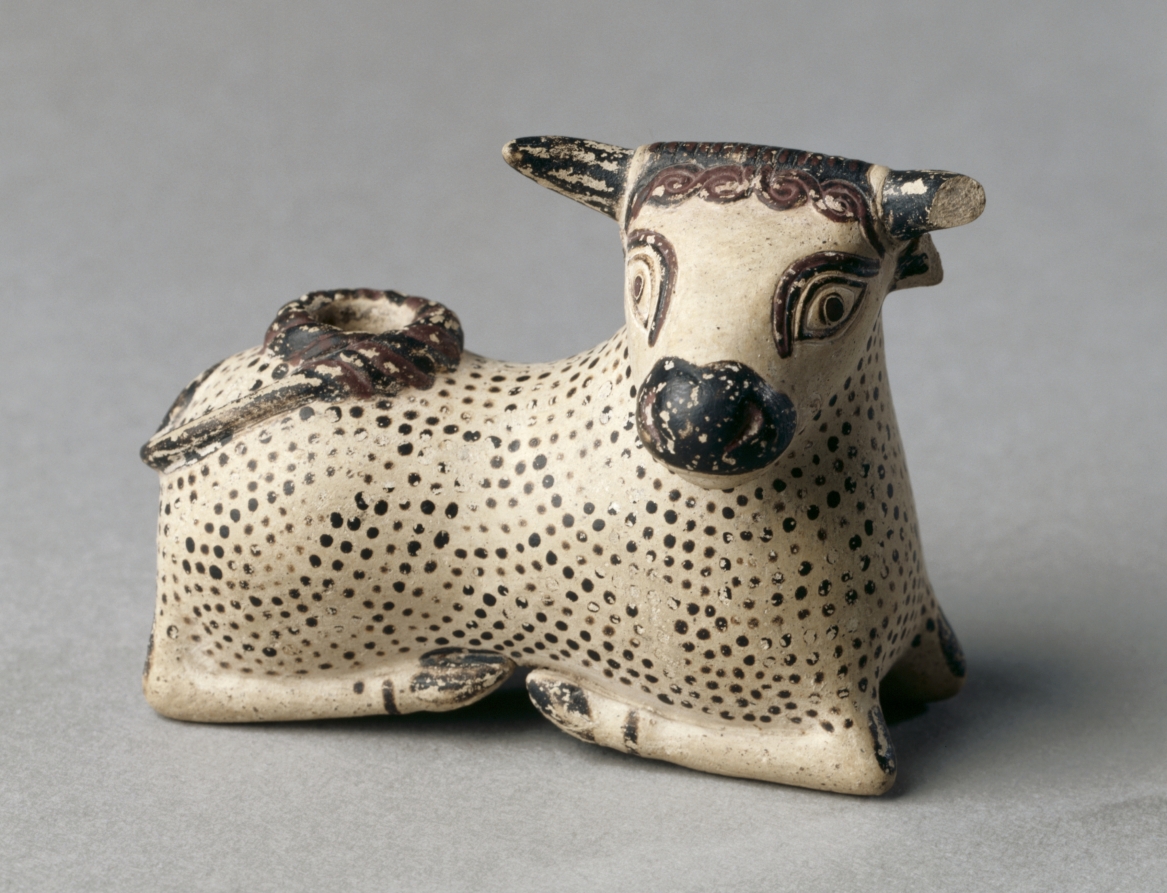
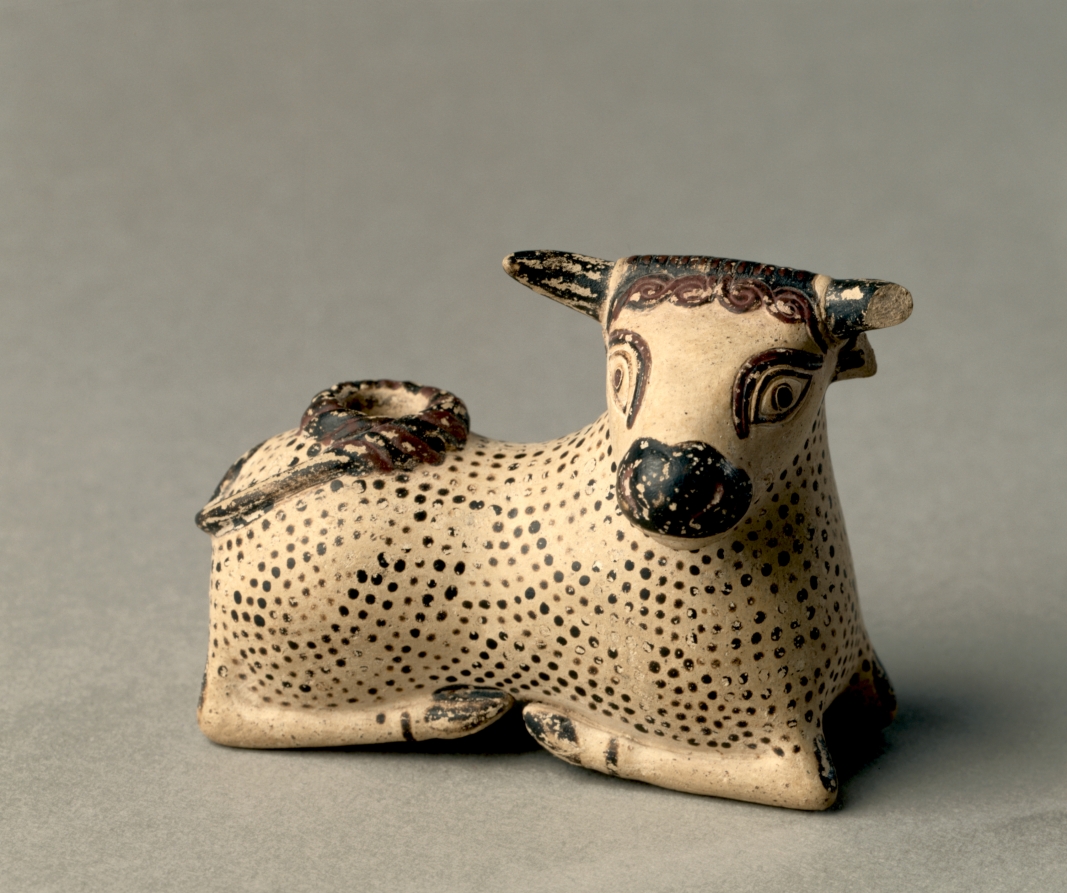
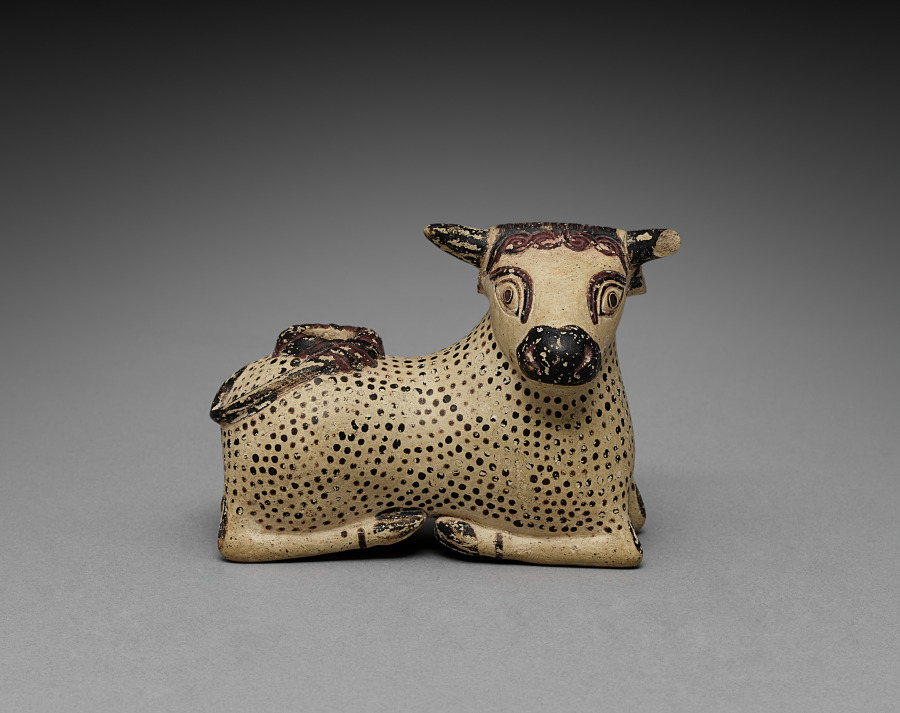
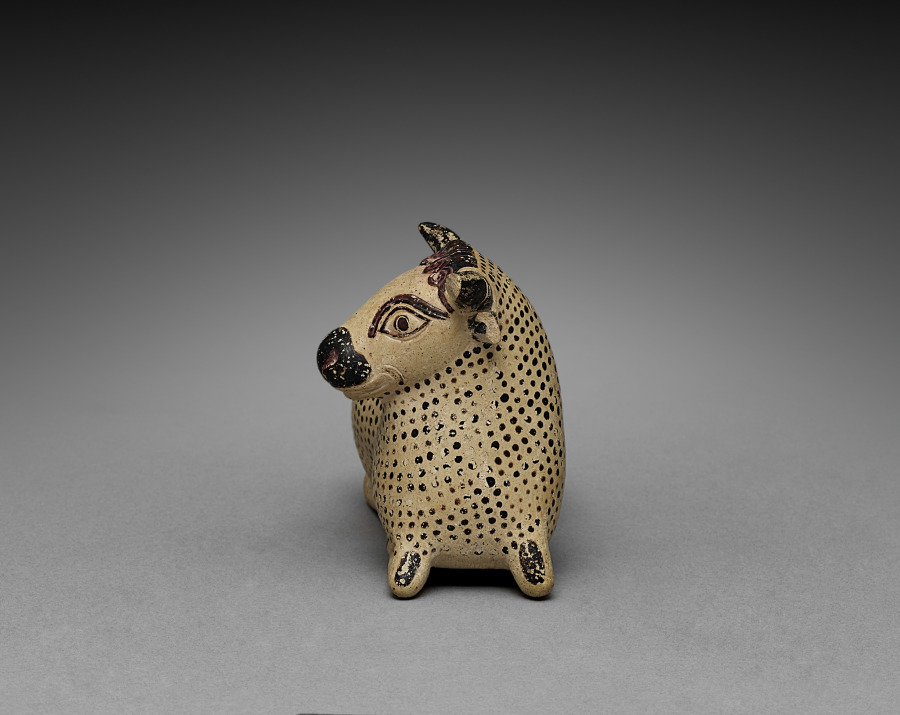
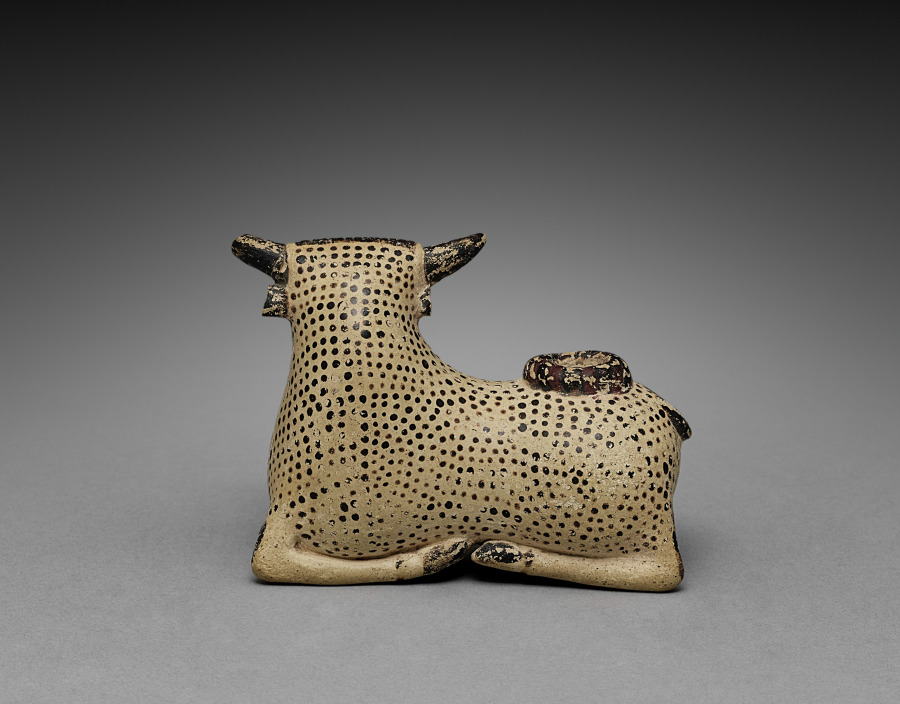
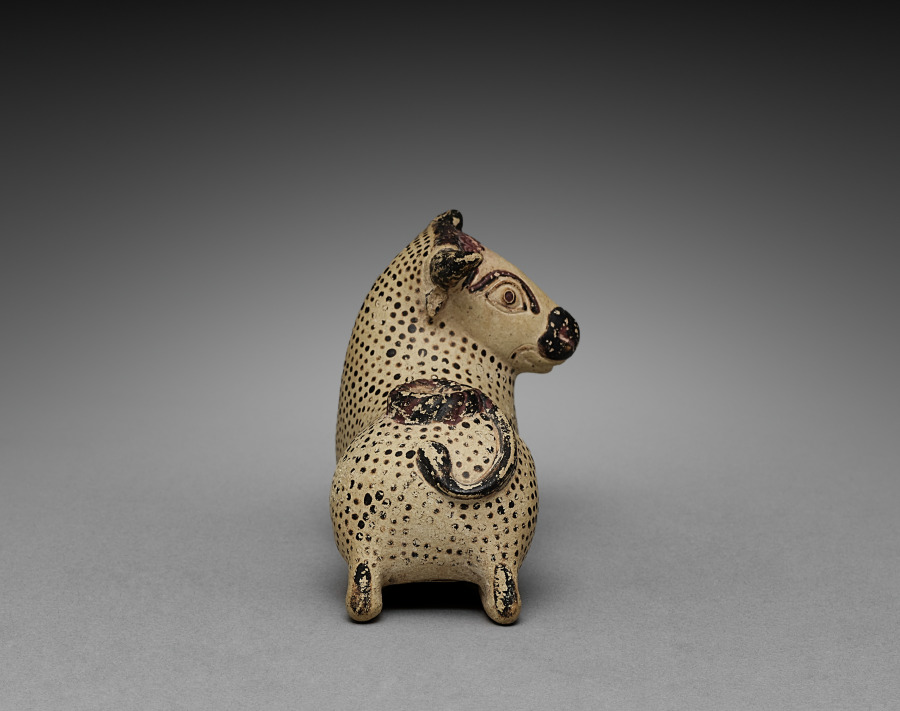
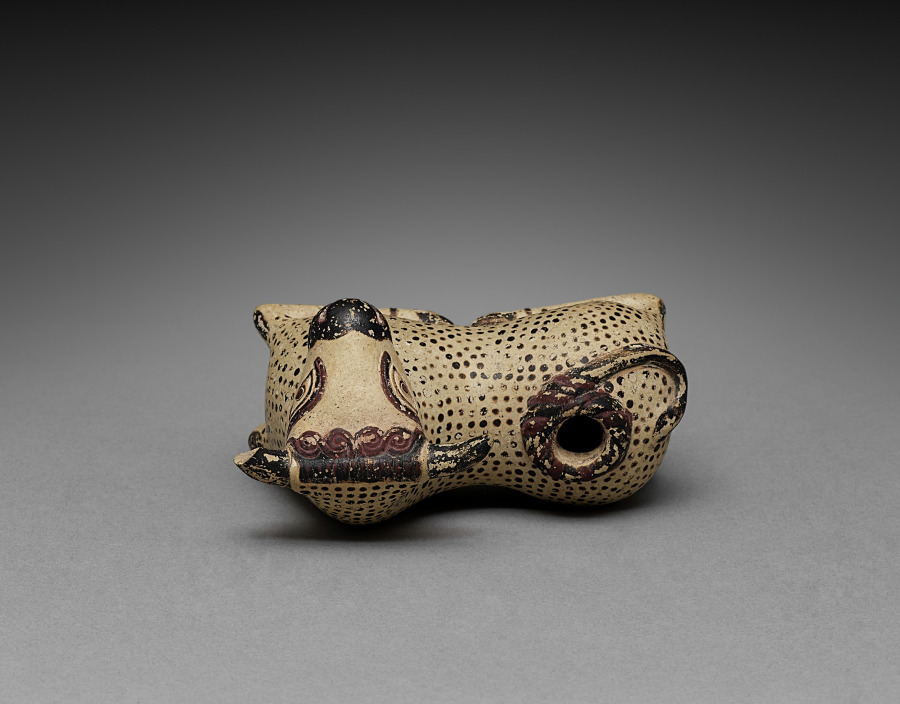
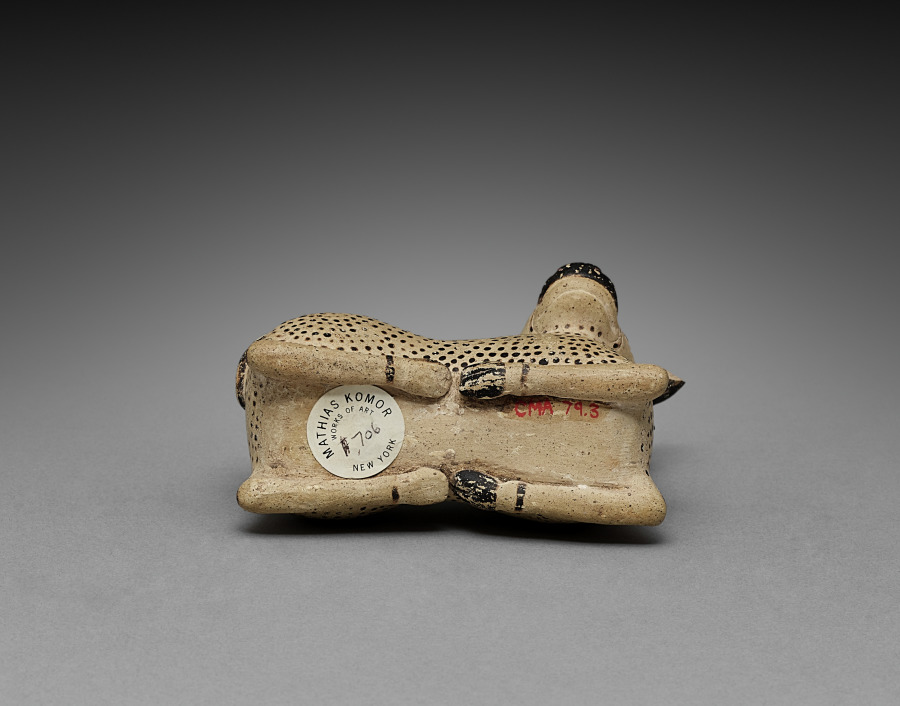
Oil Flask in the Shape of a Bull
600–575 BCE or 1900s CE
This small bull-shaped flask is similar in form and painted decoration to a class of figure-shaped perfume vessels created during the late seventh and early sixth centuries BC in Greece and Italy (especially Corinth, Rhodes, and Etruria). The stippled body decoration characterizes such vases from multiple sites, while the light-colored clay and inconspicuous orifice placement are typical of Corinth. But no other reclining bulls are known among such vases (and only a few bullheads or upper bodies), raising questions about authenticity. A 1986 analysis determined that this object had been recently fired, and a 2020 clay analysis placed its origin in the Catalonia region of Spain, far from any known ancient production area for such flasks.
Images courtesy of The Metropolitan Museum of Art (CC0)