Object from Athens NAM
Date unknown
“Two little Erotes from Smyrna”
Loading....
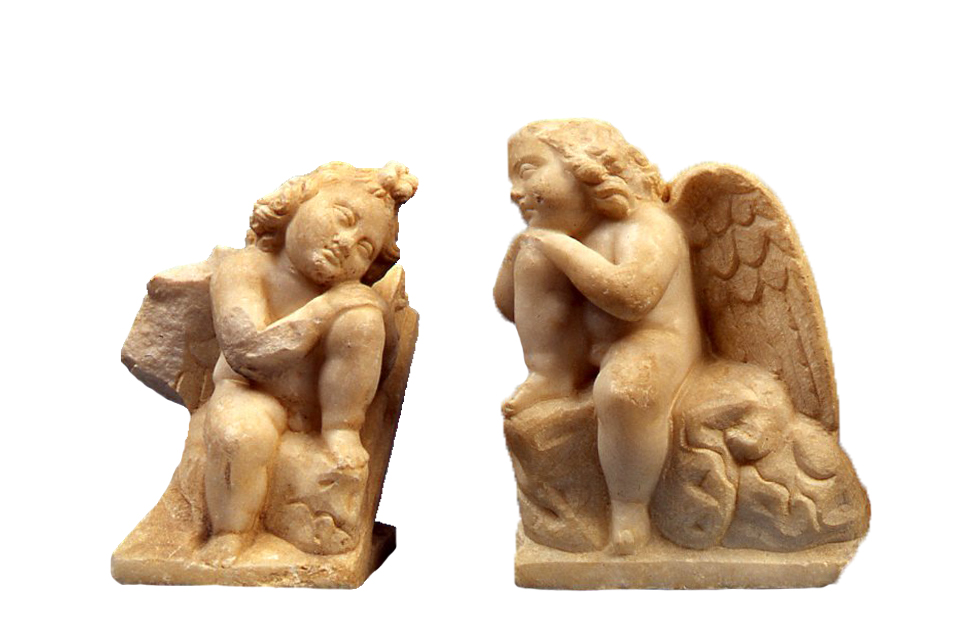
Marble statuettes of little Erotes from the lid of a gabled sarcophagus. Circa AD 150. NAM Γ 2895, Γ 2896.
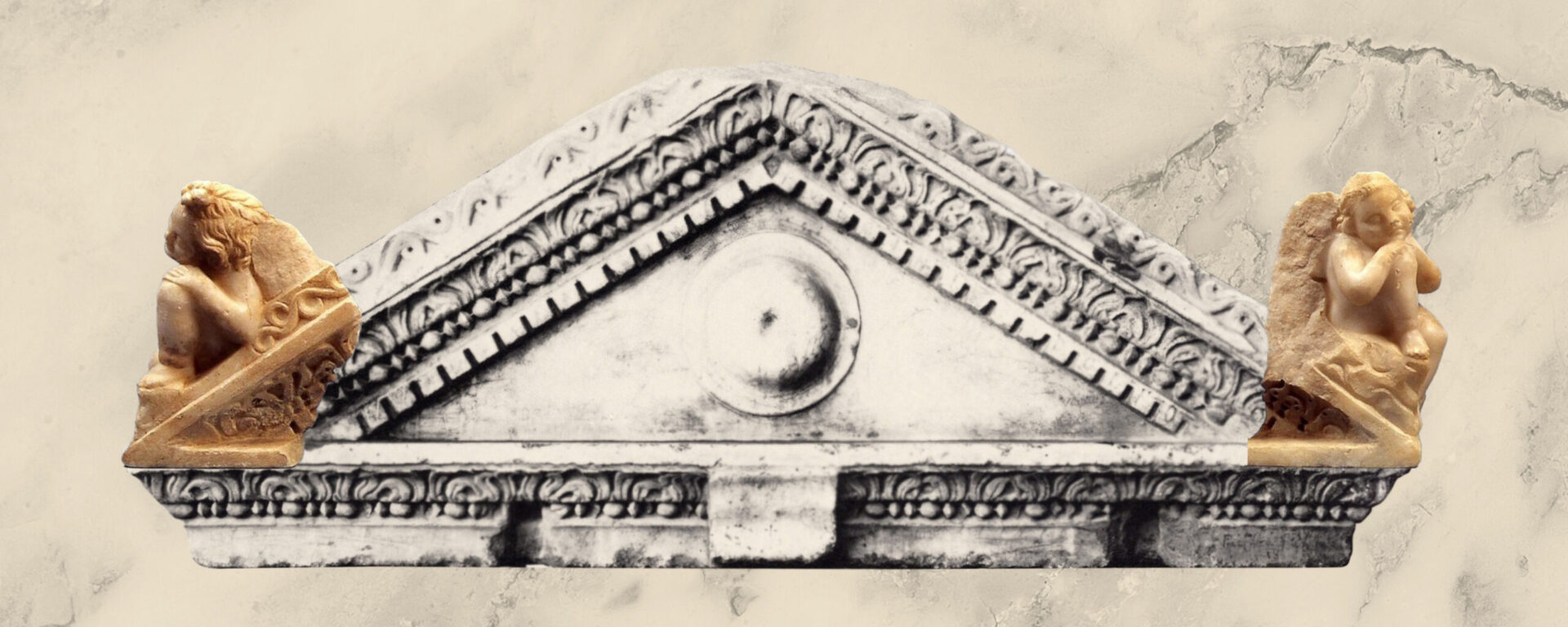
Graphic reconstruction, showing the position of the marble Erotes on the gabled lid of a sarcophagus at San Lorenzo fuori le Mure, Rome.
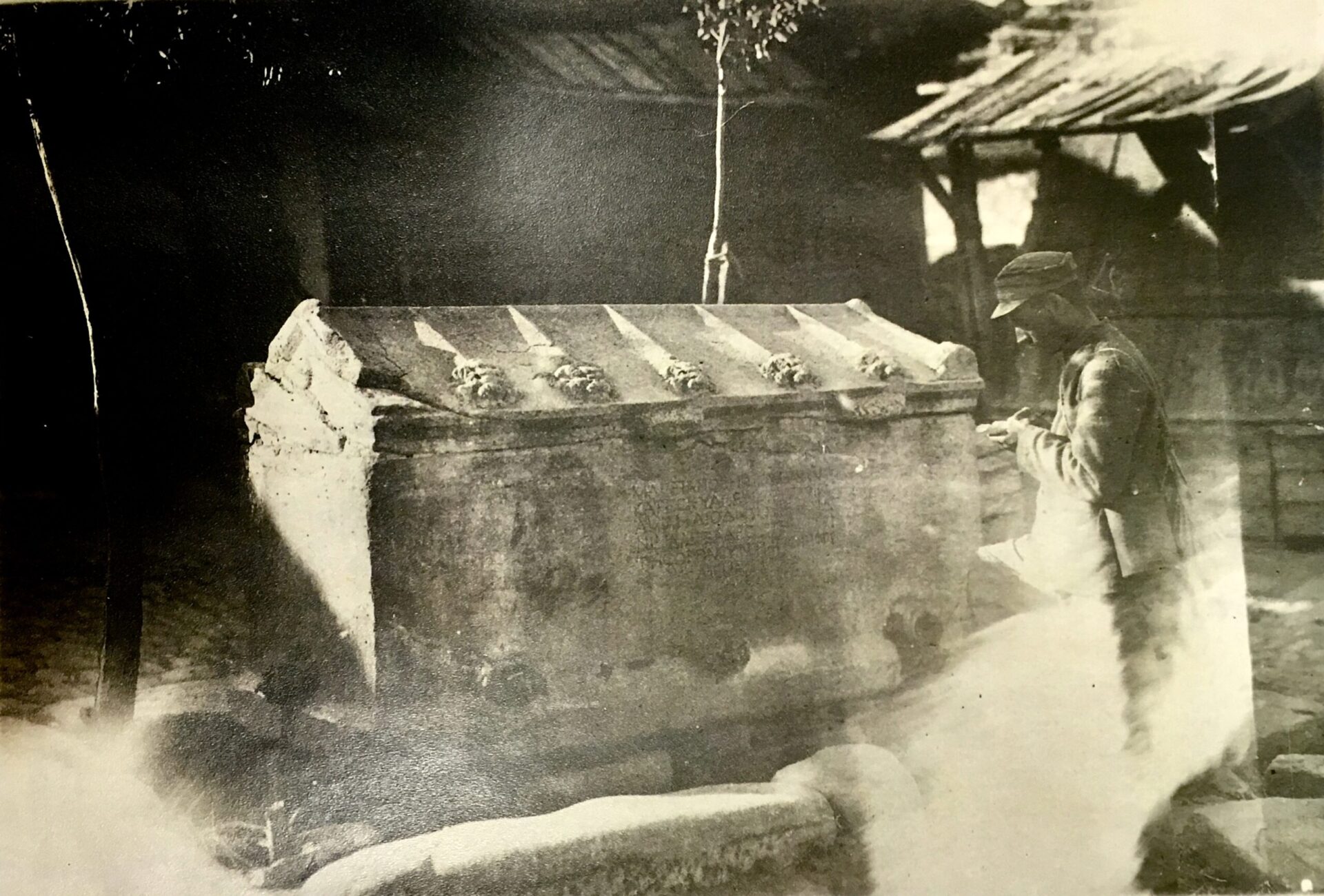
Young archaeologist and soldier of the 3/40 Evzone Unit of the Third Army Corps, Efstratios Paraskevaidis studies the inscription of a Roman sarcophagus in Sivrihisar, May 1922 (Photographic Archive HESG National Historical Museum, Athens).
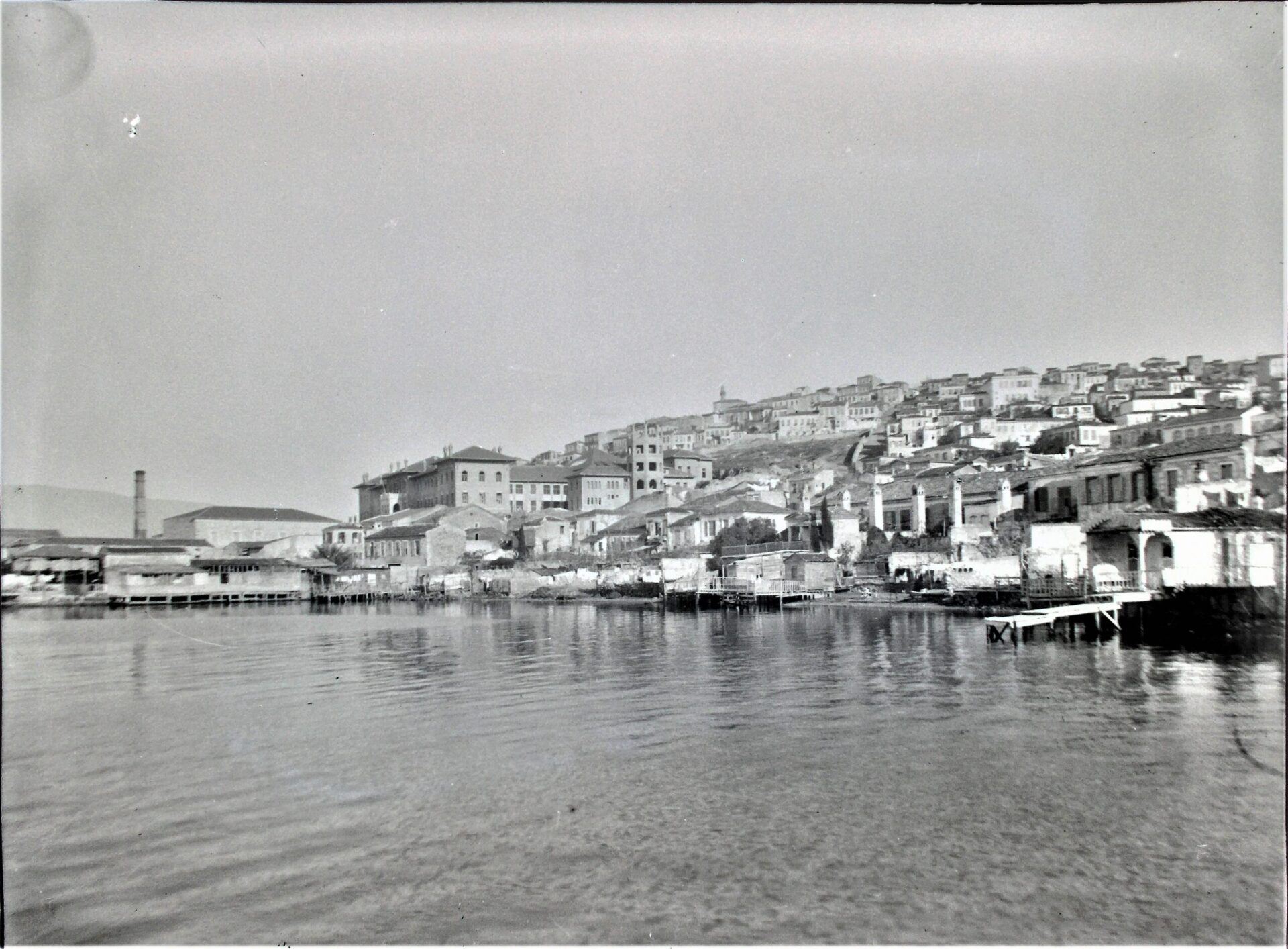
Karataş. View of the beautiful coastal suburb of Smyrna in 1921. Photographic Archive of the National Archaeological Museum.
Marble statuettes of little Erotes from the lid of a gabled sarcophagus. Circa AD 150. NAM Γ 2895, Γ 2896.
Graphic reconstruction, showing the position of the marble Erotes on the gabled lid of a sarcophagus at San Lorenzo fuori le Mure, Rome.
Young archaeologist and soldier of the 3/40 Evzone Unit of the Third Army Corps, Efstratios Paraskevaidis studies the inscription of a Roman sarcophagus in Sivrihisar, May 1922 (Photographic Archive HESG National Historical Museum, Athens).
Karataş. View of the beautiful coastal suburb of Smyrna in 1921. Photographic Archive of the National Archaeological Museum.
The
Unseen Museum
is the well-known exhibition project of the National Archaeological Museum of Athens that brings to the fore antiquities stored in its vaults away from the visitor’s eyes.
This year, the event is dedicated to the centenary of the Asia Minor Catastrophe. Ιts fourth group of exhibits is entitled
“Two little Erotes from Smyrna”
.
In the autumn of 2022 the Unseen Museum presents two ancient sculptures. These are two small marble statues of seated Erotes, which once decorated a luxurious sarcophagus from the famous in its time workshop of Dokimeion (ancient site near Afyon Karahisar). The statuettes were bought in 1883 by the Archaeological Society at Athens from the antiquarian shop of K. Polychronopoulos in Smyr
Loading....
Marble statuettes of little Erotes from the lid of a gabled sarcophagus. Circa AD 150. NAM Γ 2895, Γ 2896.
Graphic reconstruction, showing the position of the marble Erotes on the gabled lid of a sarcophagus at San Lorenzo fuori le Mure, Rome.
Young archaeologist and soldier of the 3/40 Evzone Unit of the Third Army Corps, Efstratios Paraskevaidis studies the inscription of a Roman sarcophagus in Sivrihisar, May 1922 (Photographic Archive HESG National Historical Museum, Athens).
Karataş. View of the beautiful coastal suburb of Smyrna in 1921. Photographic Archive of the National Archaeological Museum.
Marble statuettes of little Erotes from the lid of a gabled sarcophagus. Circa AD 150. NAM Γ 2895, Γ 2896.
Graphic reconstruction, showing the position of the marble Erotes on the gabled lid of a sarcophagus at San Lorenzo fuori le Mure, Rome.
Young archaeologist and soldier of the 3/40 Evzone Unit of the Third Army Corps, Efstratios Paraskevaidis studies the inscription of a Roman sarcophagus in Sivrihisar, May 1922 (Photographic Archive HESG National Historical Museum, Athens).
Karataş. View of the beautiful coastal suburb of Smyrna in 1921. Photographic Archive of the National Archaeological Museum.
The
Unseen Museum
is the well-known exhibition project of the National Archaeological Museum of Athens that brings to the fore antiquities stored in its vaults away from the visitor’s eyes.
This year, the event is dedicated to the centenary of the Asia Minor Catastrophe. Ιts fourth group of exhibits is entitled
“Two little Erotes from Smyrna”
.
In the autumn of 2022 the Unseen Museum presents two ancient sculptures. These are two small marble statues of seated Erotes, which once decorated a luxurious sarcophagus from the famous in its time workshop of Dokimeion (ancient site near Afyon Karahisar). The statuettes were bought in 1883 by the Archaeological Society at Athens from the antiquarian shop of K. Polychronopoulos in Smyr
Images courtesy of The Metropolitan Museum of Art (CC0)