Object from Athens NAM
Mycenaean alchemists
Loading....
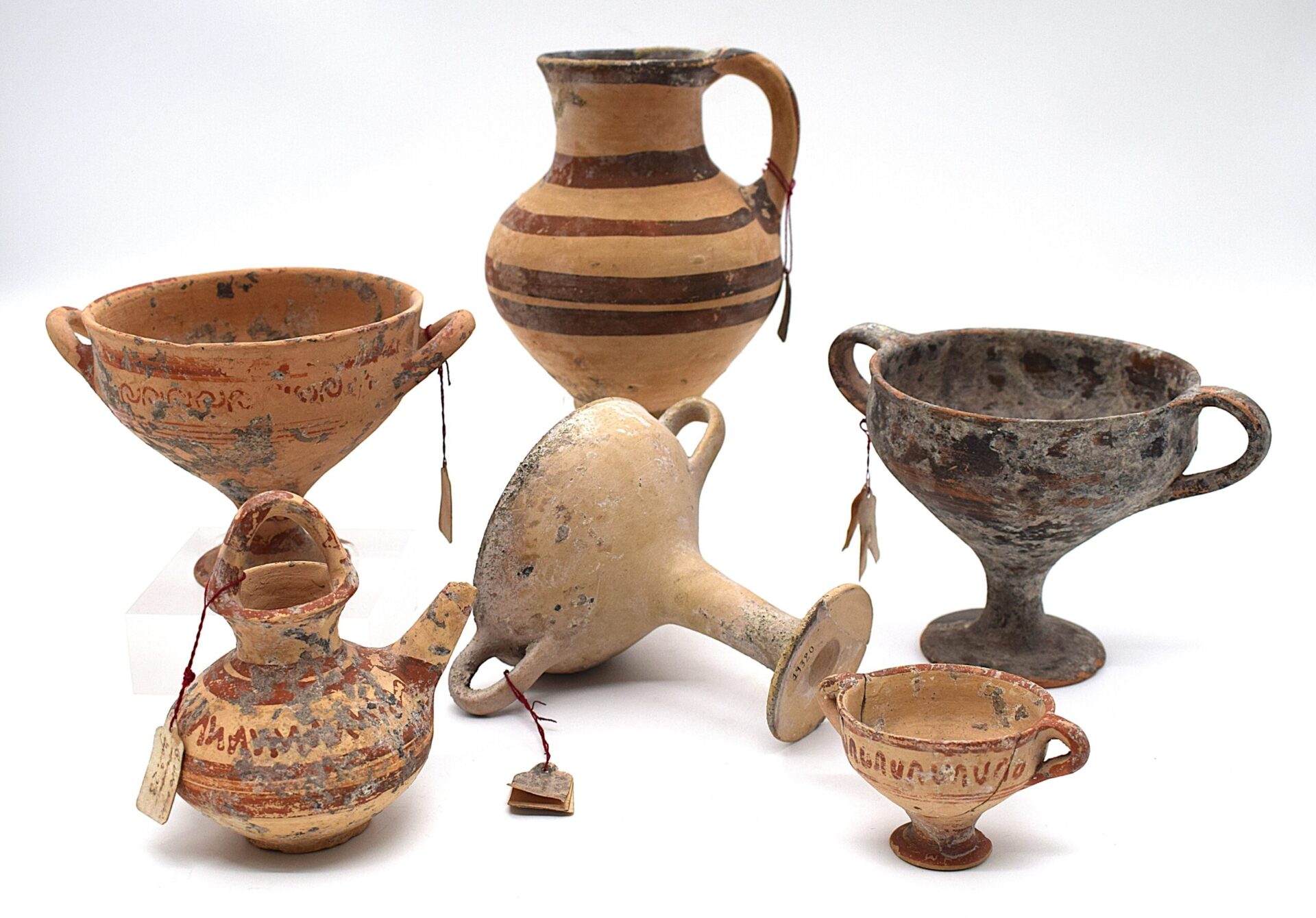
A group of Mycenaean vases with traces of tinning. Their covering with thin sheets of tin, would make them look as if they were made of silver or gold. Late 14th c. BCE
(Photographic Archive of the Hellenic National Archaeological Museum).
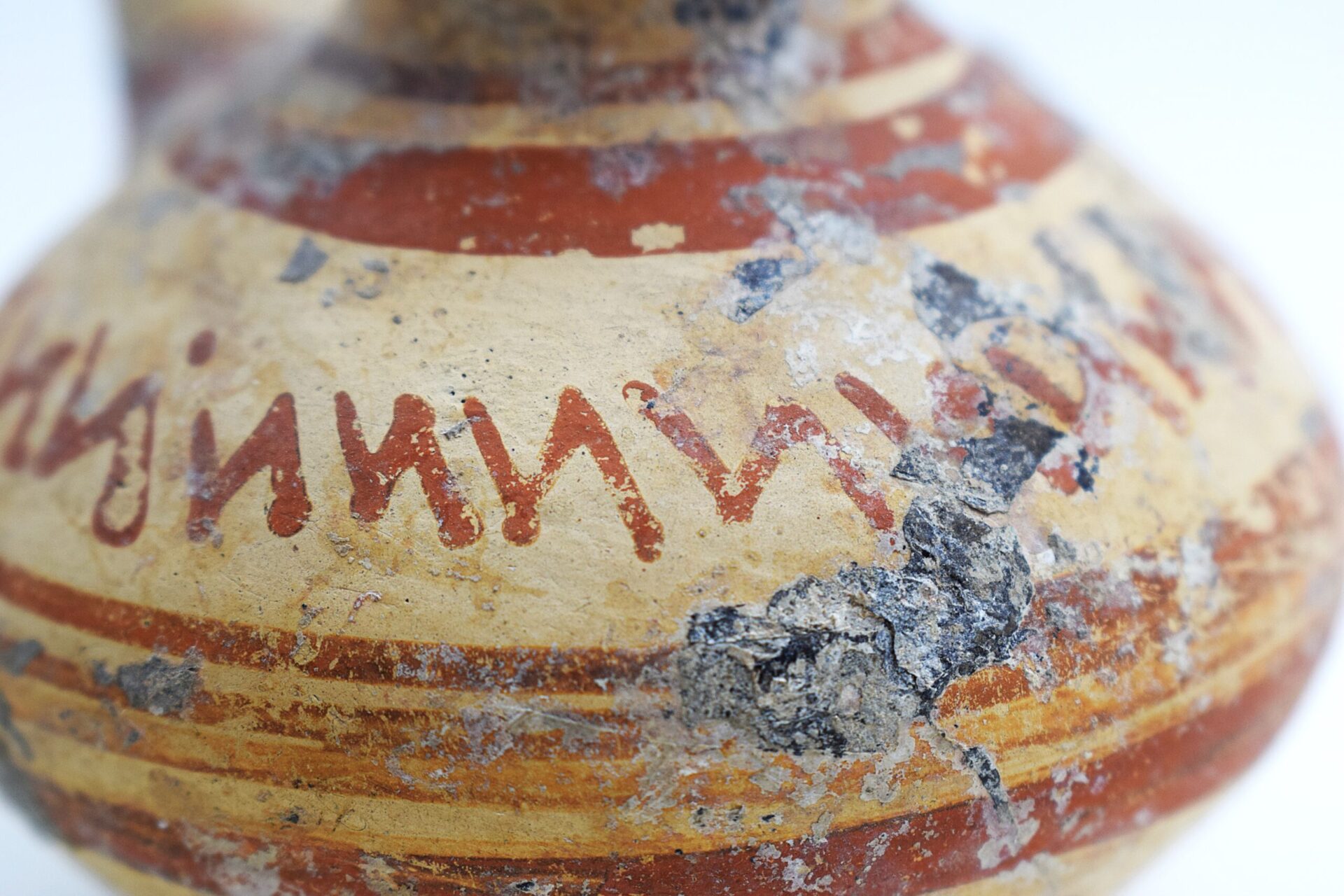
Traces of tinning on the surface of the Mycenaean vase with inv. no Π 19321 of the Unseen Museum
(Photographic Archive of the Hellenic National Archaeological Museum).
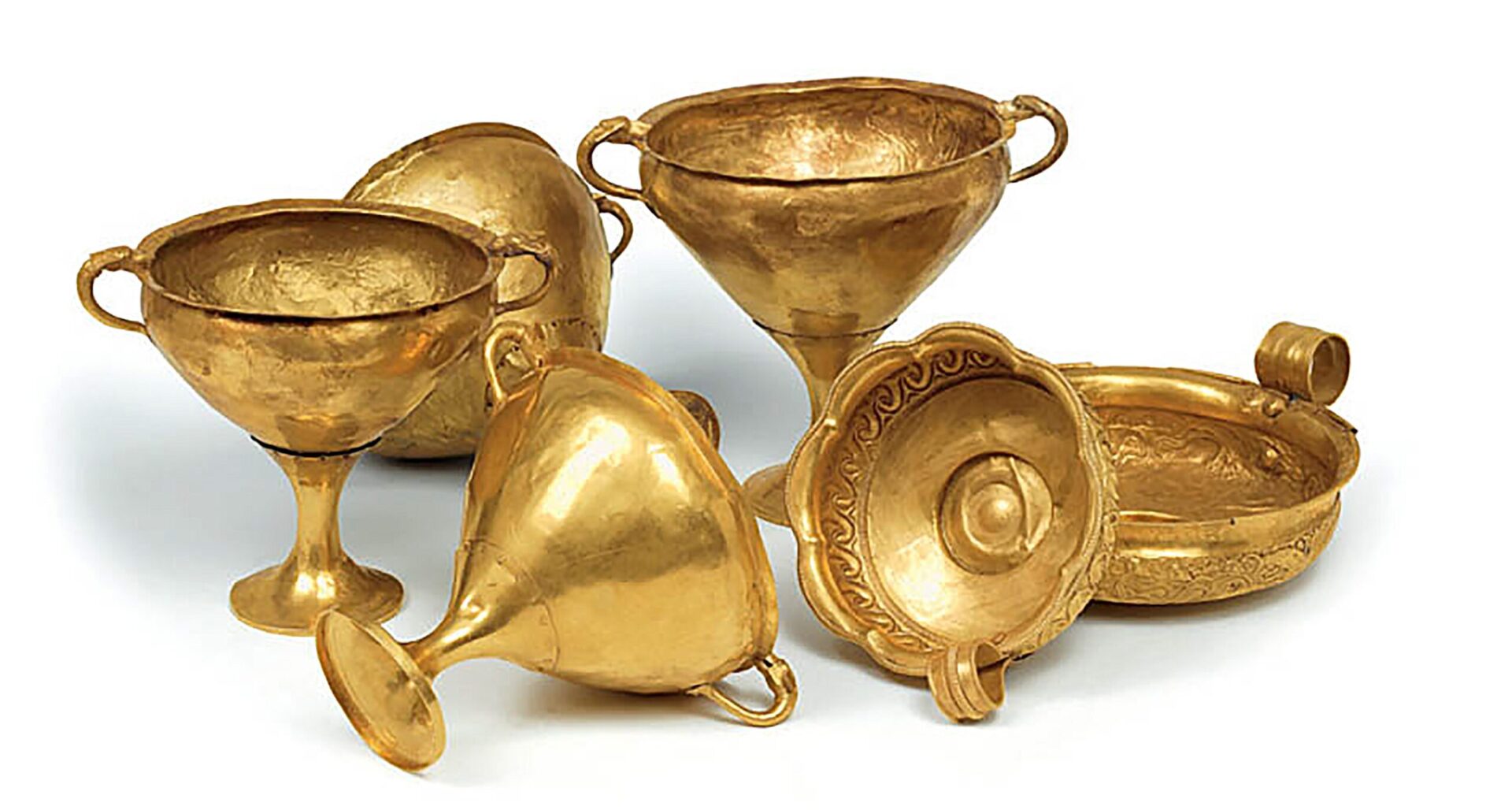
Gold goblets and cups from Mycenae and Dendra in the Argolid. Ca 1400 BCE
(Photographic Archive of the Hellenic National Archaeological Museum).
A group of Mycenaean vases with traces of tinning. Their covering with thin sheets of tin, would make them look as if they were made of silver or gold. Late 14th c. BCE
(Photographic Archive of the Hellenic National Archaeological Museum).
Traces of tinning on the surface of the Mycenaean vase with inv. no Π 19321 of the Unseen Museum
(Photographic Archive of the Hellenic National Archaeological Museum).
Gold goblets and cups from Mycenae and Dendra in the Argolid. Ca 1400 BCE
(Photographic Archive of the Hellenic National Archaeological Museum).
The
Unseen Museum
is the well-known exhibition project of the Hellenic National Archaeological Museum that brings to the fore antiquities stored in its vaults, away from the visitor’s eyes.
The Unseen Museum presents the “
Mycenaean alchemists
”. This is a group of Mycenaean ceramic vessels from the late 14th century BCE, which bear traces of tin coating on their surface. The well-known but not particularly common practice of covering ceramic vessels with thin sheets of tin was carried out by specialized craftsmen and aimed at replicating the shine of silver and gold, that is, the magical transformation of certain everyday objects into precious drinking vessels. These vessels were offered as gifts to the dead, bearing the illusion of durability and immortality associated with noble metals. This complex and delicate process, which could be called
Myc
Loading....
A group of Mycenaean vases with traces of tinning. Their covering with thin sheets of tin, would make them look as if they were made of silver or gold. Late 14th c. BCE
(Photographic Archive of the Hellenic National Archaeological Museum).
Traces of tinning on the surface of the Mycenaean vase with inv. no Π 19321 of the Unseen Museum
(Photographic Archive of the Hellenic National Archaeological Museum).
Gold goblets and cups from Mycenae and Dendra in the Argolid. Ca 1400 BCE
(Photographic Archive of the Hellenic National Archaeological Museum).
A group of Mycenaean vases with traces of tinning. Their covering with thin sheets of tin, would make them look as if they were made of silver or gold. Late 14th c. BCE
(Photographic Archive of the Hellenic National Archaeological Museum).
Traces of tinning on the surface of the Mycenaean vase with inv. no Π 19321 of the Unseen Museum
(Photographic Archive of the Hellenic National Archaeological Museum).
Gold goblets and cups from Mycenae and Dendra in the Argolid. Ca 1400 BCE
(Photographic Archive of the Hellenic National Archaeological Museum).
The
Unseen Museum
is the well-known exhibition project of the Hellenic National Archaeological Museum that brings to the fore antiquities stored in its vaults, away from the visitor’s eyes.
The Unseen Museum presents the “
Mycenaean alchemists
”. This is a group of Mycenaean ceramic vessels from the late 14th century BCE, which bear traces of tin coating on their surface. The well-known but not particularly common practice of covering ceramic vessels with thin sheets of tin was carried out by specialized craftsmen and aimed at replicating the shine of silver and gold, that is, the magical transformation of certain everyday objects into precious drinking vessels. These vessels were offered as gifts to the dead, bearing the illusion of durability and immortality associated with noble metals. This complex and delicate process, which could be called
Myc
Images courtesy of The Metropolitan Museum of Art (CC0)