
Lekythos (Oil Jar)
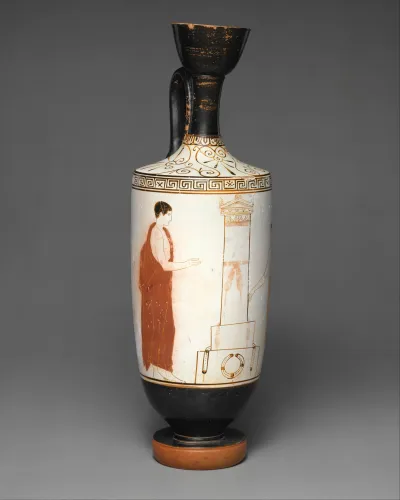
Athenian cemeteries housed a variety of monuments and offerings to the dead. This terracotta vessel, called a lekythos, is one example that held oil. From the middle until the end of the fifth century B.C., they were usually decorated in a distinctive technique known as white ground, so called after the light slip coating on the body and shoulder of the vase. Atop this, figures were usually drawn in outline and then painted in rich colors, many of which have since faded. Since most of these bottles were made for burial with the dead or to be left at their graves, the scenes on their surfaces typically represent tombs, visitors to tombs, and farewell scenes. Here two men, perhaps father and son, bid one another farewell. On the left, the young man departs, spear in hand, but he looks back toward an older man with a walking stick, who watches him go. The latter man’s hair and beard are white. He wears a russet-colored mantle that appears sheer, clearly revealing the contours of his body underneath.


Images courtesy of The Metropolitan Museum of Art (CC0)