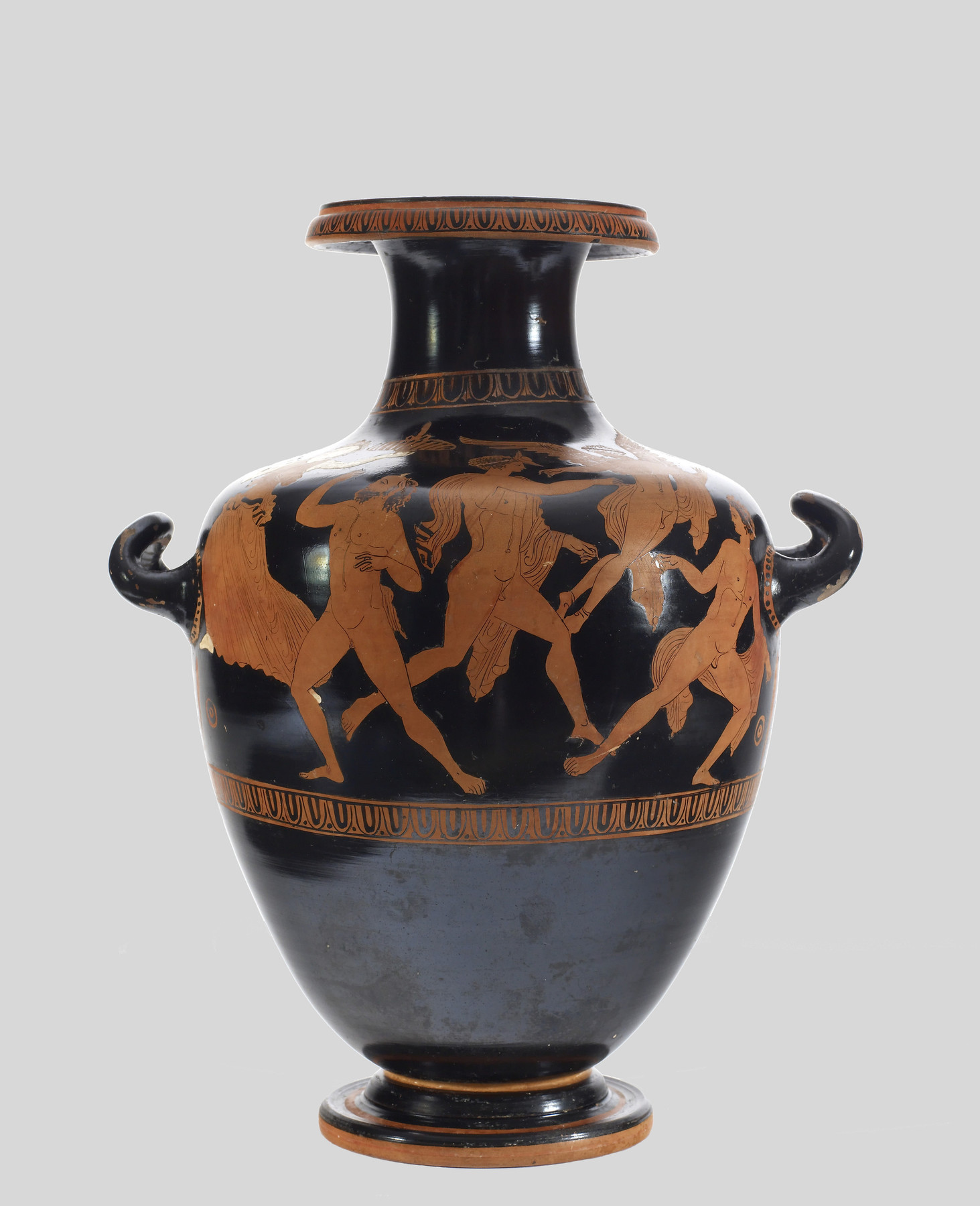
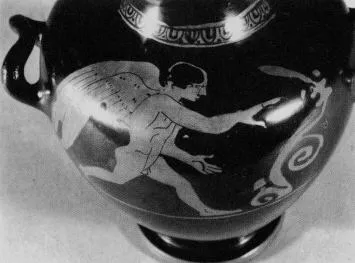
Hermes, indicated by the small petastos (travelers’ cap) he wears, pursues a youth, apparently with amorous intent, as indicated by the figure of Eros hovering between and physically connecting the two. The Herakles Painter frequently uses Eros (love) and Nike (victory) symbolically, associating their qualities with the participants in scenes by positioning them to overlap with the figures they are associated with. Behind Hermes, a satyr seems to pursue a woman who holds an exaleiptron (lidded vessel for oil or water), which is more frequently associated in vase painting with marriage scenes. Although Hermes had love affairs with men and women, the youth in this scene is unknown. Large palmettes and bands of egg-and-dart decorate most of the rest of the surface of this two-handled hydria (water jug). Kerch style vessels are named after the findspot of many of the vases, Kerch in Crimea where Greeks from Miletus founded a colony in the 7th century BCE. The style is characterized by its decoration in the red-figure technique but frequently have details painted in other colors, such as white, blue, and even gold.For the latest information about this object, Hydria with Hermes Pursuing a Youth, visit the Online Collection of the Walters Art Museum.


Images courtesy of The Metropolitan Museum of Art (CC0)