Fish Plate
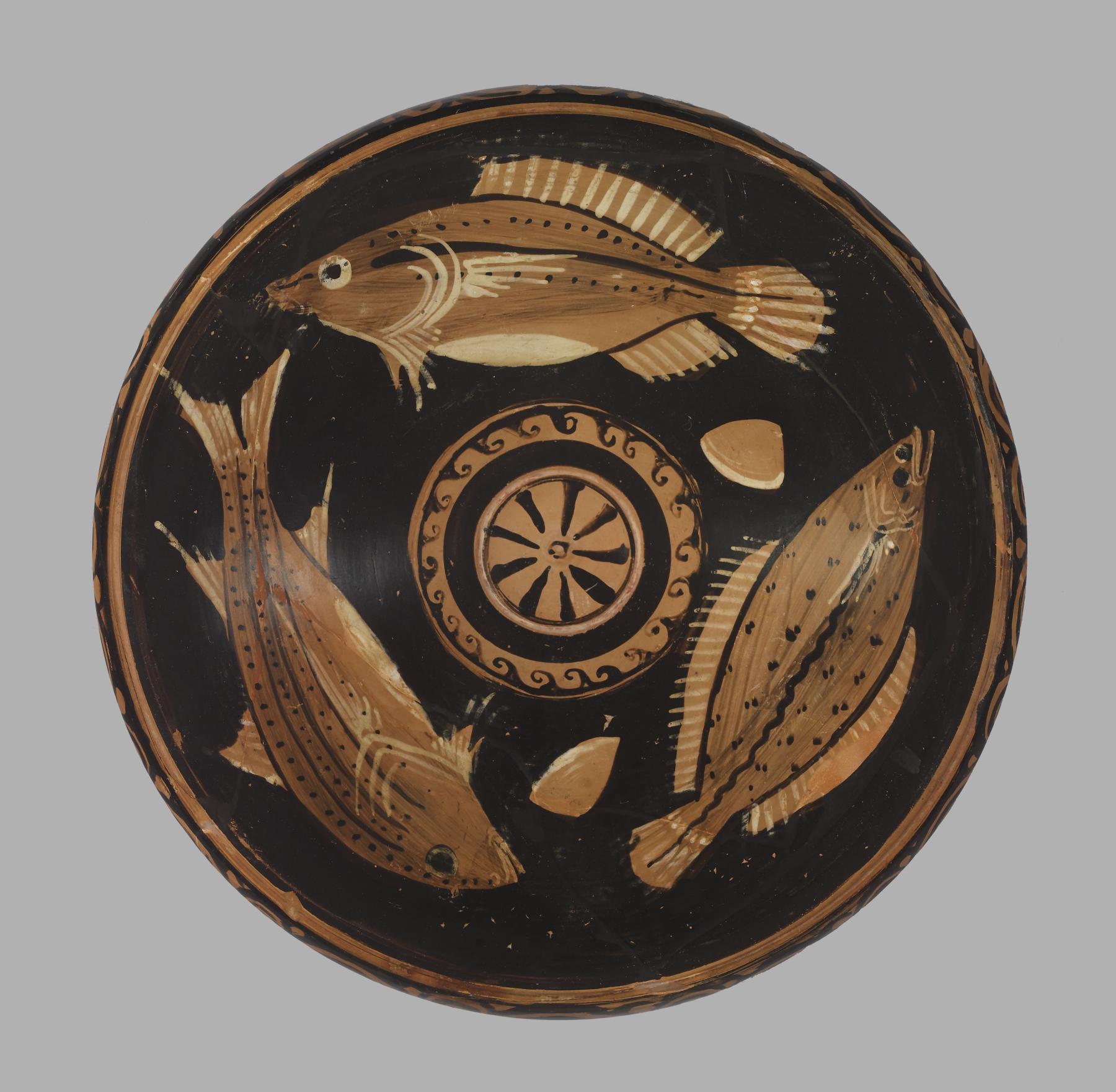
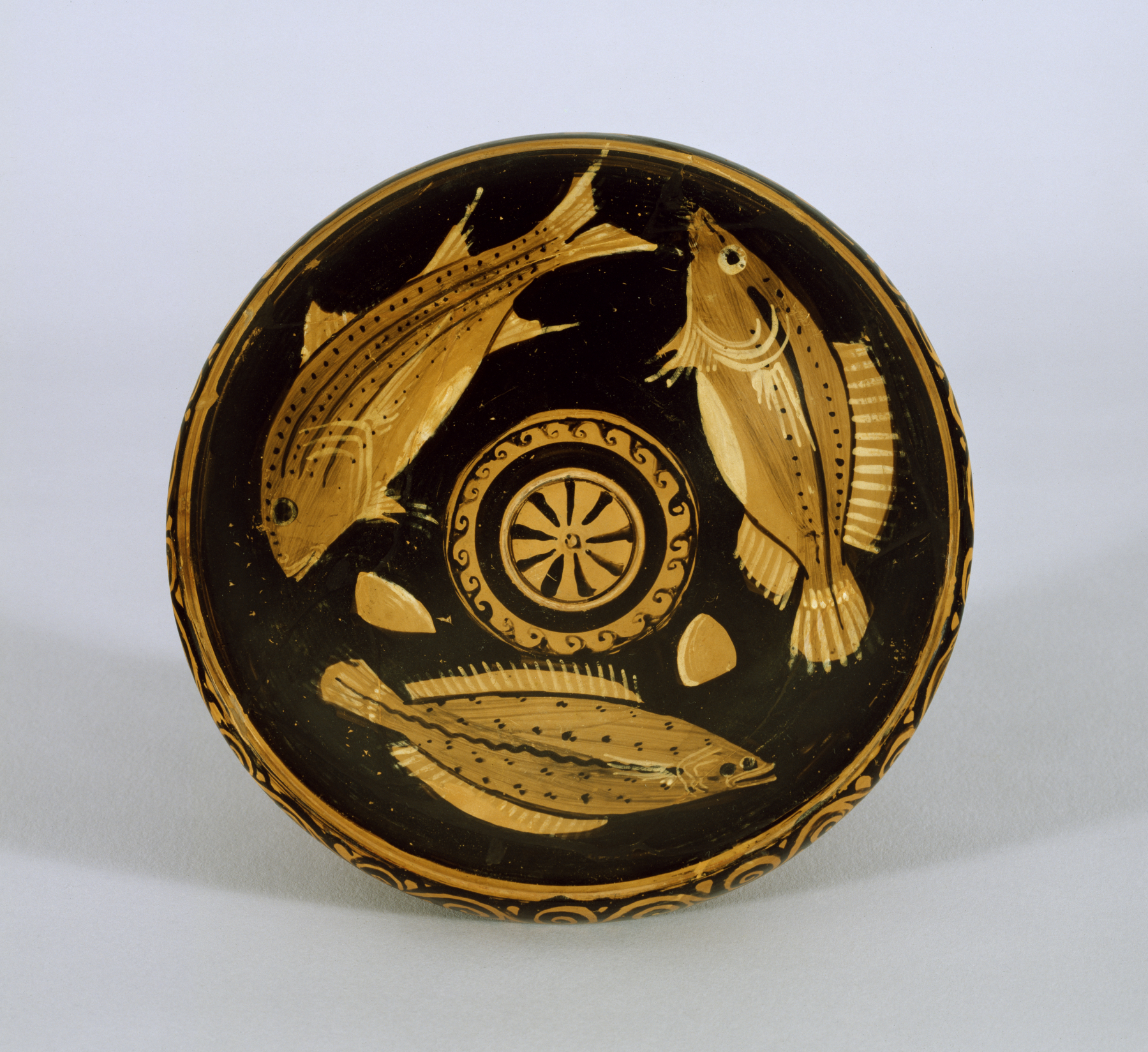
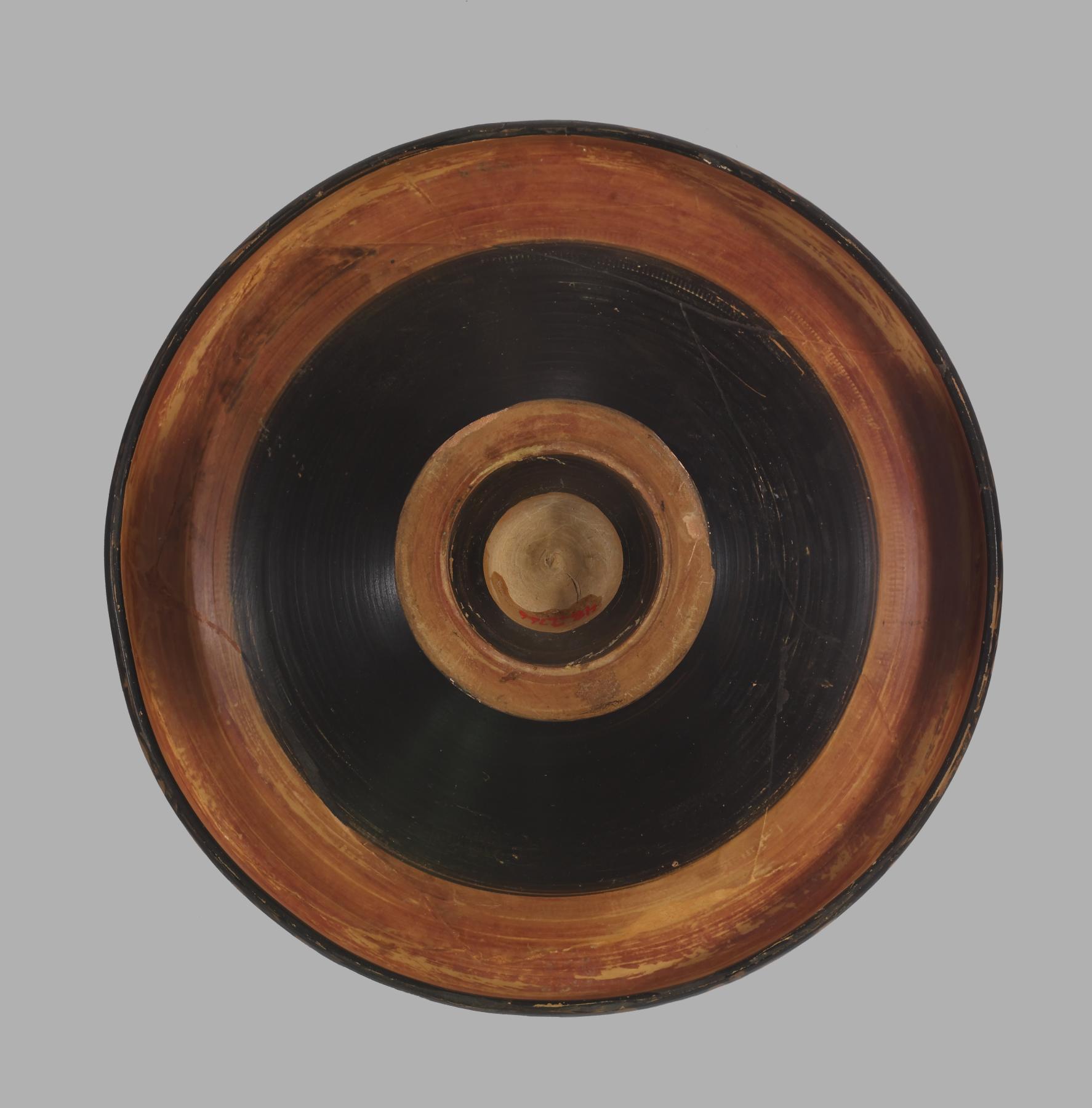
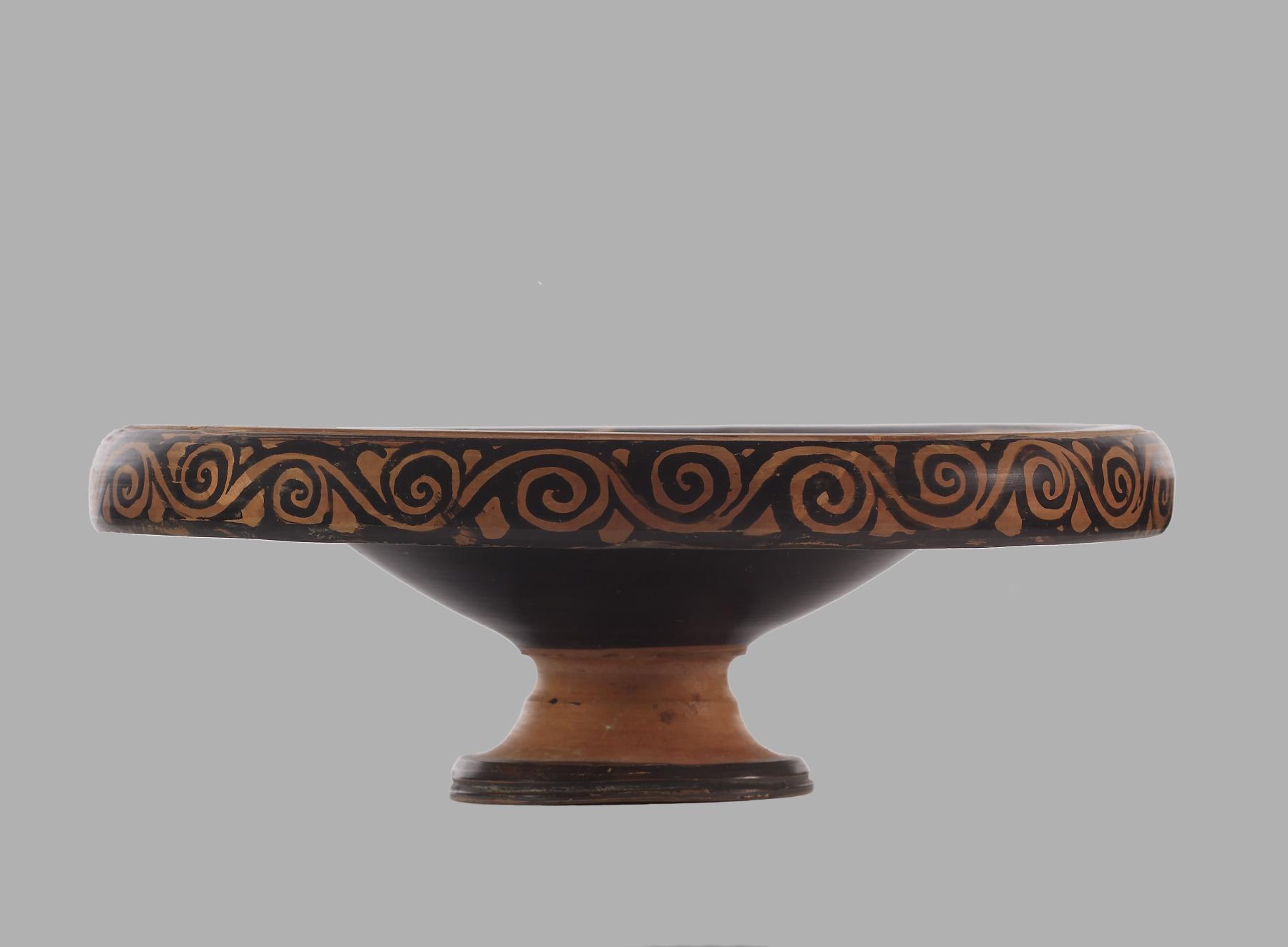
A red mullet, wrasse, flatfish, and two mussels decorate the surface of this plate; the background around the fish is glazed black. The central depression is divided into segments by black glaze, surrounded by a ring of black glaze, a ring of waves, and a thin reserved band. Details of the eyes, gills, fins, and bellies are added in white paint. A spiraling tendril decorates the rim of the plate. First produced in potters’ workshops of Athens in the 5th century BCE, fish plates were especially popular in Magna Graecia (southern Italy) in the 4th century BCE. A wide range of aquatic life, including crabs, snails, shrimp, clams, squid, and even dolphins, along with a variety of fish, are depicted on fish plates. While it is not certain that the ancient Greeks ate all of these types of animals, fish bones have been found in excavation contexts with fish plates, indicating that the plate was used primarily for sea food. A plate such as this one may have been used as a communal serving platter, perhaps with a dipping sauce in the central depression.For the latest information about this object, Fish Plate, visit the Online Collection of the Walters Art Museum.
Images courtesy of The Metropolitan Museum of Art (CC0)