
Black-Figure Neck Amphora
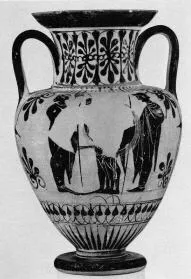
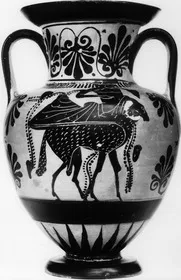
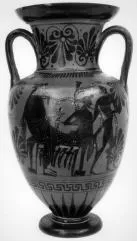
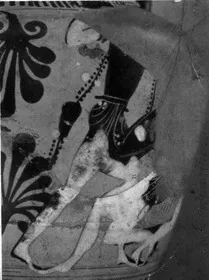
Horses were an integral part of the Greek world, used for transportation, entertainment, and warfare. Because of their high cost of maintenance, they also served as symbols of wealth and status. This Athenian black-figure neck amphora depicts two men leading their mounts. Each man wears a petasos, or broad-brimmed traveler's hat, and carries two spears. As this vase shows, Greek riders controlled their horses with reins and a bridle, but they had no saddle or stirrups. These men lead their horses at their shoulder on short reins. This follows the practice described by the historian and general Xenophon about a century and a half after this vase was made. In his text *The Art of Horsemanship*, Xenophon warned against allowing the horse to get either too far ahead or behind on a long lead. By using short reins, the rider could mount the horse quickly if necessary and prevent the horse from getting into mischief.
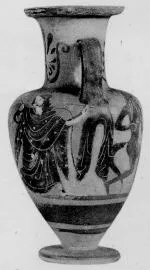
The back of the amphora depicts the festive atmosphere surrounding Dionysos, the god of wine. Dionysos stands calmly holding his kantharos, or drinking cup, while his companions dance and make music. A satyr, a creature part animal and part human, plays the aulos, or double flutes, and a maenad plays castanet-like instruments known as krotala.
The back of the amphora depicts the festive atmosphere surrounding Dionysos, the god of wine. Dionysos stands calmly holding his kantharos, or drinking cup, while his companions dance and make music. A satyr, a creature part animal and part human, plays the aulos, or double flutes, and a maenad plays castanet-like instruments known as krotala.
Images courtesy of The Metropolitan Museum of Art (CC0)