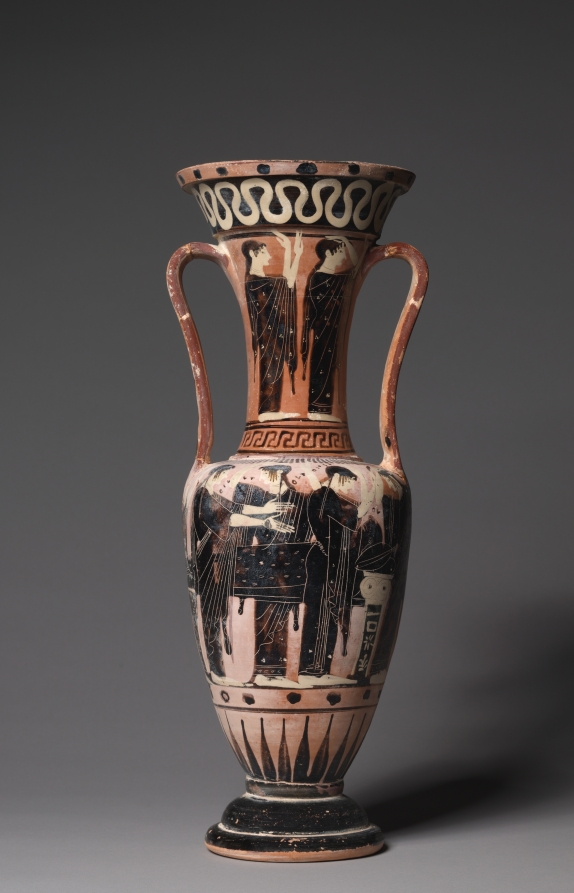
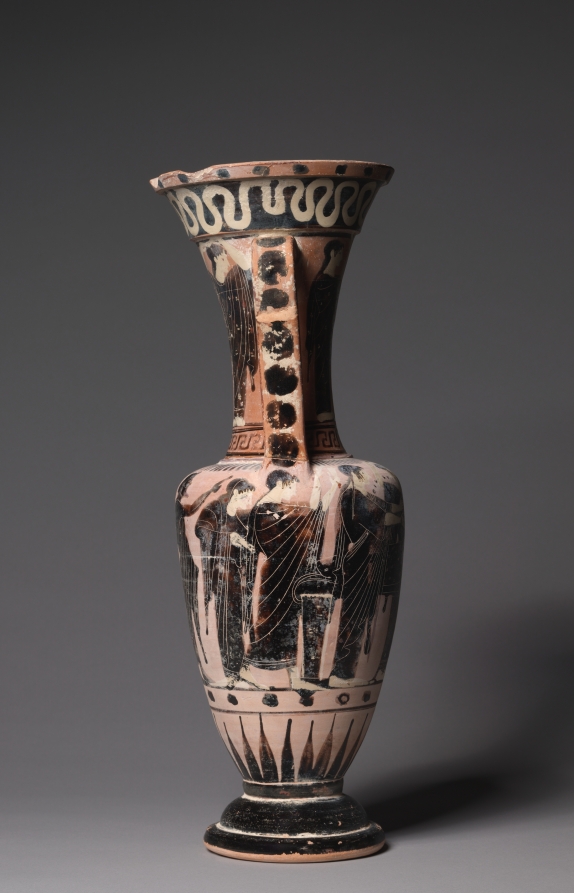
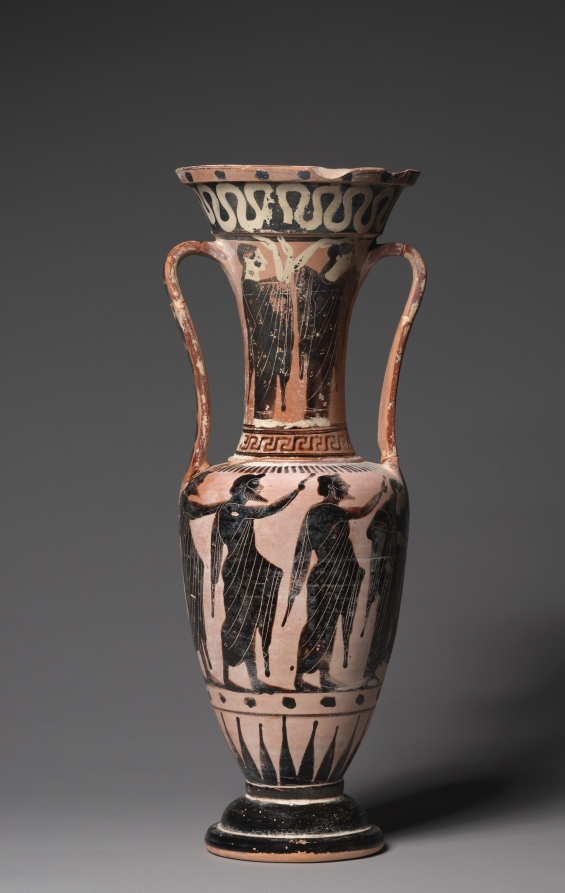
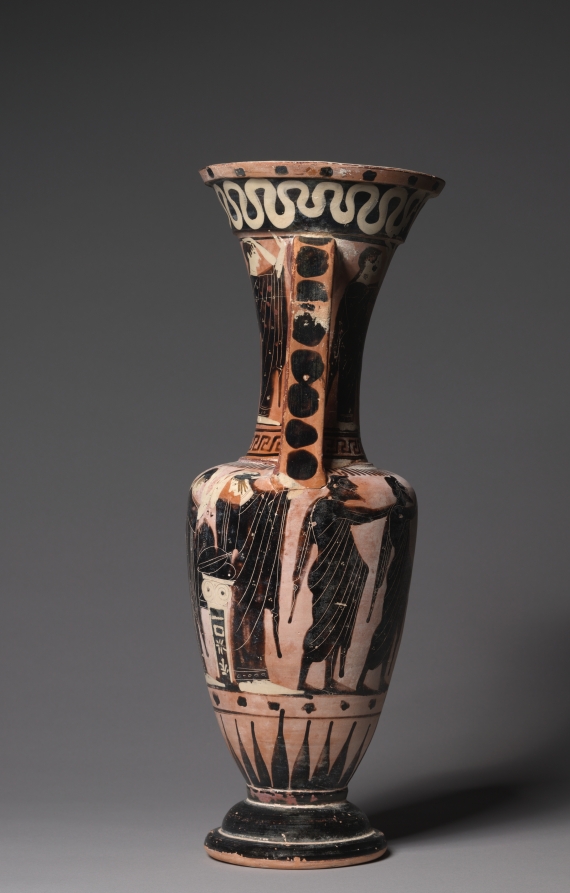
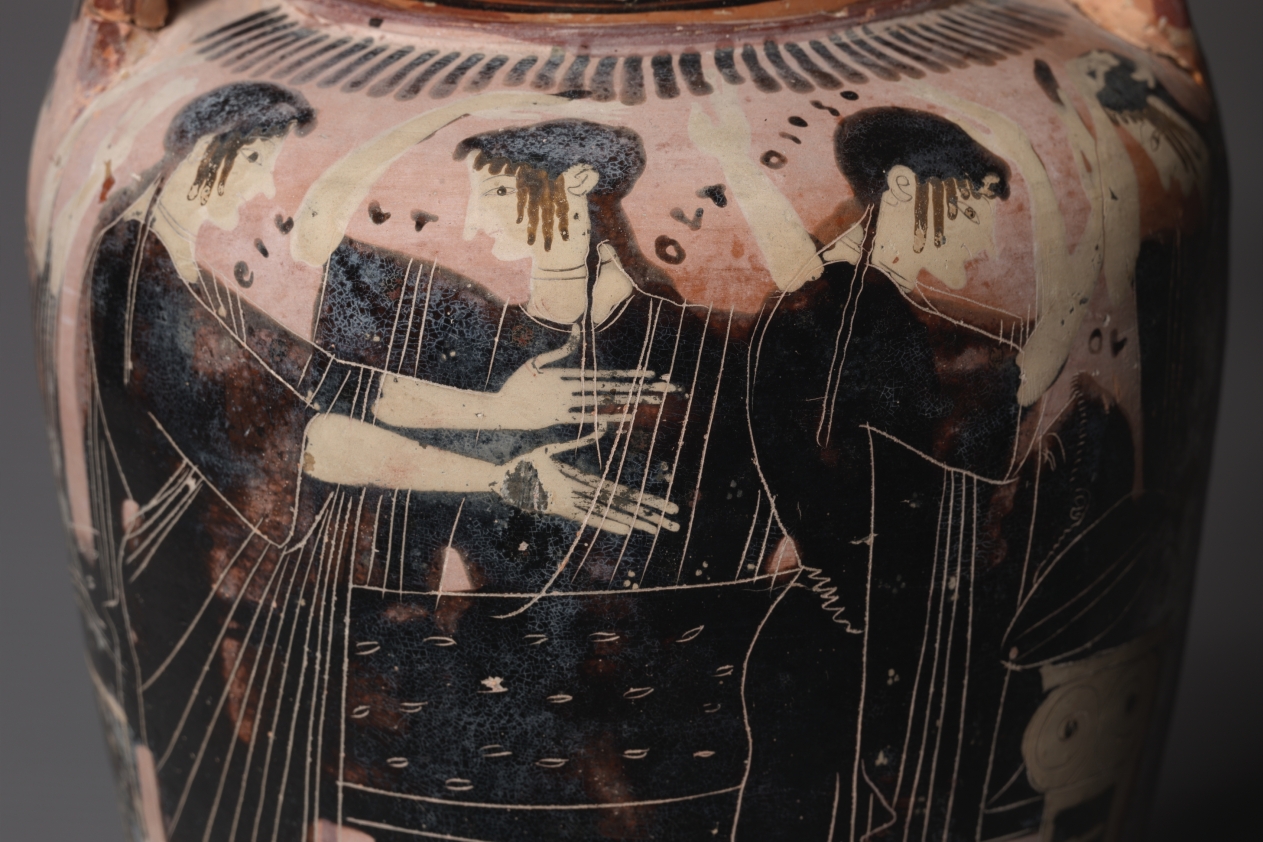
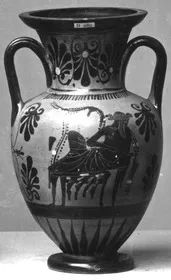
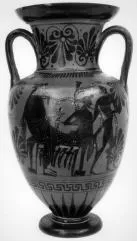
Black-Figure Loutrophoros-Amphora (Ritual Water Vessel): Prothesis (Laying out of Corpse), Mourners
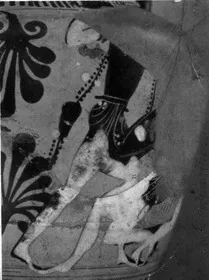
The loutrophoros, a tall-necked water vessel, served two main purposes in ancient Athens. In life, it carried sacred spring water for ceremonial pre-marriage baths. After death, it marked the tomb of an unmarried person, as if to account for that not experienced in life. Often, as here, it has no bottom, permitting offerings to flow through to the grave. Both the precise shape of this vase—a two-handled loutrophoros-amphora rather than a three-handled loutrophoros-hydria—and its depiction of the deceased suggest the commemoration of a departed man (rather than a woman). The iconography is entirely funerary, with multiple mourning figures shown: four women on the neck; six women surrounding the corpse on its bier; and three men making farewell gestures. The inscriptions near some of the mourning women do not spell out real words but may represent their sorrowful cries.
Images courtesy of The Metropolitan Museum of Art (CC0)