
Attic White-Ground Lekythos
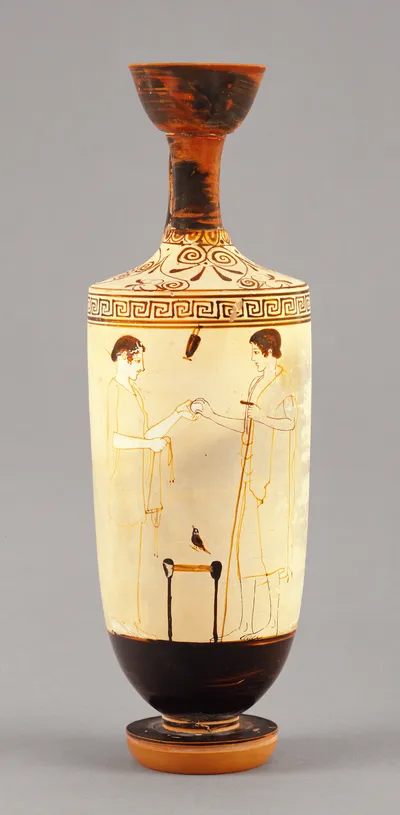
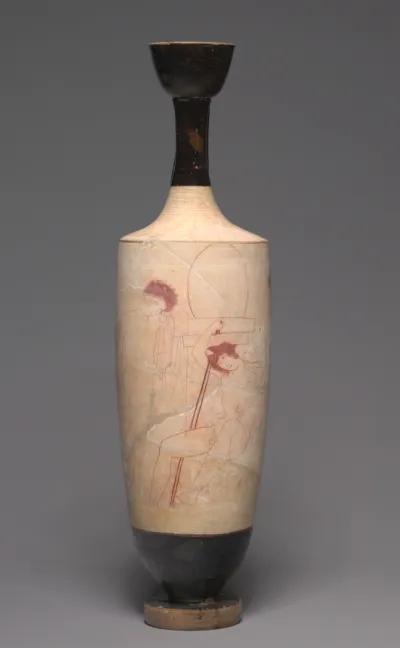
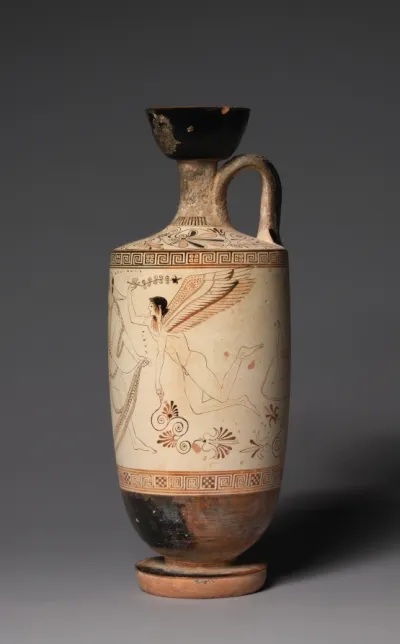
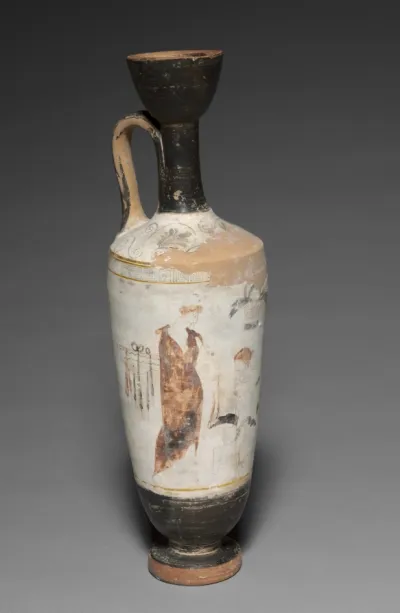
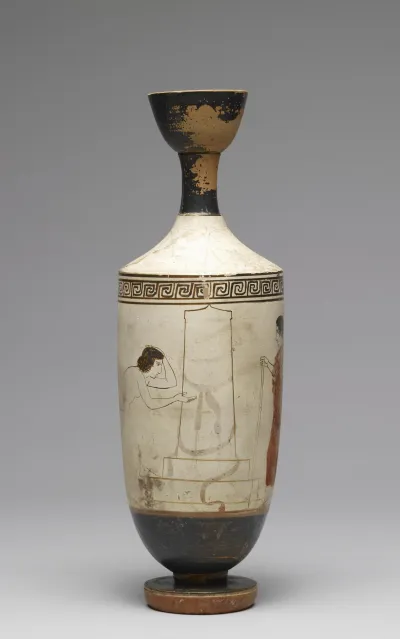
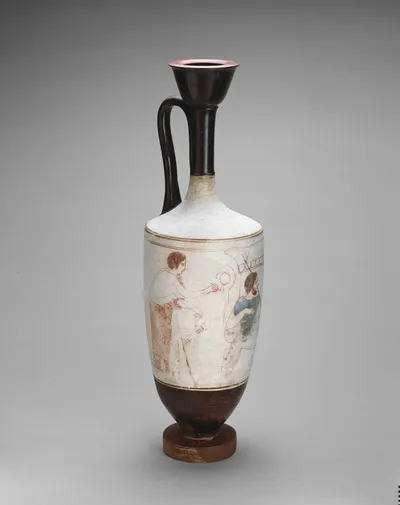
Intended as a grave offering, this Athenian white-ground lekythos depicts family members visiting a loved one's grave. A youth, standing at the left, ties fillets or ribbons around the stele or grave marker. On the right, a girl, her hair cut short as a gesture of mourning, holds an alabastron, a small oil vessel, and a flower. The grave itself appears as a high mound marked by a tall, thin stele. In the late 500s B.C., Athenian potters began to cover the natural reddish color of their pottery with a highly purified clay that turned white when fired. Initially, artists applied this technique to a variety of shapes decorated with a wide range of scenes. Just before the middle of the 400s B.C., however, artists began limiting the use of this technique to a specific shape, the lekythos, a small oil container used in funerary ritual, and the decoration on the vessel shifted almost exclusively to funerary scenes. This change was due to the fragile nature of the white slip, which did not wear well, but served the one-time usage of a funeral quite nicely.
Images courtesy of The Metropolitan Museum of Art (CC0)