
Attic Red-Figure Cup Fragment
By the early 400s B.C., professional teachers had established schools in Athens. These teachers, who specialized in various aspects of education, provided training for the male children of parents who could afford to pay the tuition. The most basic education in one of these schools would have involved reading and writing and perhaps arithmetic. At about the same time, scenes of youths at school learning their lessons began to appear on Athenian vases, part of a growing interest on the part of vase painters in depicting scenes of daily life.
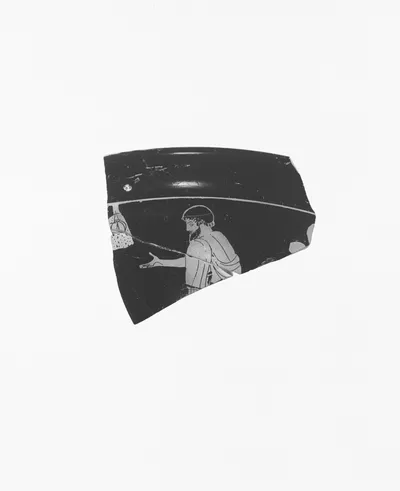
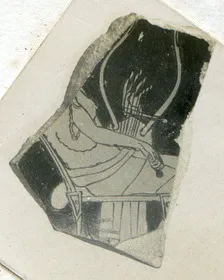
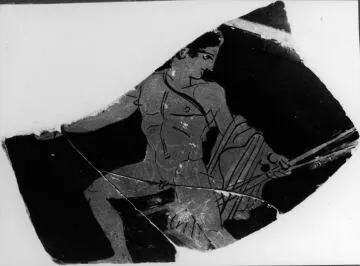
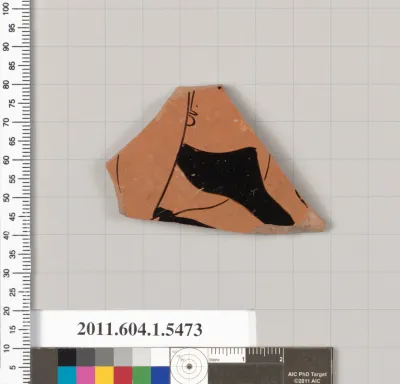
This small red-figure cup fragment shows a boy holding a scroll while another person, perhaps his teacher, stands in front of him. Scholars have disagreed over what the scroll says. Some read it as the beginning of a list of mythological figures. Others see it as a fragment from an epic poem by Hesiod, "The Catalog of Women." This school scene comes from the interior of the cup. On the exterior, only the feet of two figures remain.
This small red-figure cup fragment shows a boy holding a scroll while another person, perhaps his teacher, stands in front of him. Scholars have disagreed over what the scroll says. Some read it as the beginning of a list of mythological figures. Others see it as a fragment from an epic poem by Hesiod, "The Catalog of Women." This school scene comes from the interior of the cup. On the exterior, only the feet of two figures remain.


Images courtesy of The Metropolitan Museum of Art (CC0)