
Attic Black-Figure Amphora
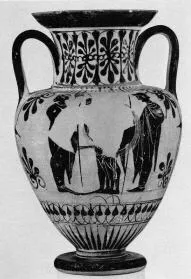
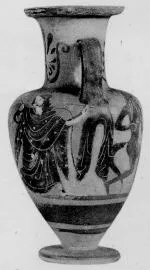
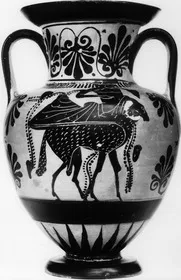
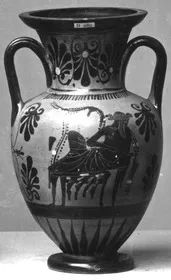
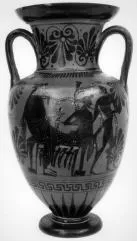
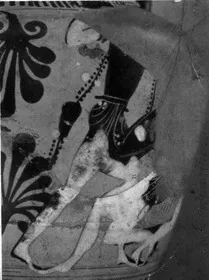
Both sides of this vessel depict a male and female pair in a chariot, with additional figures in attendance. Added white is used for the skin of the women, some horses and part of the lyre on side B. Ornamentation consists of ivy vines on the sides of the handles, upward pointing rays in a reserved zone above the foot, double palmette-lotus chains above the figural scenes, and bands in added red underneath the scenes. The interior of the neck and mouth are black. The black gloss was applied unevenly to the amphora’s exterior, and there are patches of red due to misfiring. Repair holes (one pair on the body of the foremost horse on side A, another towards the bottom of the vessel) indicate the vase was sufficiently valued to warrant mending in antiquity.
Side A: a couple in a chariot, facing right. The male figure is bearded, and on account of his ivy wreath, drinking horn, and the grape vine that extends over the scene, is identifiable as Dionysos. The female figure, who holds the reins, wears an elaborately patterned peplos (incised crosses and red dots). She could be Dionysos’s bride, Ariadne, or his mother, Semele. Behind the four horses - one of which is painted white - are four figures, three women and one bearded man, who look towards the couple in the chariot. The women wear bands around their heads, while the male figure wears a (myrtle?) wreath. He holds a trident, so can be identified as Poseidon, but the female figures, perhaps goddesses, remain nameless. At far right, Hermes walks to the right, turning back over his shoulder to look at the procession. He wears a petasos, winged boots, and chlamys, and carries a kerykeion (messenger’s staff) in his right hand.
Side B: a couple in a chariot facing right. The bearded, wreathed male wears a himation and holds the reins, and the woman standing behind him is veiled. In front of the chariot are a woman and man facing right. Both are wreathed and the man plays a lyre. To the right, behind four horses - one white - is a woman facing left. In front of the horses is a taller female figure facing left and raising her right hand. In contrast to side A, it is not clear whether all or some of these figures are divine, although the lyre-player could be Apollo.
Side A: a couple in a chariot, facing right. The male figure is bearded, and on account of his ivy wreath, drinking horn, and the grape vine that extends over the scene, is identifiable as Dionysos. The female figure, who holds the reins, wears an elaborately patterned peplos (incised crosses and red dots). She could be Dionysos’s bride, Ariadne, or his mother, Semele. Behind the four horses - one of which is painted white - are four figures, three women and one bearded man, who look towards the couple in the chariot. The women wear bands around their heads, while the male figure wears a (myrtle?) wreath. He holds a trident, so can be identified as Poseidon, but the female figures, perhaps goddesses, remain nameless. At far right, Hermes walks to the right, turning back over his shoulder to look at the procession. He wears a petasos, winged boots, and chlamys, and carries a kerykeion (messenger’s staff) in his right hand.
Side B: a couple in a chariot facing right. The bearded, wreathed male wears a himation and holds the reins, and the woman standing behind him is veiled. In front of the chariot are a woman and man facing right. Both are wreathed and the man plays a lyre. To the right, behind four horses - one white - is a woman facing left. In front of the horses is a taller female figure facing left and raising her right hand. In contrast to side A, it is not clear whether all or some of these figures are divine, although the lyre-player could be Apollo.
Images courtesy of The Metropolitan Museum of Art (CC0)