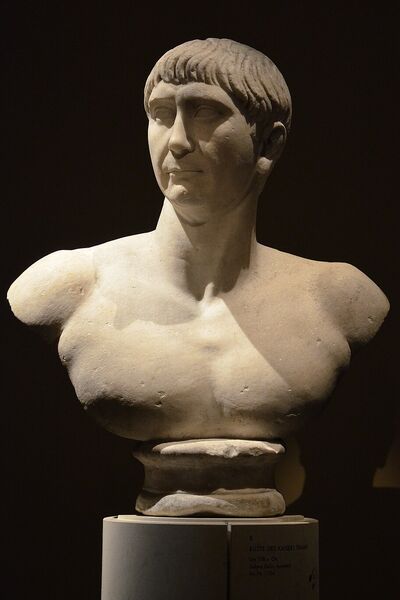
C. Plinius Caecilius Secundus
Pliny the Younger
The letter-writer of imperial Rome
61 AD – c. 113 AD
Gaius Plinius Caecilius Secundus — Pliny the Younger — was born around 61 AD in Comum (Como), in northern Italy. Adopted by his uncle, Pliny the Elder (the encyclopaedist who died investigating the eruption of Vesuvius in 79 AD), he pursued a senatorial career and served as governor of Bithynia-Pontus under Trajan.
His ten books of Letters are among the most polished and informative documents of Roman imperial life. They are literary compositions, carefully arranged for publication, covering topics from the eruption of Vesuvius (he was an eyewitness) to the prosecution of Christians (his correspondence with Trajan on the subject is the earliest Roman testimony on Christian communities) to the management of country estates, the duties of friendship, and the art of writing.
Pliny is not a deep thinker, but he is an excellent observer and a generous, civilised man. His letters are an invaluable window into the world of the Roman governing class at the height of the empire.
Works
- 1