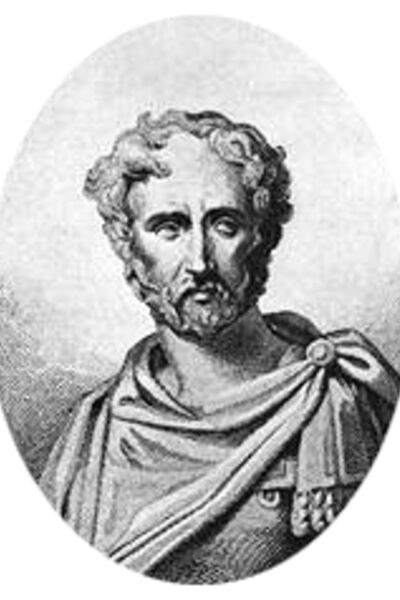
C. Plinius Secundus
Pliny the Elder
Rome's great encyclopaedist
23 AD – 79 AD
Gaius Plinius Secundus — Pliny the Elder — was born around 23 AD in Comum and died on 25 August 79 AD, suffocated by volcanic gases while investigating the eruption of Vesuvius. His nephew, Pliny the Younger, described the scene in two famous letters to Tacitus.
Pliny was a Roman officer, administrator, and scholar of inexhaustible energy. According to his nephew, he read or was read to constantly — at meals, in the bath, while travelling. His Natural History, in thirty-seven books, is an encyclopaedia of the entire natural world as the Romans understood it: cosmology, geography, anthropology, zoology, botany, medicine, mineralogy, and the arts. It cites over four hundred Greek and Roman sources, many now lost.
The Natural History is not always accurate — Pliny accepted marvels alongside facts — but it is the most comprehensive single work of factual prose to survive from antiquity. It was the standard reference work for the natural world throughout the Middle Ages.
Works (2)
- 1
-
2
Naturalis Historia prose
Ten books of letters, polished for publication, covering life under Domitian, Nerva, and Trajan. The last book contains his correspondence with Trajan...