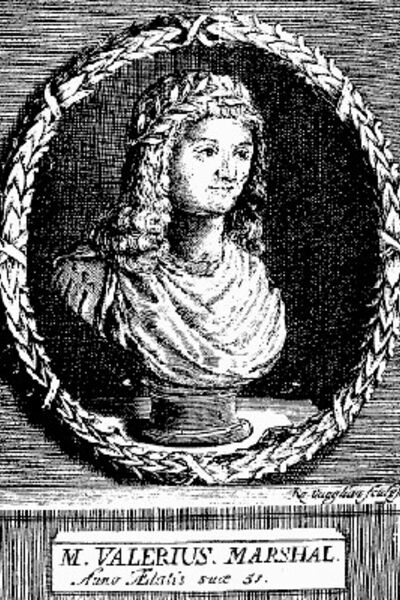
M. Valerius Martialis
Martial
The master of the epigram
c. AD 38 – c. AD 104
Marcus Valerius Martialis was born around 40 AD in Bilbilis, in northeastern Spain, and came to Rome around 64 AD. He spent the next thirty-five years as a professional poet, living by his wit and his patrons' generosity — or lack of it. He returned to Spain around 98 AD and died there around 104 AD.
He wrote over fifteen hundred epigrams in twelve books, plus two additional collections (the Liber Spectaculorum and the Xenia/Apophoreta). They are the finest body of short occasional verse in Latin — funny, filthy, tender, cruel, and always perfectly crafted. An epigram by Martial typically sets up a situation in a few lines and delivers a devastating punchline in the last word or two. The effect is like a stiletto: quick, precise, and lethal.
His subject is daily life in Rome: dinners, baths, patrons, parasites, gladiators, lawyers, doctors, bad poets, beautiful boys, and his own poverty. He is our best source for what ordinary life in imperial Rome actually felt like. His influence on English poetry — particularly Ben Jonson, Herrick, and Pope — is immense.
Works
-
1
Epigrammata poetry
Fourteen books of epigrams — short, sharp, often obscene poems about life in imperial Rome. Martial perfects the form: two or three lines of setup, th...